Neon tetra
Paracheirodon innesi

The neon tetra (Paracheirodon innesi) is a small, peaceful freshwater fish from the Amazon basin in Peru, Colombia and Brazil. Its luminous blue stripe and red rear half make it easy to recognise, even against dense planting. Unlike the cardinal tetra, the red does not extend along the entire belly. In an aquarium, neons spend much of their time in midwater, moving with their companions between open swimming space and cover. Watching that group behaviour is a large part of their appeal. They should therefore not be kept alone or added as a single splash of colour. Give the group a mature aquarium with sufficient length and planting that creates quiet, shaded areas. Successful care depends less on unusual equipment than on suitable water, stable conditions and tank mates that will not harass these small fish.
Plan your aquarium →At a glance
- Temperature
- 21–25 °C
- pH
- 6.0–7.0
- GH
- 1–8 °dGH
- Aquarium length
- At least 60 cm
- Minimum aquarium volume
- At least 54 L
- Adult size
- Approximately 3–4 cm
- Group size
- At least 8–10 individuals
- Lifespan
- 5–10 years
- Swimming zone
- Middle
- Temperament
- Peaceful
- Lighting preference
- Subdued lighting
- Cover
- Plants and sheltered areas
- Staple food
- Fine flakes, Small granules
- Supplementary food
- Live food, Frozen food, Finely crumbled dried natural food
54 L gross with a minimum 60 × 30 × 30 cm footprint and height is a lower limit for a neon tetra group, not a community stocking recommendation. Substrate and decor reduce actual water volume; tankmates require more space.
About this species
Adult neon tetras are approximately 3–4 cm long. The silvery belly and red band confined to the rear half distinguish them from cardinal tetras. When choosing fish, look beyond the blue stripe rather than assuming that both species have identical requirements.
Their colours may fade while resting and return after the lights come on. That change alone is not evidence of illness. Persistent fading accompanied by abnormal swimming, poor appetite or isolation does need attention. With good care, these fish can live for several years; LICG gives a lifespan of five to ten years.
Natural habitat
Neons originate from the upper Amazon basin, including small forest streams and tributaries rather than one single river habitat. They occur in both dark water coloured by organic matter and clear water.
Forest cover provides shade, roots, branches and fallen leaves, while the water is often soft and acidic. Not every natural site is densely planted: the surrounding forest also supplies shelter. In an aquarium, recreate that sense of cover and quieter spaces rather than concentrating solely on making the water brown.
Aquarium and layout
Choose a tank at least 60 cm long and leave usable swimming space. A tall tank of the same volume does not replace that length. A 60 × 30 × 30 cm aquarium has a calculated gross volume of 54 litres before substrate and furnishings; this is not a guarantee that any particular stocking plan will fit. A longer, larger aquarium offers more scope for a bigger group or additional inhabitants.
Plant the back and sides, using aquarium wood to create sheltered passages while leaving part of the centre open. A suitable dark substrate reduces reflections. Rocks are optional; if used, they should be stable, free of sharp edges and compatible with the intended water chemistry.
Create shaded patches with plants or floating cover. Provide filtration and gentle water movement without forcing the fish to swim constantly against a strong jet. Establish the aquarium and biological filter before adding the group.
Water conditions
This guide uses 21–25 °C, pH 6.0–7.0 and GH 1–8 °dGH as care guidance. These ranges are not an invitation to aim for their extremes. Test your source water and consider whether you can maintain stable conditions, including during water changes.
Reliable sources differ on the precise pH range. Here we follow LICG’s narrower recommendation and use Seriously Fish for temperature. The GH range is a conservative overlap between those two sources, not a proven biological optimum. Do not make abrupt pH changes simply to reach a number in a table.
Alongside pH and hardness, monitor ammonia/ammonium, nitrite and nitrate. Ammonium and nitrite should not be detectable in a properly functioning aquarium. Base water changes and maintenance on measurements and waste levels. Looking after the filter and avoiding excess food matter just as much as setting the heater.
Behaviour and group size
Keep neon tetras with their own species. For this example, we follow the advice to start with at least eight to ten individuals; ten is not an upper limit. A larger group is possible if the aquarium and overall stocking allow it. A shoal of another tetra species does not replace companions of their own kind.
Neons are generally peaceful. Potential tank mates should be calm, need compatible water conditions and be unable to regard them as prey. Avoid large predators, aggressive food competitors and fish that repeatedly chase the group. Compatibility involves more than a shared temperature: adult size, behaviour and available space all matter.
Feeding
Neons are small-mouthed omnivores. Their natural food includes small invertebrates and plant material, so aquarium feeding need not be limited to live or frozen foods.
Staple food
A complete dry food in fine flakes or small granules can form the basis of the diet. Check its intended use and, above all, whether the fish can actually swallow it. “Granules” describes a form, not a suitable particle size. Large pieces that are repeatedly spat out are a poor choice.
Supplementary food
Provide variety with appropriately small live or frozen foods, such as Daphnia or brine shrimp. Thaw frozen food and use a trustworthy supplier. Supplementary foods add variety to a balanced diet; they do not automatically replace a complete staple food.
For healthy adults, one or two small feeds a day are a useful general starting point. Offer roughly what the group eats within one to two minutes, then adjust to the fish in front of you. Check that every fish gets access and remove leftovers. Fry need much smaller food and a different feeding schedule.
Breeding
Spawning may occur in an aquarium, but raising fry deliberately needs separate preparation. Neons scatter eggs among fine material or plants and provide no parental care. Adults may eat the eggs, so a dedicated breeding tank with suitable egg protection makes management easier.
The eggs need low light and soft, acidic water. The sources give different precise breeding conditions, so this guide does not present one temperature recipe as a universal rule. Prepare the breeding tank, water monitoring and a dependable supply of very small first food before attempting to breed them. Newly hatched fry cannot eat the same food as adults. Planning to raise the young is therefore just as important as encouraging spawning.
Keeping with other species
These assessments concern individual pairings, not a combined stocking list. For two fish groups we recommend at least 80 cm of swimming length, with cover and separate feeding areas: a conservative layout choice, not a capacity guarantee. Keep each species in its own group and assess total stocking.

Pygmy cory
Suitable with conditionsSmall and peaceful, but shy and active in midwater too. Prefer at least ten; target-feed so neons do not take everything. Use 23–25 °C, pH 6.4–7 and sheltered resting places.
View species profile →
Harlequin rasbora
SuitableA peaceful shoaling fish without a usual predation risk to adult neons. Keep eight to ten or more of its own kind. Both use midwater: provide swimming length and planted edges. 23–25 °C and soft, slightly acidic water suit both.
View species profile →
Ember tetra
SuitableA small, peaceful tetra suited to 23–25 °C and soft, slightly acidic water. Keep eight to ten or more embers alongside a full neon group. Distribute fine food at several points so the smaller fish also eat.
View species profile →
Siamese fighting fish
Not recommendedOverlapping water values do not make this a reliable standard pairing. Betta aggression varies; busy shoals and feeding competition can cause stress. Territory and long fins increase conflict risk. Prefer a separate, quiet setup.
View species profile →
Ram cichlid
Not recommendedThe recommended 27–30 °C for rams exceeds this neon guide’s range. Do not use a permanent temperature compromise. A breeding pair also defends a bottom territory; extra litres do not resolve the temperature mismatch.
View species profile →
Freshwater angelfish
UnsuitableAdult angelfish may prey on small tetras; growing up together offers no assurance. Their size, required tank height and breeding territory also rule out a small neon aquarium. Similar water conditions do not remove predation risk.
View species profile →
Cockatoo dwarf cichlid
Suitable with conditionsAdult neons only in the cooler shared profile with escape space. Young neons can become prey; cichlid breeding changes territorial pressure. Shared profile: 24–25 °C; pH 6–7; GH 5–8. Layout recommendation: from 100 cm.
View species profile →
Cherry shrimp
Suitable with conditionsRisk to juvenilesRisk to adultsAdult dwarf shrimp may persist with quiet small fish; a species aquarium is safer for a breeding colony. Small neon tetras can eat newborn shrimp. Retain their own group and swimming space; moss reduces encounters without making young safe.
View species profile →
Bee shrimp
Suitable with conditionsRisk to juvenilesRisk to adultsAdult dwarf shrimp may persist with quiet small fish; a species aquarium is safer for a breeding colony. Small neon tetras can eat newborn shrimp. Retain their own group and swimming space; moss reduces encounters without making young safe.
View species profile →
Tiger shrimp
Suitable with conditionsRisk to juvenilesRisk to adultsAdult dwarf shrimp may persist with quiet small fish; a species aquarium is safer for a breeding colony. Small neon tetras can eat newborn shrimp. Retain their own group and swimming space; moss reduces encounters without making young safe.
View species profile →
Amano shrimp
Suitable with conditionsRisk to juvenilesAdult Amanos are larger than dwarf shrimp but vulnerable after moulting. Larvae also face predation and do not complete normal development in freshwater alone. Small neon tetras can eat newborn shrimp. Retain their own group and swimming space; moss reduces encounters without making young safe.
View species profile →
Bamboo shrimp
Suitable with conditionsRisk to juvenilesThis fan shrimp needs its own current perch and fine suspended food. Quiet fish must not intercept all food; protect fans, antennae and moulting animals. Small neon tetras can eat newborn shrimp. Retain their own group and swimming space; moss reduces encounters without making young safe.
View species profile →
African giant fan shrimp
Suitable with conditionsRisk to juvenilesThis fan shrimp needs its own current perch and fine suspended food. Quiet fish must not intercept all food; protect fans, antennae and moulting animals. Small neon tetras can eat newborn shrimp. Retain their own group and swimming space; moss reduces encounters without making young safe.
View species profile →
Horned nerite
Suitable with conditionsA shell does not protect the extended foot and tentacles. End the combination after persistent withdrawal or injuries. Neon tetras are not specialised snail predators. Check uninterrupted grazing and especially the cooler, softer fish profile; meeting at one boundary provides little margin.
View species profile →
Zebra nerite
Suitable with conditionsA shell does not protect the extended foot and tentacles. End the combination after persistent withdrawal or injuries. Neon tetras are not specialised snail predators. Check uninterrupted grazing and especially the cooler, softer fish profile; meeting at one boundary provides little margin.
View species profile →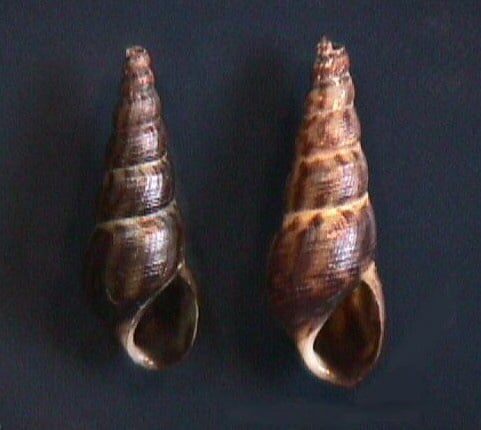
Malaysian trumpet snail
Suitable with conditionsA shell does not protect the extended foot and tentacles. End the combination after persistent withdrawal or injuries. Neon tetras are not specialised snail predators. Check uninterrupted grazing and especially the cooler, softer fish profile; meeting at one boundary provides little margin.
View species profile →
Ramshorn snail
Suitable with conditionsA shell does not protect the extended foot and tentacles. End the combination after persistent withdrawal or injuries. Neon tetras are not specialised snail predators. Check uninterrupted grazing and especially the cooler, softer fish profile; meeting at one boundary provides little margin.
View species profile →
Orange Mexican dwarf crayfish
Not recommendedRisk to adultsThe dwarf crayfish can grab resting or low-feeding fish and is itself vulnerable when moulting. Territories, separate caves and a closed lid matter; this is not a guaranteed fish-safe species. Neon tetras also rest low in the tank. Grabbing and night-time encounters outweigh water overlap for this small fish.
View species profile →Suitable plants
These plants provide cover without intense lighting. Preserve open swimming space. These are practical aquarium combinations, not a reconstruction of one natural habitat.

Dwarf Anubias
Tolerates subdued light and provides low cover around wood. Suits 23–25 °C and slightly acidic water. Attach to wood or stone; do not bury the rhizome.
- Light
- Low, Moderate
- CO₂
- CO₂ injection not needed

Java fern
Leaves form sheltered margins even in low light. Suits 23–25 °C and soft, slightly acidic water. Attach to wood or stone with the rhizome exposed; keep the centre open.
- Light
- Low, Moderate
- CO₂
- CO₂ injection not needed

Green wendtii crypt
Leaf rosettes provide lower-level cover at 23–25 °C in slightly acidic water. Leave space around each rosette and supply root nutrients as needed. Leaves may temporarily melt after moving.
- Light
- Low, Moderate
- CO₂
- CO₂ injection not essential

African water fern
The fern provides cover above the substrate. Attach the rhizome to wood outside the feeding area, retain shade for the fish and direct circulation along the leaves rather than strongly at the animals. Retain the neon tetra school and calm, shaded swimming space.
- Light
- Moderate
- CO₂
- Recommended

Amazon sword
Broad leaves provide cover, but the mature rosette can occupy considerable space. Use a spacious rear corner, preserve swimming length and an open feeding area, and account for mature leaf height. Retain the neon tetra school and calm, shaded swimming space.
- Light
- Low, Moderate
- CO₂
- CO₂ injection not essential

Dwarf hygrophila
A trimmed group at the rear provides shelter. Thin the fast growth before it fills the swimming area; allow light and circulation to reach the lower leaves. Retain the neon tetra school and calm, shaded swimming space.
- Light
- Low, Moderate
- CO₂
- CO₂ injection not needed

Roundleaf rotala
This pairing needs separate light zones: illuminate the Rotala while retaining shaded shelter and open swimming space for the fish. Trim before the stems form a closed canopy. Red colour is not required for healthy growth. Retain the neon tetra school and calm, shaded swimming space.
- Light
- Moderate, High
- CO₂
- CO₂ injection not essential

Carolina bacopa
Firm stems provide cover along the edges. Plant loose groups with light reaching the base; keep the centre and bottom feeding area open. Use the shared temperature range rather than the warmest extremes. Retain the neon tetra school and calm, shaded swimming space.
- Light
- Moderate, High
- CO₂
- CO₂ injection not essential

Creeping staurogyne
Low clumps add structure beneath the swimming area. Preserve an open feeding spot, let young roots establish, and provide stronger light locally while allowing the fish to retreat into shade. Retain the neon tetra school and calm, shaded swimming space.
- Light
- Moderate, High
- CO₂
- Recommended

Monte Carlo
The low carpet preserves swimming space above it but needs light at substrate level and regular thinning. Provide shade elsewhere and prevent food disappearing into a thick mat. Adjust CO₂ carefully with the animals in mind. Retain the neon tetra school and calm, shaded swimming space.
- Light
- Moderate, High
- CO₂
- Recommended

Red root floater
This floating plant provides overhead shade and root cover. Limit coverage to part of the surface, keep feeding areas open and prevent the filter outlet from submerging the leaves. Retain the neon tetra school and calm, shaded swimming space.
- Light
- Moderate, High
- CO₂
- CO₂ injection not needed
Suitable products
For adult neon tetras. Offer small portions each fish can swallow; remove leftovers. Supplementary food does not replace a complete staple diet.
Recommended staple foods
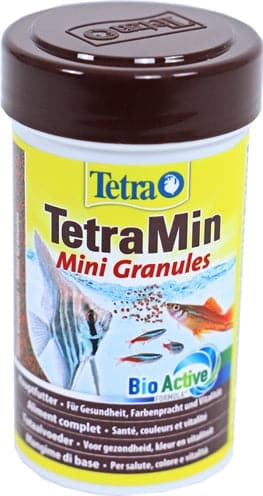
Tetra Min Minigranules Fish food 100 ml
Complete fine granules for small tropical freshwater fish. Softens quickly and sinks slowly through midwater. Offer small amounts and check that each neon can swallow the granules.
Check retailer for price0 retailers
Compare prices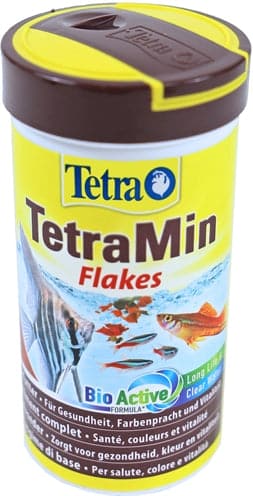
Tetramin Bio Active Vlokken Fish food 100 ml
Complete flake food also recommended for neon tetras. Crumble large flakes for their small mouths and briefly moisten them so fish can take them in midwater.
Check retailer for price0 retailers
Compare pricesSupplementary foods
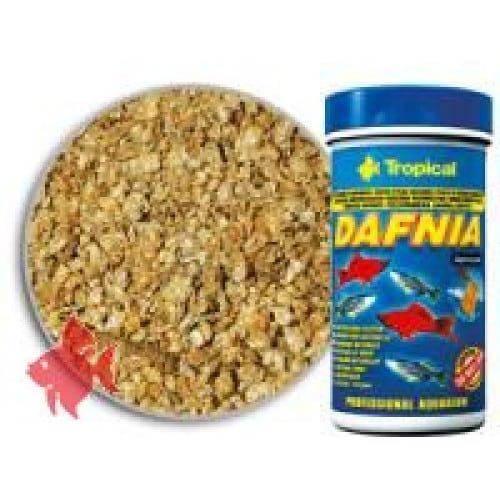
Tropical Dafnia 100ml
Dried daphnia as an occasional animal-food supplement for omnivorous neons. Crumble larger pieces and briefly soak them for easy access and swallowing. Offer alongside staple food, not as a complete diet.
Check retailer for price1 retailers
Compare pricesWater testing and equipment
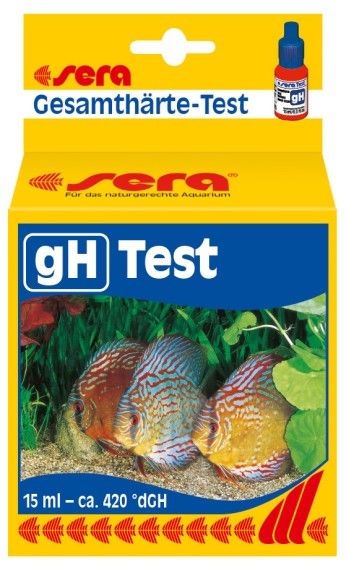
Sera - GH test
For checking a water parameter in this care guide. Follow the manufacturer’s test instructions; a test is not a treatment recommendation.
Check retailer for price0 retailers
Compare pricesPrices from the latest retailer update, excluding shipping. Check stock and delivery with the retailer.
Sources & review
This care guide draws on several specialist sources and was last checked on .