Red root floater
Phyllanthus fluitans

The red root floater (Phyllanthus fluitans) lives at the water surface and forms small groups with round to heart-shaped leaves and hanging roots. The red colored roots and leaves can be especially noticeable, but a greener plant can also be healthy. The species provides small fish with shelter from above and can soften bright light locally. It requires a different approach than ground plants: the leaves must be able to remain on top of the water and must not be constantly pushed under by currents. CO₂ from a gas installation is not necessary for this floating plant, because the leaves have access to the air. Limit the coverage before the entire surface becomes closed. This preserves light for lower plants, feeding areas and access to the surface.
Plan your aquarium →At a glance
- Difficulty
- Easy
- Plant height
- 1–5 cm
- Growth rate
- Fast
- Placement
- Floating
- Temperature
- 20–28 °C
- pH
- 5.0–8.0
- Light
- Moderate, High
- CO₂
- CO₂ injection not needed
- Nutrient uptake
- Through the water column
- Root fertilisation
- Not necessary
- Attachment
- Free floating; no substrate attachment
- Propagation
- Division
About this plant
The plant has floating, water-repellent leaves and forms hanging roots. Small white flowers may appear under suitable conditions. The central height of 1–5 cm describes growth around the surface and is not maximum root length. The color varies with conditions. Do not confuse this species with Salvinia, which has a different leaf structure. The scientific name is therefore more useful than just the designation 'red floating plant' when purchasing.
Natural habitat
Botanical sources mention a distribution from Mexico to tropical South America. The floating lifestyle belongs to water surfaces where the plant can remain without constantly going under. In an aquarium this does not mean that the entire water has to stand still. Choose a sheltered part of the surface while the rest of the container maintains adequate circulation. A strong filter outlet directly under the plant group can keep the leaves wet and submerged at all times.
Placement in the aquarium
Place healthy plants loose on a quiet part of the surface. Do not plant them in the ground or tie the roots to wood. Use 20–28 °C and pH 5–8 as the central care band. Keep space around the filter outlet and feeding area. In a closed aquarium, it should also be checked whether the leaves are constantly hit by condensation or splashing water. The location on the surface is more important than the depth of the soil.
Light
Medium to high light suits a compact, more strongly colored presentation. The species may remain greener in lower light; that in itself is not a defect. Because the leaves are close to the lamp, settings for ground plants should not be adopted blindly. Assess warmth, distance and the development of new leaves. Regularly remove some of the floating plants so that lower species are not unexpectedly placed in deep shade.
CO₂
Extra CO₂ is not necessary for this floating plant. The leaves take carbon from the air, while the roots hang in the water. A gas installation for other plants may be present, but is not recommended as a care product for this species. Make sure that the leaves maintain their floating position. Constantly submerged plants are not helped by more CO₂ in the water; the location and flow must first be adjusted.
Nutrition and fertilisation
The roots absorb nutrition from the water column. Rapid expansion may consume nutrients, but does not make the plant a substitute for water changes or a good filter. Check whether the available fertilizer supplies all the necessary substances. A trace element product without nitrate and phosphate is not automatically a complete nutrient supply. Only add loose main nutrients after assessing the existing supply. Removing excess plants keeps the group manageable and removes absorbed substances.
Substrate and root feeding
A soil or root tablet is not necessary: the roots should hang freely in the water. Do not tie them down or press them into soil to keep the plant in one place. A secure, aquarium-suitable surface barrier can help keep the group out of the filter flow, as long as fish cannot become trapped. Always leave a clear open area and an accessible feeding zone.
Growth and pruning
Thin the group as soon as several layers overlap or lower plants receive too little light. Especially remove damaged and poorly growing parts. Do not pull hard on roots that have become stuck between wood or other plants; carefully loosen the group. Also check if roots are approaching the filter inlet. A small healthy group is easier to maintain than a completely closed deck that is only removed after problems.
Propagation
The species expands vegetatively through connected young plants. Healthy clumps can be carefully separated when they have independent leaves and roots. Then allow small parts to slowly recover to the surface. Dividing is usually easier than consciously trying to obtain flowers or seeds. Keep excess plants out of outdoor waters and only supply them with the correct name to other aquarium keepers. A loose fragment does not have to be returned to the container when the desired coverage has already been achieved.
Suitable fish and animals
Small fish can take shelter under the roots, while surface dwellers must maintain an open breathing and feeding area. With a Betta, gentle surface movement is practical, but the water surface should never become completely inaccessible. Neon tetras can benefit from local shading at appropriate values. Check that shade is not at the expense of ground plants that require light. The suitability therefore also depends on the rest of the aquarium setup, not just on temperature and pH.

Neon tetra
Suitable with conditionsThis floating plant provides overhead shade and root cover. Limit coverage to part of the surface, keep feeding areas open and prevent the filter outlet from submerging the leaves. Retain the neon tetra school and calm, shaded swimming space.
View species profile →
Ember tetra
Suitable with conditionsThis floating plant provides overhead shade and root cover. Limit coverage to part of the surface, keep feeding areas open and prevent the filter outlet from submerging the leaves. Ember tetras need a school and calm sheltered zones; do not brightly illuminate the entire aquarium.
View species profile →
Siamese fighting fish
Suitable with conditionsThis floating plant provides overhead shade and root cover. Limit coverage to part of the surface, keep feeding areas open and prevent the filter outlet from submerging the leaves. For Betta, always retain a clear route to air at the surface. Avoid strong surface flow and assess tankmates separately.
View species profile →Possible problems
Brown or rotting leaves may be associated with constant wetting, submergence, damage or an inappropriate light and nutrient balance. Check the location before adding extra food. A greener color does not need to be corrected as long as new leaves are growing vigorously. When roots die en masse, remove loose debris and examine recent changes. If the filter flow continues to push the plant down, choose a quieter zone or another plant instead of switching off the circulation everywhere.
Care for this plant
Plant fertiliser
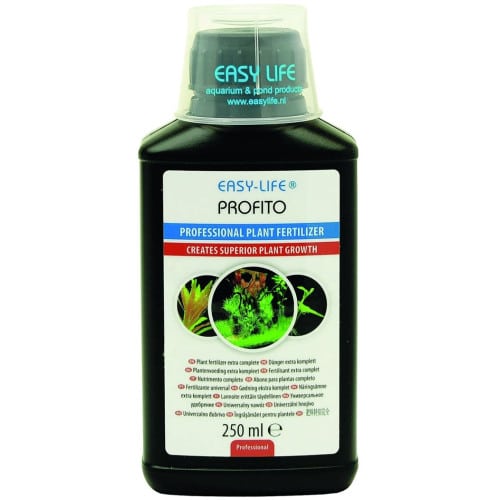
Easy Life ProFito 250ml
OptionalLiquid potassium and trace nutrients available through the water. Contains no nitrate or phosphate. Adapt supplementation to existing nutrients and plant growth; no automatic extra dosing.
Check retailer for price0 retailers
Compare prices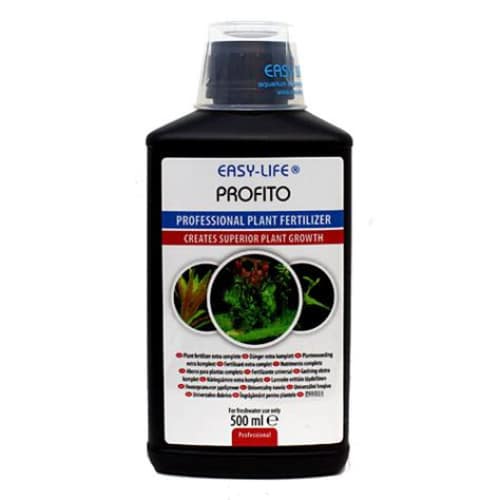
Easy Life ProFito 500ml
OptionalAn optional suitable product type; use according to manufacturer instructions and measured need.
Check retailer for price0 retailers
Compare pricesTools
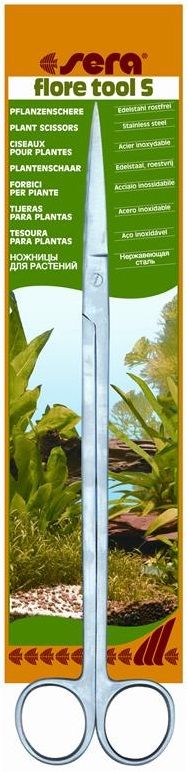
Sera Flore Tool S plantenschaar
OptionalOptional plant scissors for selective pruning or removing damaged parts. Protect growing points; gentle hand thinning is usually sufficient for floating plants.
Check retailer for price0 retailers
Compare pricesPrices from the latest retailer update, excluding shipping. Check stock and delivery with the retailer.
Lighting has been investigated but is not yet linked: available specifications do not adequately establish light class and coverage at plant depth.
Sources & review
This care guide draws on several specialist sources and was last checked on .