Ram cichlid
Mikrogeophagus ramirezi

The ram cichlid combines blue spangling, dark markings and an expressive dorsal fin in a small cichlid body. Mikrogeophagus ramirezi is often offered beside ordinary community fish, but deserves a more deliberate aquarium plan. This Orinoco-region species needs warm water and is sensitive to unstable conditions. A mature, quiet setup matters more than a newly started tank displaying apparently perfect numbers. Rams search for food near the bottom and may defend a territory during parental care. Two randomly purchased fish do not automatically form a harmonious pair. Choose compatible individuals, provide broken sightlines and retain a way to separate them. The main restriction on tankmates is sustained warm maintenance: a fish that temporarily tolerates the same temperature is not necessarily a suitable permanent companion.
Plan your aquarium →At a glance
- Temperature
- 27–30 °C
- pH
- 5.5–7.0
- GH
- 1–6 °dGH
- Aquarium length
- At least 60 cm
- Minimum aquarium volume
- At least 54 L
- Adult size
- Approximately 4–5 cm
- Group size
- 2 individuals
- Swimming zone
- Bottom
- Temperament
- Territorial
- Lighting preference
- Subdued lighting
- Cover
- Plants and sheltered areas
- Staple food
- Small granules, Fine flakes
- Supplementary food
- Live food, Frozen food, Finely crumbled dried natural food
Specialist sources cite 60 × 30 × 30 cm, around 54 litres gross, as a lower limit for a compatible pair. Prefer at least 80 cm and around 100 litres or more: extra floor area helps retreat and territory formation.
About this species
Adults measure roughly 4–5 cm, depending on sex and the length convention used. The dark flank blotch, eye stripe and blue spangling aid recognition. Do not confuse the species with the usually larger Bolivian ram, which has different care priorities. In ordinary colour forms a pink belly may suggest a female, but juveniles and selected varieties cannot always be sexed reliably this way.
Electric-blue and other colour forms still need warm, clean water. Choose well-built fish with calm breathing, adequate body condition and demonstrated feeding. Attractive colour alone says little about condition after transport or whether two individuals will accept one another as partners.
Natural habitat
The natural range lies in the Orinoco region of Colombia and Venezuela, including the seasonal llanos landscape. Shallow warm waters, quiet margins and cover change with rainfall and flooding. Sand or fine bottom material provides feeding opportunities, while plants, roots and scattered shelter create escape routes. Translate these features into a warm aquarium with open sand and interrupted sightlines, not a bare breeding tank as permanent housing.
Naturally occurring low oxygen or fluctuating conditions are not aquarium targets. Gas exchange remains especially important at higher temperatures. Stable maintenance values are used here without implying that every wild population and captive strain requires exactly the same water recipe.
Aquarium and layout
Specialist sources cite 60 × 30 × 30 cm, around 54 litres gross, as a lower limit for a compatible pair. Prefer at least 80 cm and around 100 litres or more: extra floor area helps retreat and territory formation. Companions require further space; the smaller setup is not a community recommendation. Provide fine sand, low visual barriers, wood and a few flat stones.
Keep feeding patches accessible and avoid forceful bottom currents. Mature biological filtration and stable heating are essential. Even a larger aquarium needs a separation option for a repeatedly harassed fish; litres do not repair an incompatible pairing.
Water conditions
Choose 27–30 °C, pH 5.5–7 and approximately 1–6 °dGH. This is appreciably warmer than routine neon tetra maintenance. Some sources give lower temperature limits, but these are not used to justify permanent cool community housing. No unsupported separate KH target is added.
Very soft water requires careful pH stability rather than abrupt correction. Ammonia and nitrite should be undetectable. Make regular matched partial changes and limit accumulating waste. At these temperatures, support oxygen exchange without subjecting the fish to a strong current.
Behaviour and group size
An established pair may cooperate but becomes territorial around eggs or fry. Simply having two individuals does not demonstrate a pair bond. Watch for a fish trapped in a corner, excluded from feeding or denied resting cover. Other bottom dwellers may repeatedly enter the defended area.
Tiny shrimps and fry can be eaten. Plants are not normally destroyed as food, although bottom disturbance may affect loose cuttings. Assess every pairing through warmth, floor area, feeding competition and breeding behaviour. Cards concern separate combinations, not a proposal to add every listed species to the pair.
Feeding
Rams take many small animal food items near the substrate. Use a complete fine food that sinks sufficiently and is demonstrably accepted. Newly acquired fish may hesitate over dry food; check their actual intake rather than merely whether food disappears. Small live or thawed prey provide useful variety.
Dried Daphnia is only supplementary and may need soaking to reach the feeding area. Divide small daily rations among quiet locations. Oversized particles, fast companions and food remaining at the surface can cause shortages even when a product appears suitable in principle.
Breeding
A compatible pair may lay eggs on a stone or other flat surface. Both parents can tend eggs and fry, increasing territorial pressure on neighbours. Inexperienced or disturbed parents may lose or eat a clutch; this is not an automatic reason for medication. A separate quiet breeding aquarium is safer than a busy community.
After using their yolk, fry require suitably tiny live food, such as appropriate Artemia nauplii. Prepare food and space beforehand and maintain warm, stable water quality. Repeatedly moving parents or broods to force a result is counterproductive.
Keeping with other species

Neon tetra
Not recommendedThe recommended 27–30 °C for rams exceeds this neon guide’s range. Do not use a permanent temperature compromise. A breeding pair also defends a bottom territory; extra litres do not resolve the temperature mismatch.
View species profile →
Pygmy cory
Not recommendedThe ram’s 27–30 °C is above the cory’s chosen maintenance range. They also share the bottom, where breeding rams defend territory.
View species profile →
Harlequin rasbora
Not recommendedRams need sustained 27–30 °C; this guide uses 23–26 °C for routine harlequin care. Do not stretch the recommendation merely to permit a pairing.
View species profile →
Ember tetra
Not recommendedHeat and territory make this a poor choice: rams 27–30 °C, embers here 23–26 °C. Tiny tetras should not face brood defence.
View species profile →
Siamese fighting fish
Not recommendedBoth can be territorial, with different hardness choices and space use. A slow betta and breeding ram pair create unnecessary risk.
View species profile →
Freshwater angelfish
Suitable with conditionsOnly in a spacious plan, preferably 150 cm and around 450 litres, with distinct bottom territories and separation options. 27–28 °C, pH 6–7 and GH 3–6 overlap; both may defend broods.
View species profile →
Rummy-nose tetra
Not recommendedThe selected rummynose range ends below the ram’s long-term warm regime. Forcing a boundary is poor practice; both require excellent water quality.
View species profile →Suitable plants

Dwarf Anubias
Attached Anubias remains secure during sand foraging. Choose 27–28 °C for this pairing; optimal plant growth at 30 °C is not claimed.
- Light
- Low, Moderate
- CO₂
- CO₂ injection not needed

Java fern
Wood-mounted Java fern provides a visual barrier without loose cuttings in the feeding area. Use 27–28 °C for joint maintenance.
- Light
- Low, Moderate
- CO₂
- CO₂ injection not needed
Suitable products
Recommended staple foods
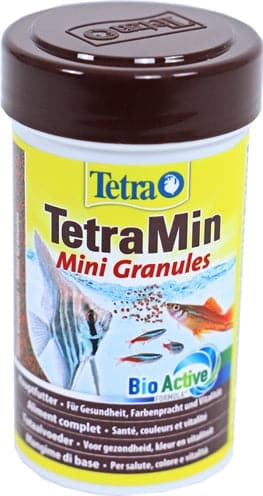
Tetra Min Minigranules Fish food 100 ml
Fine complete food only when the ram demonstrably accepts it. Let particles reach the quiet bottom feeding area and vary the diet.
Check retailer for price0 retailers
View retailersSupplementary foods
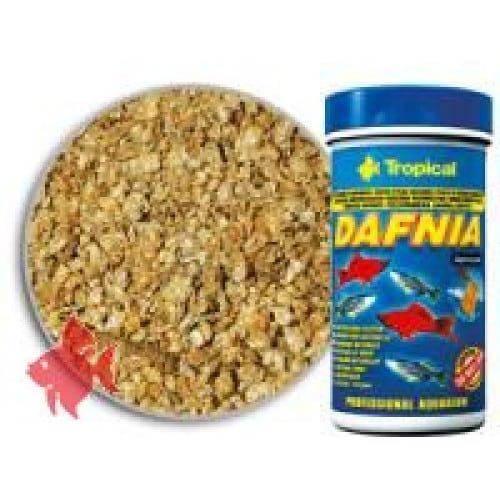
Tropical Dafnia 100ml
Briefly soak and target-feed near the bottom; check intake. Supplement to accepted complete food only.
Check retailer for price0 retailers
View retailersWater testing and equipment
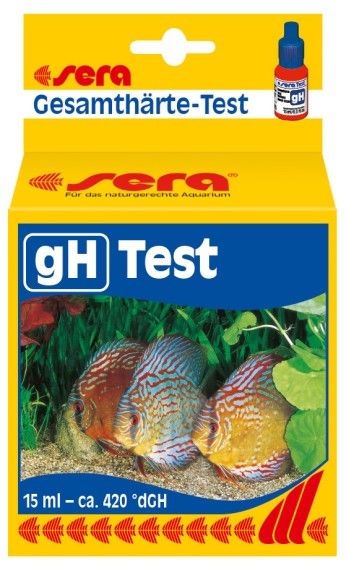
Sera - GH test
For checking a water parameter in this care guide. Follow the manufacturer’s test instructions; a test is not a treatment recommendation.
Check retailer for price0 retailers
View retailersPrices from the latest retailer update, excluding shipping. Check stock and delivery with the retailer.
Sources & review
This care guide draws on several specialist sources and was last checked on .