Harlequin rasbora
Trigonostigma heteromorpha

The harlequin rasbora combines a copper-pink body with a broad black triangle on the rear flank. In a generous group these lively fish explore midwater without remaining in a permanently tight school. Trigonostigma heteromorpha comes from Southeast Asia and benefits from sheltered planted margins alongside clear swimming lanes. It is usually an approachable aquarium species when its group is large enough and the aquarium is mature. However, it grows larger and feeds more assertively than an ember tetra. That difference matters just as much as overlapping water requirements when choosing companions. Plan at least ten individuals, subdued lighting and sufficient tank length. Its unusual habit of laying eggs beneath leaves adds interest, but sound everyday care should come before any attempt to breed it.
Plan your aquarium →At a glance
- Temperature
- 23–26 °C
- pH
- 6.0–7.0
- GH
- 5–10 °dGH
- Aquarium length
- At least 60 cm
- Minimum aquarium volume
- At least 54 L
- Adult size
- Approximately 4–5 cm
- Group size
- At least 10 individuals
- Swimming zone
- Middle
- Temperament
- Peaceful
- Lighting preference
- Subdued lighting
- Cover
- Plants and sheltered areas
- Staple food
- Small granules, Fine flakes
- Supplementary food
- Live food, Frozen food, Finely crumbled dried natural food
Use 60 cm length and approximately 54 litres gross as a lower limit for a dedicated group. Prefer 80 cm and around 100 litres, particularly with companions.
About this species
Expect adults to reach roughly 4–5 cm. The broad dark wedge separates this fish from slimmer relatives such as Trigonostigma espei and T. hengeli. T. truncata also resembles it, so a common name alone is not a complete identification. Choose recognisable, healthy fish from a reliable group.
Females tend to be fuller and males slimmer, but colour and wedge shape do not always establish sex with certainty. Modern classifications place the fish in Danionidae; older accounts often use Cyprinidae. Ornamental colour forms still need the same fundamentals: companions of their own species, swimming space and suitable water. A different colour is not evidence of different social requirements.
Natural habitat
The known range includes the Malay Peninsula, Singapore and Bintan. Sheltered forest waters offer gentle flow, shade and structure along the margins. Organic material may stain the water, but this does not mean every aquarium population needs extremely acidic blackwater. Related fishes from the same region must not automatically be treated as this species.
Translate the useful habitat features into a dark background, planted edges, roots and open water between them. Gentle surface movement maintains gas exchange. Leaf litter is optional and requires controlled maintenance rather than replacing it. The linked plants provide functional shelter; their inclusion does not claim that they all grow together at one natural collection site.
Aquarium and layout
Use 60 cm length and approximately 54 litres gross as a lower limit for a dedicated group. Prefer 80 cm and around 100 litres, particularly with companions. Preserve a clear swimming lane: a densely packed tank cannot compensate for missing space through its nominal volume. Fine substrate, wood and robust leaves provide cover.
Soften lighting with plants without sealing the surface. A mature filter with moderate output is preferable to forceful flow throughout the aquarium. Fit a lid, stock only after ammonia and nitrite are undetectable, and feed cautiously at first.
Water conditions
Our routine maintenance range is 23–26 °C, pH 6–7 and approximately 5–10 °dGH. Specialist sources list broader limits, but their extremes are not everyday targets. Wild-caught fish or breeding projects may need softer water and separate assessment.
A specific KH minimum is not sufficiently established to prescribe here. With soft water, monitor stability and match replacement water carefully. Do not maintain unusually high temperatures simply to make a pairing with a warm-water cichlid appear suitable.
Behaviour and group size
At least ten allow social choice and distribute attention. Brief displaying or chasing can occur, but a persistently excluded fish needs attention. Harlequins are generally peaceful and plant-safe, although tiny shrimplets may be eaten.
Their efficient feeding requires care alongside ember tetras or pygmy corys: distribute food and watch the smaller fishes. A full-grown harlequin is less vulnerable than a tiny tetra, but is not automatically safe with a large cichlid. Each compatibility card assesses a separate pairing rather than proposing one combined community.
Feeding
A complete small granule or appropriately crushed flake can form the staple diet. Choose particles swallowed readily rather than repeatedly spat out. Offer small quantities once or twice daily and watch less confident individuals. Small live or thawed invertebrates provide variety.
Dried Daphnia is supplementary: break down oversized pieces and do not use it as the entire diet. These fish feed readily in midwater and at the surface. Bottom dwellers therefore need their own targeted ration rather than reliance on accidental leftovers.
Breeding
The pair turns beneath broad leaves to attach adhesive eggs to their undersides. There is no dependable parental care and adults may eat the eggs. Deliberate breeding normally uses a separate quiet aquarium, suitable leaves and soft, mildly acidic water. Breeding conditions are not mandatory everyday maintenance targets.
Remove the parents after spawning if raising fry. First foods must be very small, with suitable nauplii introduced later. Protect eggs and larvae from strong currents and filter intakes while maintaining water quality without abrupt changes.
Keeping with other species

Neon tetra
SuitableA peaceful shoaling fish without a usual predation risk to adult neons. Keep eight to ten or more of its own kind. Both use midwater: provide swimming length and planted edges. 23–25 °C and soft, slightly acidic water suit both.
View species profile →
Pygmy cory
Suitable with conditionsPeaceful groups, but harlequins feed faster. At least 80 cm, ten of each, 23–26 °C and pH 6.4–7. Target-feed the corys.
View species profile →
Ember tetra
Suitable with conditionsHarlequins are larger and quicker at meals. Use at least 80 cm, separate groups of ten or more and sheltered feeding spots; watch ember intake.
View species profile →
Siamese fighting fish
Suitable with conditionsOnly with a demonstrably calm betta, at least 80 cm, dense visual barriers and spare housing. 24–26 °C and GH 8–10 fit, but activity and feeding competition remain risks.
View species profile →
Ram cichlid
Not recommendedRams need sustained 27–30 °C; this guide uses 23–26 °C for routine harlequin care. Do not stretch the recommendation merely to permit a pairing.
View species profile →
Freshwater angelfish
Suitable with conditionsOnly full-grown, sufficiently large harlequins in a spacious angel setup, preferably 150 cm and around 450 litres. Juveniles face predation; assess both groups, feeding areas and territories.
View species profile →Suitable plants

Java fern
Robust leaves and soft shade at the margins, with a clear group swimming lane. Java fern can grow without injected CO₂.
- Light
- Low, Moderate
- CO₂
- CO₂ injection not needed

Green wendtii crypt
A marginal Cryptocoryne group provides cover without filling midwater. Root in the substrate; a practical planting, not an exact biotope.
- Light
- Low, Moderate
- CO₂
- CO₂ injection not essential

Amazon sword
Broad leaves provide cover, but the mature rosette can occupy considerable space. Use a spacious rear corner, preserve swimming length and an open feeding area, and account for mature leaf height. Preserve uninterrupted swimming length for the harlequin rasbora school.
- Light
- Low, Moderate
- CO₂
- CO₂ injection not essential

Roundleaf rotala
This pairing needs separate light zones: illuminate the Rotala while retaining shaded shelter and open swimming space for the fish. Trim before the stems form a closed canopy. Red colour is not required for healthy growth. Preserve uninterrupted swimming length for the harlequin rasbora school.
- Light
- Moderate, High
- CO₂
- CO₂ injection not essential
Suitable products
Recommended staple foods
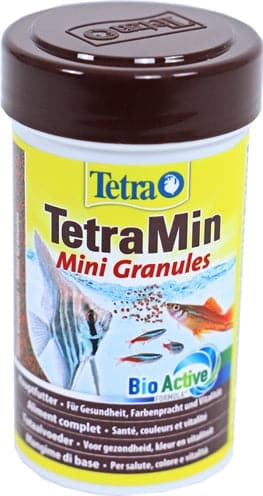
Tetra Min Minigranules Fish food 100 ml
Fine complete granules for small freshwater fish. Check swallowing and distribute the ration across the group.
Check retailer for price0 retailers
Compare prices
Tetramin Bio Active Vlokken Fish food 100 ml
Complete flakes, reduced to readily swallowed pieces. Suits midwater feeding; reserve separate food for bottom dwellers.
Check retailer for price0 retailers
Compare pricesSupplementary foods
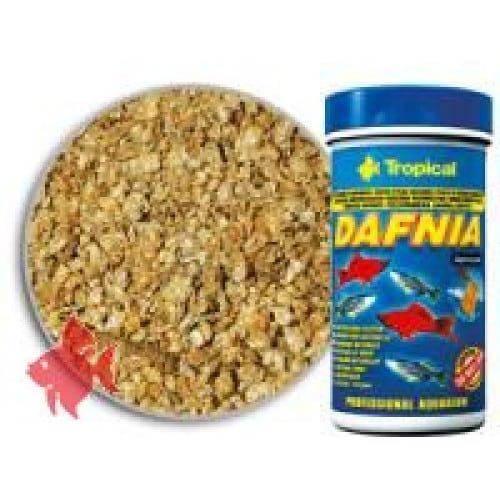
Tropical Dafnia 100ml
Small animal supplement; crumble oversized pieces. Does not replace complete granules or flakes.
Check retailer for price1 retailers
Compare pricesWater testing and equipment
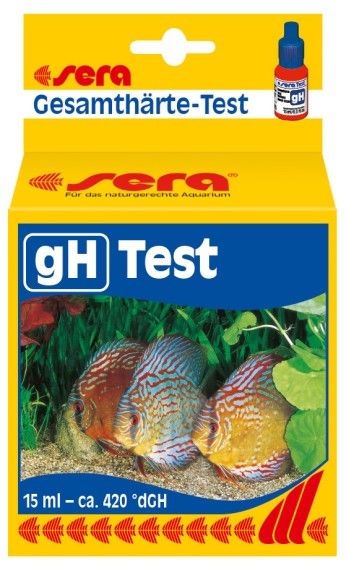
Sera - GH test
For checking a water parameter in this care guide. Follow the manufacturer’s test instructions; a test is not a treatment recommendation.
Check retailer for price0 retailers
Compare pricesPrices from the latest retailer update, excluding shipping. Check stock and delivery with the retailer.
Sources & review
This care guide draws on several specialist sources and was last checked on .