Dwarf Anubias
Anubias barteri var. nana

Dwarf Anubias (Anubias barteri var. nana) has firm, dark green leaves on a creeping rhizome. Slow growth makes it manageable among rocks and aquarium wood, but it still needs considered care. Long-lived leaves can collect algae under excessive light. Attachment is the key decision: keep the rhizome above the substrate and allow time for the roots to grip. Added CO₂ is not needed for ordinary care. Modest, appropriate fertilisation may help, with dosing based on the whole aquarium rather than the number of leaves. This is a structural plant for a calm layout, not a fast-growing nutrient sponge.
Plan your aquarium →At a glance
- Difficulty
- Easy
- Plant height
- 5–10 cm
- Growth rate
- Slow
- Placement
- On wood or rock, Foreground
- Temperature
- 22–28 °C
- pH
- 5.0–9.0
- Light
- Low, Moderate
- CO₂
- CO₂ injection not needed
- Nutrient uptake
- Through the water column
- Root fertilisation
- Not necessary
- Attachment
- Wood or rock
- Propagation
- Rhizome division
About this plant
The thick horizontal rhizome is the growing stem, distinct from the thin roots beneath it. New leaves and roots emerge from it. Nana identifies this small aquarium form of Anubias barteri. Kew treats the variety name as a synonym within that species; both names remain registered. Do not confuse it with even smaller named selections.
Natural habitat
This Anubias originates from tropical Africa; the nana form is associated with Cameroon. Its growth around wet margins helps explain its suitability for shade and attachment. Aquarium wood is a practical layout choice, not evidence of a shared natural habitat with South American fish. It can grow submerged, although leaves raised above water may need to adapt after purchase.
Placement in the aquarium
Use 22–28 °C and pH 5–9 as broad cultivation guidance, not targets to chase. Typical leaf height is 5–10 cm; older specimens may become larger. Attach loosely to wood or rock without constricting the growing tip. Roots may enter the substrate, but never cover the rhizome with sand or gravel. Leave room between plants for maintenance and water movement.
Light
Low to moderate light is sufficient. Taller plants can provide partial shade, without leaving the Anubias in complete darkness. Intense light cannot indefinitely accelerate slow growth and can encourage algae on old leaves. A general start-up approach is 6 hours, gradually increasing to 8 hours when growth is stable. This is not a measured species requirement or a substitute for appropriate intensity.
CO₂
Injected CO₂ is not needed for healthy, slow growth. Naturally available carbon can suffice under modest lighting. The plant can also grow in an aquarium that already uses CO₂, but that does not justify buying an installation solely for it. Avoid simultaneously increasing light and fertiliser to force growth; the animals and the aquarium’s stability come first.
Nutrition and fertilisation
An attached plant benefits from nutrients available in the water. These include nitrogen, phosphorus and potassium, plus small amounts of trace elements such as iron. Demand depends on stocking, water changes and other plants. A yellow leaf does not establish an iron deficiency. Check new growth and conditions first. A fertiliser without nitrate or phosphate does not replace those nutrients.
Substrate and root feeding
Nutrient soil is not a primary requirement for an Anubias growing on wood. Root tablets beneath it are not the main solution if its roots cannot reach that layer. The support should provide a stable anchor. Avoid repeatedly detaching the plant. If the rhizome becomes soft and dark, check for burial, injury or decay and carefully remove affected tissue.
Growth and pruning
Slow growth is normal: assess progress over time rather than expecting new leaves daily. Remove badly damaged or heavily algae-covered leaves at the leaf stalk with clean scissors. Retain healthy foliage and protect the growing tip. Gently remove loose debris while supporting the plant. Prevent faster neighbours from completely covering it.
Propagation
Divide a healthy, sufficiently large rhizome, leaving each portion several sound leaves and roots. Use clean tools and reattach the sections without burying the cut surface. An isolated cut leaf does not automatically become a complete new plant. Allow a recently moved or weakened specimen to recover before dividing it.
Suitable fish and animals
Small peaceful fish can use the leaves as cover, while shrimp and snails graze their surfaces. Tough leaves resist damage better than fine stem foliage, but large diggers and herbivores can still disturb the plant. Secure the hardscape. A suitable plant does not compensate for insufficient tank space, unsuitable temperatures or incompatible fish.

Neon tetra
SuitableTolerates subdued light and provides low cover around wood. Suits 23–25 °C and slightly acidic water. Attach to wood or stone; do not bury the rhizome.
View species profile →
Pygmy cory
SuitableBroad leaves provide sheltered rests above fine sand. Low light, no essential CO₂; attach the rhizome to wood and keep feeding areas clear.
View species profile →
Ember tetra
SuitableLow broad leaves create shaded retreats for tiny embers. Gentle lighting; keep the rhizome above the substrate.
View species profile →
Siamese fighting fish
SuitableAttach Anubias higher on wood for a resting leaf near the surface. Gentle flow and open breathing access remain essential.
View species profile →
Ram cichlid
SuitableAttached Anubias remains secure during sand foraging. Choose 27–28 °C for this pairing; optimal plant growth at 30 °C is not claimed.
View species profile →
Rummy-nose tetra
Suitable with conditionsLeave a long rummynose swimming lane in front. Sturdy Anubias leaves provide sheltered surfaces. Attach the rhizome to wood without burying; gentle light, no compulsory CO₂. Shared profile: 24–26 °C; pH 6–6.5.
View species profile →
Bigspot otocinclus
Suitable with conditionsAllow safe biofilm on leaves; plants alone do not prove sufficient nutrition. Sturdy Anubias leaves provide sheltered surfaces. Attach the rhizome to wood without burying; gentle light, no compulsory CO₂. Shared profile: 23–26 °C; pH 6–7.5.
View species profile →
Cherry shrimp
SuitableSturdy Anubias leaves and roots provide grazing surfaces and shelter. Attach the rhizome rather than burying it.
View species profile →
Bee shrimp
SuitableSturdy Anubias leaves and roots provide grazing surfaces and shelter. Attach the rhizome rather than burying it.
View species profile →
Tiger shrimp
SuitableSturdy Anubias leaves and roots provide grazing surfaces and shelter. Attach the rhizome rather than burying it.
View species profile →
Amano shrimp
SuitableSturdy Anubias leaves and roots provide grazing surfaces and shelter. Attach the rhizome rather than burying it.
View species profile →
Bamboo shrimp
SuitableSturdy Anubias leaves and roots provide grazing surfaces and shelter. Attach the rhizome rather than burying it.
View species profile →
African giant fan shrimp
SuitableSturdy Anubias leaves and roots provide grazing surfaces and shelter. Attach the rhizome rather than burying it.
View species profile →
Horned nerite
SuitableSturdy Anubias leaves and roots provide grazing surfaces and shelter. Attach the rhizome rather than burying it.
View species profile →
Zebra nerite
SuitableSturdy Anubias leaves and roots provide grazing surfaces and shelter. Attach the rhizome rather than burying it.
View species profile →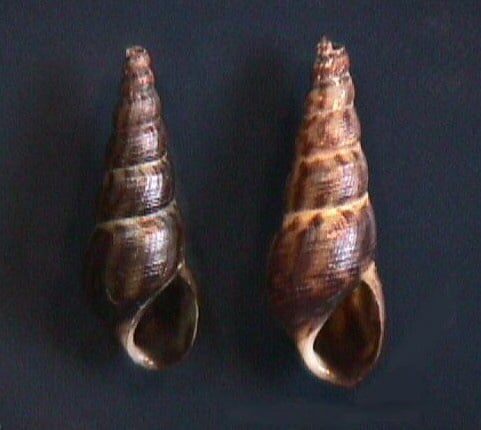
Malaysian trumpet snail
Suitable with conditionsSturdy Anubias leaves and roots provide grazing surfaces and shelter. Attach the rhizome rather than burying it. Anchor new plants; burrowing or movement may dislodge loose roots.
View species profile →
Ramshorn snail
SuitableSturdy Anubias leaves and roots provide grazing surfaces and shelter. Attach the rhizome rather than burying it.
View species profile →
Matano rabbit snail
Suitable with conditionsSturdy Anubias leaves and roots provide grazing surfaces and shelter. Attach the rhizome rather than burying it. Retain open sand for the long shell; a dense carpet is less useful here.
View species profile →
Orange Mexican dwarf crayfish
Suitable with conditionsSturdy Anubias leaves and roots provide grazing surfaces and shelter. Attach the rhizome rather than burying it. Anchor new plants; burrowing or movement may dislodge loose roots.
View species profile →Possible problems
Algae on older leaves calls for checking light duration, position, debris and overall plant growth. Extra iron or CO₂ is not an automatic cure. After purchase, confirm that the rhizome remains firm and exposed if leaves decline. Healthy new leaves matter more than damaged old ones. Follow product instructions rather than applying treatments directly, and remove pruning debris.
Care for this plant
Plant fertiliser
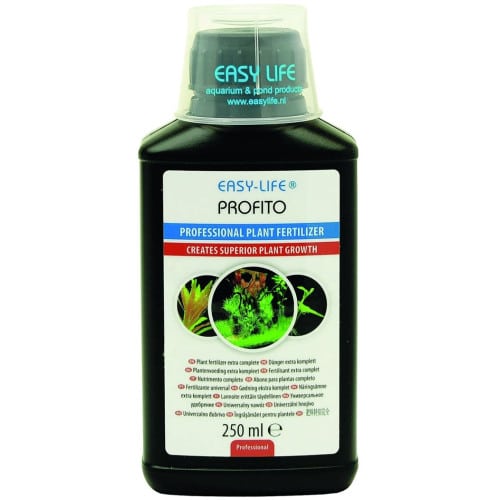
Easy Life ProFito 250ml
OptionalLiquid potassium and trace nutrients for this slow epiphyte. Contains no nitrate or phosphate; dose for the whole tank.
Check retailer for price0 retailers
Compare prices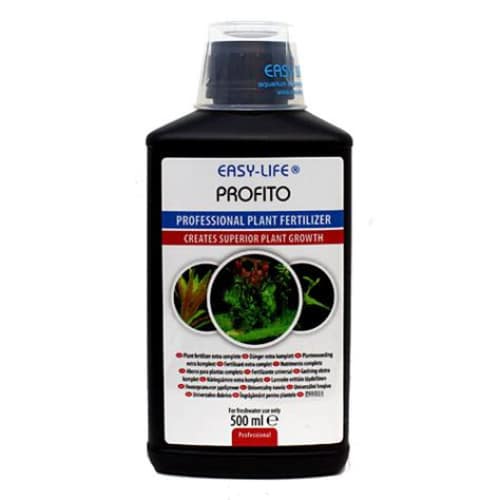
Easy Life ProFito 500ml
OptionalAn optional suitable product type; use according to manufacturer instructions and measured need.
Check retailer for price0 retailers
Compare pricesTools
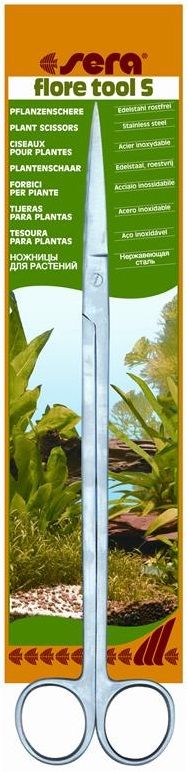
Sera Flore Tool S plantenschaar
OptionalScissors to remove damaged leaves near their base while protecting the growing point.
Check retailer for price0 retailers
Compare pricesPrices from the latest retailer update, excluding shipping. Check stock and delivery with the retailer.
Lighting has been investigated but is not yet linked: available specifications do not adequately establish light class and coverage at plant depth.
Sources & review
This care guide draws on several specialist sources and was last checked on .