Horned nerite
Clithon corona

The horned nerite is a small grazer for aquaria with established natural growth. Clithon corona finds food on glass, wood, stones and plant leaves. Its shell spines are distinctive, although their number and shape vary. Do not buy it as an automatic solution for a newly set up or algae-free tank. It must find real food rather than merely crawl among attractive ornaments. Unlike ramshorn snails, it does not establish a self-reproducing colony in an ordinary freshwater aquarium. Egg capsules may nevertheless appear on hard surfaces. This guide addresses adult care.
Plan your aquarium →At a glance
- Temperature
- 22–28 °C
- pH
- 7.0–8.5
- GH
- 5–22 °dGH
- KH
- 3–12 °dKH
- Difficulty
- Easy
- Diet
- Herbivore
- Plant safety
- Yes
- Minimum aquarium volume
- At least 20 L
- Adult size
- Approximately 1–2.5 cm
- Swimming zone
- Bottom
- Temperament
- Peaceful
- Cover
- Suitable plants, Wood
Figures are cautious husbandry guidance, not a full stocking calculation. Missing values are insufficiently supported. Read layout, water and pairing conditions together.
About this species
Clithon corona belongs to Neritidae and usually remains around one to two centimetres. Shells show varied dark, yellow or greenish patterns. Spines may be small or broken, so counting horns is not a conclusive identification. Trade names such as Sun Snail also cover related snails. Clithon diadema and other species are not silently treated as synonyms here. The source identifies the photograph as Clithon corona and records an animal from the Philippines.
Natural habitat
The species occurs in the Indo-Pacific region, including freshwater and brackish environments in Southeast Asia. Its life cycle involves larval development beyond exclusively freshwater conditions. In an aquarium, stability, oxygen and edible growth are the practical priorities. Provide hard grazing surfaces and retain some established growth when cleaning others. Absence of visible algae does not necessarily mean no food, but adequate nutrition must not be assumed without observation.
Aquarium and layout
A mature aquarium from about 20 litres can be a starting point for one small animal if grazing surfaces provide enough food. Litres alone do not determine stocking. Adding many snails to clear glass faster can leave too little food afterwards. Use stable stones and accessible leaves. Snails may climb above water, so limit escape routes. Protect them when cleaning glass and intakes; do not force an attached animal from its surface.
Water conditions
About 22–28 °C and neutral to slightly alkaline water fit common maintenance advice. Avoid prolonged acidic, very low-mineral conditions if shell erosion develops. GH and KH help describe the environment, but a single figure cannot fully explain shell condition. Choose stable conditions within the central ranges and ask about source water. Large rapid hardness corrections are not an appropriate attempt to repair damage. No exact species-specific conductivity target is provided.
Behaviour and group size
This peaceful snail has no schooling or fixed social-group requirement. Numbers should primarily reflect food availability. Allow quiet acclimation and check grazing on different surfaces. Remaining closed has several possible causes; never pull the foot to force activity. A snail that has fallen can gently be offered a stable accessible surface. Watch for small animals when pruning or removing stones.
Feeding
Soft algal films and biofilm are the main grazing diet. Not every Clithon immediately accepts tablets or vegetables. A recommended commercial food therefore needs more evidence than algae appearing in its name. Observe consumption of supplements and remove leftovers. Established stones from your own safe aquarium can add accessible growth; avoid unknown materials from outdoor waters. Account for competing grazers and do not clean every surface simultaneously.
Breeding
Small pale egg capsules may be attached to hard surfaces. They do not lead to an automatically growing population in ordinary freshwater. Larval development requires different conditions and is not a simple community-tank project. Capsules are therefore different from a sudden infestation. Do not move adults into saltwater merely because eggs appear. Purposeful breeding requires reliable identification and specialist information; no unproven recipe is supplied here.
Keeping with fish
Quiet small fish may fit, but a shell does not prevent every injury. Fish can pick at tentacles or the foot while the snail feeds. Snail-eating species and persistent harassers are unsuitable irrespective of temperature overlap. Food competition matters too: many grazers may exhaust edible growth. Read the individual cards and observe behaviour after introduction. A snail continually forced to remain closed cannot live normally.
Keeping with other invertebrates
Small peaceful shrimp and non-predatory snails may coexist under appropriate conditions, but share some grazing resources. A bee-shrimp breeding tank with very low KH and acidic pH is not automatically suitable. Crayfish may grasp exposed body parts, and predatory snails are not considered safe neighbours. Assess the actual water needs, feeding method and space use of each species rather than the invertebrate label.
Exoskeleton, shell and minerals
Snails do not moult like shrimp: the shell grows continuously, and damaged older areas are not shed. Shell quality relates to conditions and nutrition. Adding calcium or mineral products without analysis is not an automatic remedy. Assess new growth and investigate acidic water or mechanical damage. Handle the delicate shell edge carefully. Consider activity and food intake alongside appearance.
Possible problems
Insufficient natural food in young tanks is a major risk. Persistent withdrawal may also reflect harassment or inappropriate water. Before treatment, check suitability for snails; copper-containing products and snail-control agents may harm them. A resting snail is not necessarily dead. Seek knowledgeable assessment when several animals are affected or the cause is uncertain. Record recent changes and avoid increasing stocking while food supply or abnormal behaviour remains unresolved.
Keeping with other species

Neon tetra
Suitable with conditionsA shell does not protect the extended foot and tentacles. End the combination after persistent withdrawal or injuries. Neon tetras are not specialised snail predators. Check uninterrupted grazing and especially the cooler, softer fish profile; meeting at one boundary provides little margin.
View species profile →
Pygmy cory
SuitableA shell does not protect the extended foot and tentacles. End the combination after persistent withdrawal or injuries. Pygmy corys are not specialised shell-crushers, but share bottom space and food. Retain the fish group and ensure the snail can graze quietly.
View species profile →
Siamese fighting fish
Suitable with conditionsRisk of injury to snailsA shell does not protect the extended foot and tentacles. End the combination after persistent withdrawal or injuries. A betta may deliberately hunt or pick at exposed parts. Individuals differ; dense plants and shells do not guarantee protection. Separation must be possible.
View species profile →
Freshwater angelfish
Not recommendedRisk of injury to snailsA shell does not protect the extended foot and tentacles. End the combination after persistent withdrawal or injuries. Adult angelfish are large and territorial and can seize smaller animals. Predation, picking and moulting vulnerability matter despite water overlap; their own large aquarium is still required.
View species profile →
Guppy
SuitableA shell does not protect the extended foot and tentacles. End the combination after persistent withdrawal or injuries. Guppies are not specialised snail predators and their water often suits snails better than very acidic breeding water. Still watch for picking at foot or tentacles and competition for growth.
View species profile →
Cherry shrimp
SuitablePeaceful grazers with useful water overlap. Retain snail growth and separate shrimp food; do not clean every surface together.
View species profile →
Bee shrimp
UnsuitableAcidic, nearly KH-free bee-shrimp water does not overlap the chosen snail ranges. Do not force a mineral compromise for an extra grazer.
View species profile →Suitable plants

Dwarf Anubias
Sturdy Anubias leaves and roots provide grazing surfaces and shelter. Attach the rhizome rather than burying it.
- Light
- Low, Moderate
- CO₂
- CO₂ injection not needed

Java fern
Java fern on wood offers lasting leaves and cover. Keep the rhizome exposed and leave access for maintenance and feeding.
- Light
- Low, Moderate
- CO₂
- CO₂ injection not needed

Straight vallisneria
Vallisneria leaves provide long grazing routes. Plant at the margins and keep runners away from feeding and maintenance areas.
- Light
- Moderate, High
- CO₂
- CO₂ injection not essential
Suitable products
Recommended staple foods
No existing catalogue food sufficiently supported for this snail. Natural grazing surfaces and actually accepted food remain necessary; no product card does not mean supplementary feeding is never needed.
Water testing and equipment
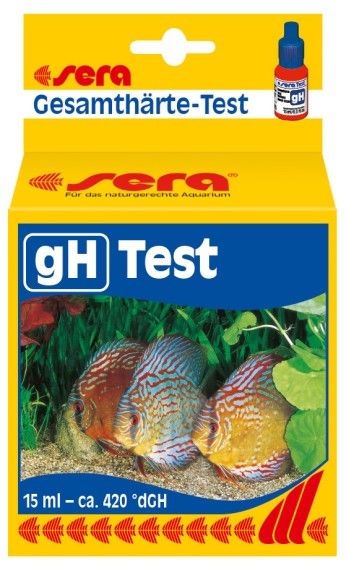
Sera - GH test
For checking a water parameter in this care guide. Follow the manufacturer’s test instructions; a test is not a treatment recommendation.
Check retailer for price0 retailers
Compare pricesPrices from the latest retailer update, excluding shipping. Check stock and delivery with the retailer.
Sources & review
This care guide draws on several specialist sources and was last checked on .