Straight vallisneria
Vallisneria spiralis

Vallisneria spiralis grows long ribbon leaves from a rosette and can create a green curtain along the back of an aquarium. Runners gradually extend a single planting into a strip or bed. This shelters fish but requires space management. Spiralis does not mean every leaf should be curled; the name relates to its reproductive structures. Do not choose it as a permanently low foreground plant. Leaves may reach the surface and shade neighbouring plants. A correctly positioned root base, suitable nutrition and selective thinning make it useful in a relatively simple planted tank, provided its eventual spread is considered from the start.
Plan your aquarium →At a glance
- Difficulty
- Easy
- Plant height
- Up to 100 cm
- Growth rate
- Fast
- Placement
- Background
- Temperature
- 18–28 °C
- pH
- 6.0–9.0
- Light
- Moderate, High
- CO₂
- Optional
- Nutrient uptake
- Through roots and water
- Substrate
- Sand, Gravel, Aquasoil
- Propagation
- Runners
About this plant
Kew accepts Vallisneria spiralis. Several Vallisneria species and selections appear under similar trade names, so leaf width and length alone do not fully establish identity. This guide does not automatically cover every curled or giant vallisneria. Leaves emerge from a shared rosette base. Unlike stem cuttings, arbitrary leaf fragments cannot simply be replanted to make new complete plants.
Natural habitat
Vallisneria spiralis is a submerged plant from warmer parts of the Old World. It can form extensive vegetation in suitable freshwater habitats. Ribbon leaves move with the water and provide cover without a branching structure. In an aquarium, room for the leaves matters more than imposing strong current. Keep open feeding, swimming and bottom-dwelling areas beside the background strip.
Placement in the aquarium
Cultivation guidance is 18–28 °C and pH 6–9. Leaves can reach about 100 cm in length; this is growth potential, not a prediction for every tank. Use the background. Insert roots into the substrate but keep the rosette base at its surface. Allow runners room without losing maintenance access. Prevent leaves from covering outlets, intakes and feeding areas.
Light
Moderate to high light fits the cultivation guidance used here. Consider depth: a bright-looking surface does not establish illumination at the bottom. Dense surface leaves also create shade. A general start with 6 hours can progress towards 8 hours in stable conditions. No reliable species-specific PAR range is available to automatically approve every lamp. Assess intensity, coverage and maintenance together.
CO₂
CO₂ is optional. Vallisneria can grow without injection, so equipment is not a default requirement. Existing injection should suit lighting, nutrients and animals. Liquid products marketed as carbon are not equivalent to controlled CO₂ gas supply. Assess their own instructions and suitability instead of increasing doses to force a newly planted rosette to establish.
Nutrition and fertilisation
The root zone matters for this rosette plant. Suitable root feeding may help in depleted sand or gravel, alongside nutrients already in the water. Both macro- and micronutrients contribute; iron is only one component. A nutrient base without nitrogen and phosphorus does not supply all macronutrients. Check substrate, stocking and maintenance before combining products. Demand changes as a small plant becomes a bed.
Substrate and root feeding
Use an anchoring substrate without burying the rosette base deeply. A covered nutrient layer is one approach, not the only one. Root tablets may be used selectively if an appropriate product and genuine need exist. Aquasoil can alter water chemistry and is not automatically an improvement for a plant also suited to harder water. Match the whole aquarium.
Growth and pruning
Established plants may produce leaves and runners quickly. Remove damaged or excessively long leaves selectively near the base. Cutting every leaf tip to the same height leaves damaged edges and does not replace thinning. Remove excess daughter plants when crowded, protecting roots that should remain. After pruning, reassess how much more light reaches lower planting.
Propagation
Runners connect the mother plant to young rosettes. Allow independent roots and leaves to develop before exposing and cutting the connection carefully. Avoid pulling an entire chain from the substrate. Replant with the base exposed. A long leaf lacking a growing base cannot become a new Vallisneria. Preserve some established shelter when relocating a group.
Suitable fish and animals
Leaves provide small fish with sheltered routes along the background. Active shoals still need open swimming space. Bottom dwellers can move between spaced rosettes, but large diggers may uproot young plants. Herbivores can damage leaves; rapid growth does not guarantee recovery keeps pace. Central links consider practical use and water overlap without endorsing all listed species together in a small tank.

Black neon tetra
Suitable with conditionsPlant the sides so black neons can choose cover or open water. Ribbon leaves form a tall backdrop. Moderate to strong light, no compulsory CO₂; remove runners from open swimming or feeding areas. Shared profile: 23–26 °C; pH 6–7.5.
View species profile →
Zebra danio
Suitable with conditionsPreserve swimming length for the danios. Ribbon leaves form a tall backdrop. Moderate to strong light, no compulsory CO₂; remove runners from open swimming or feeding areas. Shared profile: 20–24 °C; pH 6.5–7.5.
View species profile →
Tiger barb
Suitable with conditionsKeep robust plants at the sides and check nibbling damage from active tiger barbs. Ribbon leaves form a tall backdrop. Moderate to strong light, no compulsory CO₂; remove runners from open swimming or feeding areas. Shared profile: 22–26 °C; pH 6.5–7.5.
View species profile →
Guppy
Suitable with conditionsCover helps guppy fry but does not prevent overstocking. Ribbon leaves form a tall backdrop. Moderate to strong light, no compulsory CO₂; remove runners from open swimming or feeding areas. Shared profile: 23–25 °C; pH 7–8.
View species profile →
Endler's livebearer
Suitable with conditionsSheltered margins for small Endlers in the selected harder water. Ribbon leaves form a tall backdrop. Moderate to strong light, no compulsory CO₂; remove runners from open swimming or feeding areas. Shared profile: 24–27 °C; pH 7–8.
View species profile →
Southern platyfish
Suitable with conditionsGaps between stands help adult platies swim and let you count fry. Ribbon leaves form a tall backdrop. Moderate to strong light, no compulsory CO₂; remove runners from open swimming or feeding areas. Shared profile: 22–25 °C; pH 7–8.
View species profile →
Green swordtail
Suitable with conditionsPlants break sightlines beside, not across, the long swordtail lane. Ribbon leaves form a tall backdrop. Moderate to strong light, no compulsory CO₂; remove runners from open swimming or feeding areas. Shared profile: 22–26 °C; pH 7–8.
View species profile →
Sterba's cory
Suitable with conditionsKeep Sterbai’s sand feeding area clear and establish plants before they are uprooted. Ribbon leaves form a tall backdrop. Moderate to strong light, no compulsory CO₂; remove runners from open swimming or feeding areas. Shared profile: 24–28 °C; pH 6–7.2.
View species profile →
Bronze cory
Suitable with conditionsRobust marginal structure leaves open floor for larger bronze corys. Ribbon leaves form a tall backdrop. Moderate to strong light, no compulsory CO₂; remove runners from open swimming or feeding areas. Shared profile: 23–26 °C; pH 6.5–7.5.
View species profile →
Bigspot otocinclus
Suitable with conditionsAllow safe biofilm on leaves; plants alone do not prove sufficient nutrition. Ribbon leaves form a tall backdrop. Moderate to strong light, no compulsory CO₂; remove runners from open swimming or feeding areas. Shared profile: 23–26 °C; pH 6–7.5.
View species profile →
Boeseman's rainbowfish
Suitable with conditionsPlace tall stands outside the broad adult rainbowfish swimming route. Ribbon leaves form a tall backdrop. Moderate to strong light, no compulsory CO₂; remove runners from open swimming or feeding areas. Shared profile: 25–27 °C; pH 7–8.
View species profile →
Horned nerite
SuitableVallisneria leaves provide long grazing routes. Plant at the margins and keep runners away from feeding and maintenance areas.
View species profile →
Zebra nerite
SuitableVallisneria leaves provide long grazing routes. Plant at the margins and keep runners away from feeding and maintenance areas.
View species profile →Possible problems
Old leaves may deteriorate after transplanting while the base survives. Look for firm new foliage and check that the rosette is exposed. Stalled growth may involve surface shade, depleted substrate or disturbed roots. Investigate before raising iron or CO₂. Remove leaves from the filter intake and clear decay. Keep runners managed so maintenance remains possible.
Care for this plant
Plant fertiliser
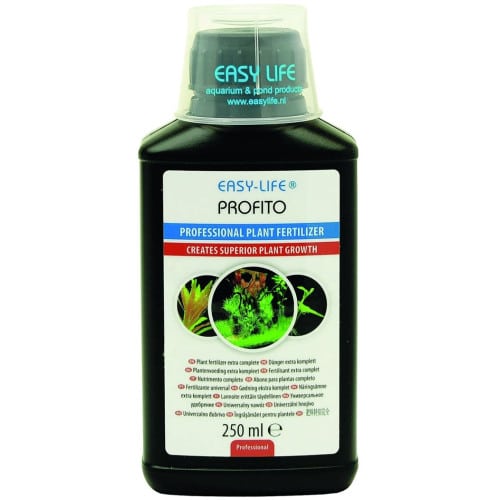
Easy Life ProFito 250ml
OptionalPotassium and trace supplementation alongside Vallisneria root nutrition. Not automatically needed with adequate supplies; no nitrate or phosphate.
Check retailer for price0 retailers
Compare prices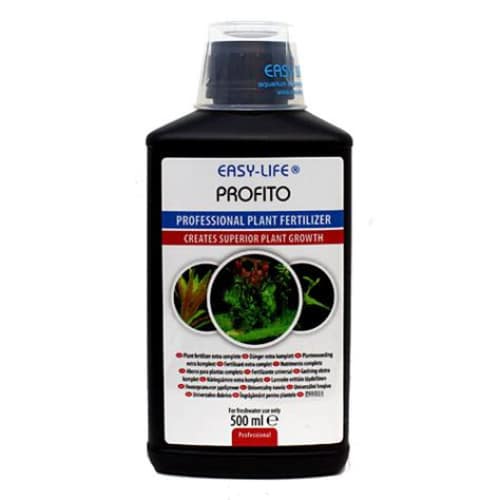
Easy Life ProFito 500ml
OptionalAn optional suitable product type; use according to manufacturer instructions and measured need.
Check retailer for price0 retailers
Compare pricesNutrient substrate
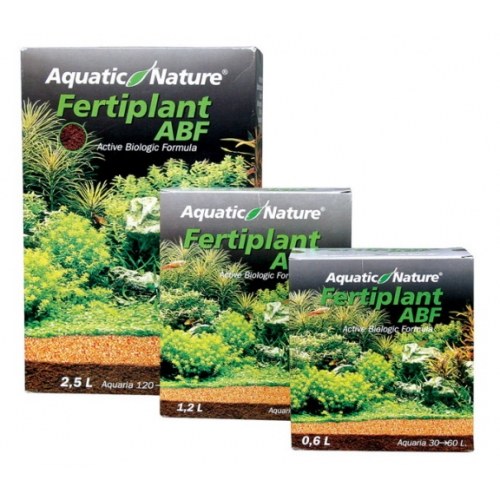
Aquatic Nature FertiPlant ABF 1.2L
OptionalOptional nutrient underlayer when setting up for this rooted rosette. Cover appropriately; no nitrate or phosphate. Do not unnecessarily disturb an established substrate.
Check retailer for price0 retailers
Compare pricesTools

Sera Flore Tool S plantenschaar
OptionalScissors to remove damaged leaves near their base while protecting the growing point.
Check retailer for price0 retailers
Compare pricesPrices from the latest retailer update, excluding shipping. Check stock and delivery with the retailer.
Lighting has been investigated but is not yet linked: available specifications do not adequately establish light class and coverage at plant depth.
Sources & review
This care guide draws on several specialist sources and was last checked on .