Endler's livebearer
Poecilia wingei

Endler's livebearer, Poecilia wingei, is a small fish whose males move through the aquarium displaying striking patches of colour. Its modest size makes it interesting for a properly arranged smaller tank, but not for solitary life in a vase. These are active fish with frequent social interactions and a strong drive to reproduce. A group can consequently grow faster than a new keeper expects. Moreover, not every fish sold as an Endler is pure Poecilia wingei: crosses with common guppies are widespread. A documented wild line is not a prerequisite for enjoying a healthy aquarium group, but reliable provenance is essential when preserving and passing on a particular strain. Plan the layout and maintenance for the entire group, including the larger females and any young.
Plan your aquarium →At a glance
- Temperature
- 24–27 °C
- pH
- 7.0–8.0
- GH
- 15–25 °dGH
- Aquarium length
- At least 60 cm
- Adult size
- Approximately 4.5 cm
- Group size
- At least 6 individuals
- Swimming zone
- Surface, Middle
- Temperament
- Peaceful
- Cover
- Plants and sheltered areas
- Staple food
- Fine flakes
- Supplementary food
- Live food, Frozen food, Finely crumbled dried natural food
We recommend at least sixty centimetres length for a small group, preferably eighty centimetres for a colony allowed to grow. Some keepers use smaller tanks, but this choice accounts for larger females, constant activity and future fry. No biological minimum volume is calculated from an arbitrary height.
About this species
Males generally stay around two and a half centimetres and may show sharply defined green, orange and black patches. Females are less conspicuous and can reach approximately four and a half centimetres. A summary listing only the small male measurement therefore understates the eventual population's size.
The species is scientifically distinguished from Poecilia reticulata; the ability to produce fertile hybrids does not make them identical species. Colour alone cannot establish that a shop fish is uncrossed. For a particular Campoma or other locality line, ask about the breeder's records. Store the strain name separately from the species name and avoid mixing unknown fish into a documented group. An attractive hybrid can be kept honestly as a hybrid, without inventing its ancestry.
Natural habitat
The natural origin lies in northeastern Venezuela, including the Campoma and Cumaná areas. Locality descriptions and population observations underpin this identification. Stories about a familiar lagoon do not automatically describe the entire range or the present condition of every population.
For everyday aquarium design, planted edges, foraging surfaces and calmer water zones are useful. A clear planted tank need not look exactly like a turbid collecting site to serve the fish well. Retain biofilm on safe surfaces while continuing deliberate feeding. Likewise, do not claim that every chosen aquarium plant naturally occurs alongside Endlers: suitable shelter and a documented shared locality are different things.
Aquarium and layout
We recommend at least sixty centimetres length for a small group, preferably eighty centimetres for a colony allowed to grow. Some keepers use smaller tanks, but this choice accounts for larger females, constant activity and future fry. No biological minimum volume is calculated from an arbitrary height.
Use fine plants along the sides with several open passages. A dense wall across the whole aquarium complicates observation and targeted feeding; a bare centre without escape routes is no better. A sponge over the filter intake helps protect fry. Maintain water movement without turning the entire tank into a strong current. Check carefully for small fish when trimming plants so none are accidentally discarded.
Water conditions
The practical maintenance range used here is 24–27 °C, pH 7–8 and GH 15–25. Sources and breeders describe wider tolerance, but this does not justify continually changing conditions. Our selected range targets a stable, mineral-rich freshwater environment, rather than reproducing every reported collecting site.
Check whether your tap water fits and ask about the breeder's conditions. Very soft water requires a considered approach instead of blind dosing. Ordinary salt is not the same as calcium and magnesium hardness. As the population grows, nitrate and organic waste can rise before the water looks dirty. Base filter and aquarium maintenance on measurements and fish numbers, not clarity alone.
Behaviour and group size
Start with at least six and include more females than males in a mixed group. Approximately two to three females per male is a useful starting point, not a guarantee of peace for every individual. Courtship, display and foraging form a substantial part of their daily activity.
Research on wild Endlers describes their own social pattern, so they should not simply be treated as miniature guppies. Check that every fish can eat and rest. Small males are vulnerable to larger predators, while tiny shrimp may themselves become food. A quiet species may still be unsuitable because it requires soft water or grows much larger. Guppies are discouraged when maintaining Endler ancestry, even if no fighting occurs.
Feeding
A small mouth needs genuinely fine food. Choose complete food for small omnivores and crush flakes when necessary. Small slow-sinking particles spread through the water column; check that the fish take them before everything disappears among plants. Plant ingredients belong in the diet, but grazing algae alone is not a complete menu.
Small live or frozen organisms and an appropriate dried supplement can add variety. Large hard pellets remain unsuitable even if the label says all tropical fish. Offer finer portions to fry in accessible places and remove excess. An expanding colony should not be maintained by ever-larger uncontrolled clouds of food. The aim is good body condition and equitable access, rather than the greatest possible number of births.
Breeding
Endlers are livebearers: internal fertilisation is followed by the birth of free-swimming fry. A separate egg-deposition site is unnecessary. Young may survive in a planted aquarium, but do not assume the adults are invariably safe. Their presence does not provide active parental care either.
To maintain a strain, separate different lines and common guppies, and record the provenance of new fish. Plan sufficient nursery space before the colony expands substantially. Newborns can take suitable small food but require clean conditions and a protected filter intake. A separate mature aquarium is better for extended rearing than a cramped net box. Find responsible new keepers in good time; reproduction must not lead to overcrowding or release outdoors.
Keeping with other species

Guppy
Suitable with conditionsCare can overlap, but the species can hybridise. Avoid mixing for pure-line breeding; manage sex ratio, fry and food access. Shared profile: 24–25 °C; pH 7–8; GH 15–20. Layout recommendation: from 100 cm.
View species profile →
Southern platyfish
Suitable with conditionsSuitable harder water can work, but platies are larger and faster feeders. Give Endlers sheltered areas and plan for growing fry numbers. Shared profile: 24–25 °C; pH 7–8; GH 15–25. Layout recommendation: from 100 cm.
View species profile →
Green swordtail
Not recommendedTiny Endlers can be overshadowed by large active swordtails. Water overlap does not remove feeding competition, fry predation or size imbalance.
View species profile →
Boeseman's rainbowfish
Not recommendedSmall Endler males and fry are poor companions for large fast rainbowfish. Choose more evenly matched tankmates despite compatible hard water.
View species profile →
Bigspot otocinclus
Not recommendedThe selected hard-water Endler profile does not overlap the softer Otocinclus range. Active livebearers can also steal targeted food.
View species profile →
Honey gourami
Not recommendedHardness preferences differ, and calm honey gouramis feed at a different pace. Do not force a poor water compromise.
View species profile →Suitable plants

Straight vallisneria
Sheltered margins for small Endlers in the selected harder water. Ribbon leaves form a tall backdrop. Moderate to strong light, no compulsory CO₂; remove runners from open swimming or feeding areas. Shared profile: 24–27 °C; pH 7–8.
- Light
- Moderate, High
- CO₂
- CO₂ injection not essential

Java moss
Sheltered margins for small Endlers in the selected harder water. Thinly attached moss gives fine shelter. Low to moderate light, no compulsory CO₂; keep debris and loose thread loops out. Shared profile: 24–27 °C; pH 7–8.
- Light
- Low, Moderate
- CO₂
- CO₂ injection not essential
Suitable products
Recommended staple foods

Tetra Guppy Fish food Vlokken 100 ml
Crush mini flakes further for tiny Endler males. The complete livebearer food must be visibly swallowed.
Check retailer for price0 retailers
Compare pricesSupplementary foods
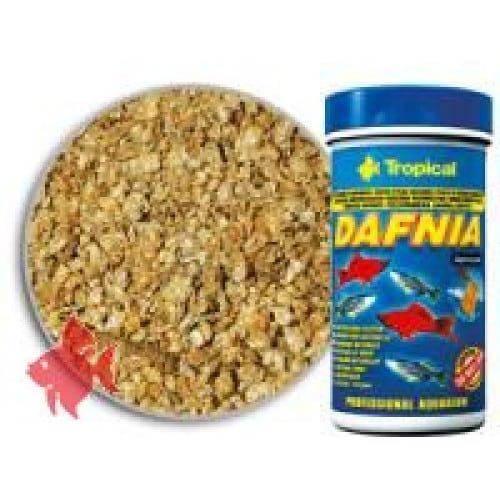
Tropical Dafnia 100ml
Very finely crumbled dried Daphnia, only as variety alongside complete food. Check the small mouth accepts it; not newly hatched fry food.
Check retailer for price1 retailers
Compare pricesWater testing and equipment
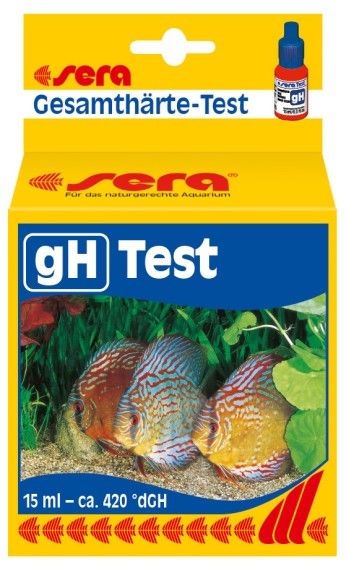
Sera - GH test
For checking a water parameter in this care guide. Follow the manufacturer’s test instructions; a test is not a treatment recommendation.
Check retailer for price0 retailers
Compare pricesPrices from the latest retailer update, excluding shipping. Check stock and delivery with the retailer.
Sources & review
This care guide draws on several specialist sources and was last checked on .
View the sources
- Poeser, Kempkes & Isbrücker (2005), Contributions to Zoology — Description of Poecilia wingei and review of Poecilia reticulata
- Schories, Meyer & Schartl (2009), Zootaxa — Poecilia obscura, with molecular evidence for the status of P. wingei
- Seriously Fish — Poecilia wingei — keeping and breeding
- Aquarium Co-Op — Endler's livebearers — practical keeping and breeding experience