Southern platyfish
Xiphophorus maculatus

The southern platyfish, Xiphophorus maculatus, is a sturdy small livebearer bred in many colours. It often fits well in a planted aquarium with mineral-rich water and other peaceful fish. That does not make every tropical community suitable: dedicated soft-water fish and very warm-water specialists have different needs. Reproduction also deserves planning, since a few apparently small fish can develop into a substantial population. The name platy is used for different species and hybrids too. This guide covers the common platy and identifies where aquarium strains may have uncertain ancestry. Choose healthy normal proportions and a suitable group structure rather than a particular colour pattern alone. Given enough space and purposeful maintenance, there is plenty to observe in their foraging, courtship and development of young.
Plan your aquarium →At a glance
- Temperature
- 22–25 °C
- pH
- 7.0–8.0
- GH
- 10–25 °dGH
- Aquarium length
- At least 60 cm
- Adult size
- Approximately 6 cm
- Group size
- At least 6 individuals
- Swimming zone
- Middle
- Temperament
- Peaceful
- Cover
- Plants and sheltered areas
- Staple food
- Fine flakes
- Supplementary food
- Live food, Frozen food, Finely crumbled dried natural food
Use at least sixty centimetres length for a small group; eighty centimetres is more comfortable and practical with fry or additional species. Platies are not miniature fish that retain their purchase size throughout life. Plan space and maintenance for the larger adult females.
About this species
Females reach approximately six centimetres and are usually larger and fuller than males. The male's modified anal fin, the gonopodium, helps identify sex. A rounded abdomen alone does not prove pregnancy or a particular sex.
Red, yellow and spotted forms are not separate species. A popular marking near the tail does not reveal which crosses occurred in a strain's history. Xiphophorus variatus is a related but different species, and commercial hybrids with other Xiphophorus also exist. Ask about background when preserving pure lines matters. A fish with a severely shortened or malformed body is not a better choice because it is marketed as unusual.
Natural habitat
The native distribution includes Atlantic-draining regions of Mexico and parts of Central America. Quieter stretches of vegetated streams and rivers provide food and cover. Locality records for scientific breeding stocks illustrate why precise provenance is more valuable than a broad label such as tropical America.
In the aquarium, planted edges and accessible grazing surfaces are useful. Retain open water for movement and social interaction as well. A densely planted corner serves a different purpose from packing the whole tank: fish must be able to avoid each other and the keeper must check that everyone feeds. The commonly farmed shop forms should not be assigned an exact wild biotope when their ancestry is unknown.
Aquarium and layout
Use at least sixty centimetres length for a small group; eighty centimetres is more comfortable and practical with fry or additional species. Platies are not miniature fish that retain their purchase size throughout life. Plan space and maintenance for the larger adult females.
Arrange separate plant stands along the back and sides, with passages between them. Fine vegetation can shelter young fish. A smooth substrate is easy to clean, while any suitable nutrient layer beneath plants should not be stirred into the swimming water. Provide reliable biological filtration without strong current everywhere. Protect the intake around fry and check their location before siphoning. A tank that looks spacious when first stocked can still become overcrowded after several broods.
Water conditions
The selected maintenance range is 22–25 °C, pH 7–8 and GH 10–25. Sources also describe wider temperature tolerance; we choose a moderate setting for everyday care. Platies are not obvious partners for fish requiring consistently very soft acidic water.
Measure the starting water before using additives. An aquarium with artificially lowered pH and hardness need not retain those conditions for platies simply because its layout looks attractive. Choose fish suited to the water or prepare a stable appropriate environment. Recheck waste loading as numbers increase: ammonia and nitrite should remain undetectable, with nitrate managed through suitable maintenance. Clear water alone is not a quality measurement.
Behaviour and group size
Keep platies in a group, with at least six as a practical starting point. Their grouping is looser than that of tightly schooling fish. In mixed groups, approximately two to four females per male is sensible, together with escape space. Even a fairly tolerant male may persistently follow a particular female.
Watch the distribution of attention during feeding and rest. An all-male group prevents new births but still needs observation; previously mated females may later produce fry. Peaceful guppies are often a more logical starting point than strongly soft-water-dependent tetras. With swordtails, consider their greater size, activity and potential hybridisation. Do not add a large predator simply to solve the maintenance problem of too many fry.
Feeding
Platies eat animal and plant material. Use an appropriate complete food for small omnivores with a plant component, such as suitable flakes or fine granules. Check the actual particle size: a generic tropical fish picture on the container does not prove easy ingestion.
A limited supplement of small live or frozen organisms adds variety; dried water fleas remain supplementary. Pecking at algae is normal foraging, not a promise that the fish will maintain the glass. Feed in a way that includes smaller or less dominant individuals. Fry need finer portions placed where they can reach them. Remove food trapped beneath dense planting and assess body condition before increasing the daily amount.
Breeding
Fertilisation is internal and the female gives birth to independently swimming young. Sperm storage may allow several subsequent broods. Removing males therefore does not necessarily stop reproduction immediately. To breed a particular line, carefully record ancestry and sexual development.
Fine plants and separate rearing space improve opportunities to raise fry. Do not assume guaranteed safety around adults just because a previous brood did well. Use a mature nursery aquarium with safe filtration and suitably small food. Avoid trying to induce birth through repeated catching or temperature shocks. Colour prediction in commercial strains is often uncertain; pass offspring on with honest provenance and only when suitable accommodation is available.
Keeping with other species

Cherry barb
Suitable with conditionsOnly in the harder shared range. Platies can feed faster and reproduce; monitor stocking and the barbs’ condition. Shared profile: 22–25 °C; pH 7–7.5; GH 10–15. Layout recommendation: from 100 cm.
View species profile →
Guppy
SuitableSuitable mineral-rich water and calm varieties can work. Both reproduce readily; plan for offspring and ensure smaller guppies feed. Shared profile: 23–25 °C; pH 7–8; GH 10–20. Layout recommendation: from 100 cm.
View species profile →
Endler's livebearer
Suitable with conditionsSuitable harder water can work, but platies are larger and faster feeders. Give Endlers sheltered areas and plan for growing fry numbers. Shared profile: 24–25 °C; pH 7–8; GH 15–25. Layout recommendation: from 100 cm.
View species profile →
Green swordtail
Suitable with conditionsBoth can suit mineral-rich water, but swordtails need much more swimming space. Xiphophorus hybridisation is possible; avoid mixing for pure breeding. Shared profile: 22–25 °C; pH 7–8; GH 10–20. Layout recommendation: from 150 cm.
View species profile →
Boeseman's rainbowfish
Suitable with conditionsUse the warmer shared range and adult platies. Rainbowfish feed fast; young platies need a separate rearing plan. Shared profile: 25 °C; pH 7–8; GH 10–20. Layout recommendation: from 150 cm.
View species profile →
Bronze cory
Suitable with conditionsUse the shared moderately hard range. Corys still need dedicated bottom food; platy fry must not silently overload the tank. Shared profile: 23–25 °C; pH 7–7.5; GH 10–15. Layout recommendation: from 100 cm.
View species profile →Suitable plants

Straight vallisneria
Gaps between stands help adult platies swim and let you count fry. Ribbon leaves form a tall backdrop. Moderate to strong light, no compulsory CO₂; remove runners from open swimming or feeding areas. Shared profile: 22–25 °C; pH 7–8.
- Light
- Moderate, High
- CO₂
- CO₂ injection not essential

Water sprite
Gaps between stands help adult platies swim and let you count fry. Floating fern can provide shade and root shelter. Moderate light, CO₂ not compulsory; never seal the whole surface. Shared profile: 22–25 °C; pH 7–7.5.
- Light
- Moderate
- CO₂
- CO₂ injection not essential
Suitable products
Recommended staple foods

Tetra Guppy Fish food Vlokken 100 ml
Complete livebearer food with animal and plant ingredients. Suitable for platies; a large belly does not justify a larger ration.
Check retailer for price0 retailers
Compare pricesSupplementary foods
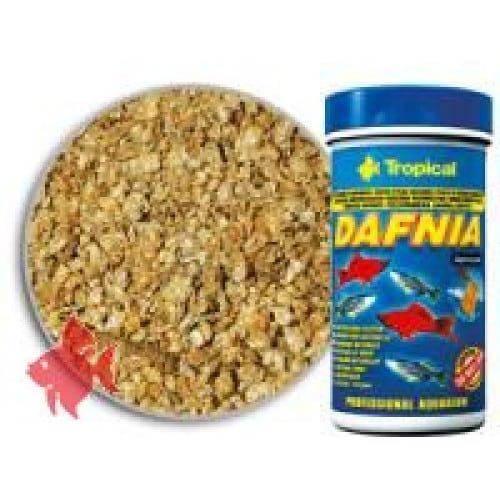
Tropical Dafnia 100ml
Dried Daphnia as a small supplementary variety. Adjust particle size and share among companions; never the only daily food.
Check retailer for price1 retailers
Compare pricesWater testing and equipment
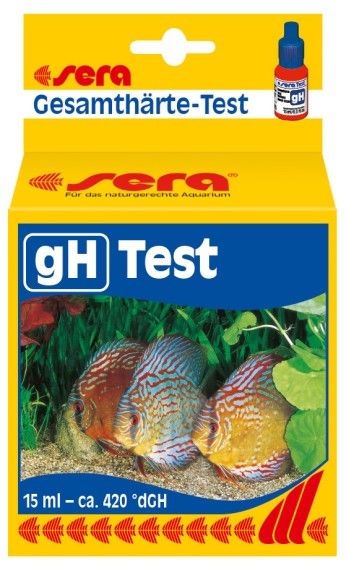
Sera - GH test
For checking a water parameter in this care guide. Follow the manufacturer’s test instructions; a test is not a treatment recommendation.
Check retailer for price0 retailers
Compare pricesPrices from the latest retailer update, excluding shipping. Check stock and delivery with the retailer.
Sources & review
This care guide draws on several specialist sources and was last checked on .
View the sources
- LICG — Platy — verzorging
- Seriously Fish — Xiphophorus maculatus — aquarium care
- Texas State University, Xiphophorus Genetic Stock Center — Xiphophorus Genetic Stock Center Manual — maculatus stocks
- Yang et al. (2011) — Offspring production with cryopreserved sperm from Xiphophorus maculatus
- FishBase — Xiphophorus maculatus — length, distribution and diet references