Boeseman's rainbowfish
Melanotaenia boesemani

Boeseman's rainbowfish, Melanotaenia boesemani, is striking as an adult male because of its transition from blue at the front to warm orange behind. Young shop fish often show little of this pattern. Their eventual behaviour matters just as much as colour: these are active social fish that travel extensively through the middle and upper water layers. A spacious aquarium with a long unobstructed swimming route matters more than a tall tank in which the group must constantly turn. Plants remain useful as shelter and background provided they do not block movement. This rainbowfish suits robust, reasonably sized neighbours better than a quiet collection of miniature fish. Plan for adult size and favour responsibly bred fish with known origins when available; an attractive trade name does not reveal everything about a line's quality or ancestry.
Plan your aquarium →At a glance
- Temperature
- 25–27 °C
- pH
- 7.0–8.0
- GH
- 10–20 °dGH
- Aquarium length
- At least 120 cm
- Adult size
- Approximately 10–12 cm
- Group size
- At least 6 individuals
- Swimming zone
- Middle
- Temperament
- Peaceful, May compete for food, May jump
- Cover
- Plants and sheltered areas
- Staple food
- Fine flakes, Small granules
- Supplementary food
- Live food, Frozen food, Finely crumbled dried natural food
Use an aquarium at least one hundred and twenty centimetres long for a minimum of six adults. One hundred and fifty centimetres is more comfortable for a larger group and additional companions. Unobstructed length counts: large ornaments dividing a long aquarium into short compartments do not provide equivalent usable space.
About this species
Adult males develop deeper bodies and stronger two-tone colour than females. For aquarium planning, allow for a body size of roughly ten to twelve centimetres, varying with sex and strain. Juveniles can look considerably slimmer and less conspicuous. Their modest shop size is no reason to postpone permanent suitable housing.
Melanotaenia boesemani belongs to the rainbowfishes. Do not casually mix species or uncertain lines if you intend to distribute offspring later. Retain origin records and describe uncertainties honestly. A colour-strain name does not represent a separate species. When buying, also assess body alignment, normal fins, breathing and feeding. Choosing only the brightest individual says little about long-term health.
Natural habitat
Its natural range occupies a limited part of western New Guinea, including the Ayamaru lake region. Vegetated shallows and adjoining waterways are important. Field research also describes clear, slow water over gravel and limestone with patches of aquatic plants. An assumption of exclusively hot, acidic rainforest water is inappropriate here.
Translate this into clear, well-maintained aquarium water with planted margins and an open route through the tank. An active swimmer does not automatically need a powerful current everywhere. Areas with different water movement provide choice. Background plants offer visual shelter without filling the entire middle of the aquarium.
Aquarium and layout
Use an aquarium at least one hundred and twenty centimetres long for a minimum of six adults. One hundred and fifty centimetres is more comfortable for a larger group and additional companions. Unobstructed length counts: large ornaments dividing a long aquarium into short compartments do not provide equivalent usable space.
Combine sturdy marginal planting with open central space and dependable filtration. An actively feeding group creates a corresponding waste load. Keep the surface moving for gas exchange while retaining quieter areas. A close-fitting lid prevents jumping during courtship or alarm. Arrange ornaments so sudden turns do not bring fish against sharp points. Check that growing plants have not closed the original swimming lane.
Water conditions
Our practical baseline is 25–27 °C, pH 7–8 and GH 10–20. Some care sources recommend substantially warmer conditions. Field measurements and other maintenance accounts also support moderate temperatures, so continuous very warm housing is not our default.
With soft tap water, check mineral availability and adjust only in a controlled way. Numerical targets cannot be separated from the fish: stable quality, oxygen and suitable maintenance remain essential. Warm water requires extra attention to gas exchange. If behaviour deteriorates, investigate waste levels and filtration rather than simply increasing the heater. Acclimate newcomers gradually to differences between their previous water and the aquarium.
Behaviour and group size
Keep at least six of the same species, preferably with slightly more females than males. Males display to each other and females and may make short chases. A suitable larger group with sufficient space distributes attention but cannot remedy inappropriate accommodation.
Companions must cope with active feeding and swimming. Small shrimp, fry and very small fish can become food. Even without predation, timid species may remain overwhelmed. A large fish is not automatically safe either: territorial cichlids introduce different risks. Consider behaviour and water requirements together. After introduction, check which fish visibly feed and whether quieter inhabitants still have undisturbed places.
Feeding
Boeseman's rainbowfish is an omnivore that uses several small food types. Provide a complete flake or granular food as the foundation, sized for its relatively small mouth. Body size does not justify excessively large chunks. Food that remains available in the middle and upper layers is practical for the group.
Supplement with suitable Artemia, water fleas or other small animal foods. A varied staple can also contain plant ingredients. Spread small portions widely enough that dominant feeders cannot take everything. Do not feed without limit to accelerate colour development. Leftovers degrade water quality, while juveniles need time to acquire their adult appearance.
Breeding
Adhesive eggs are deposited among fine plants or in a suitable spawning mop. Courtship may be especially noticeable early in the day. There is no protective parental care. For planned breeding, move spawning material to prepared rearing accommodation or otherwise separate adults and eggs safely.
The small fry require fine first foods that they actually ingest. Prepare suitable microscopic foods before spawning and move to larger live prey only when the young can manage them. Several small meals demand careful maintenance without excessive disturbance. Growth and full colour development take time. Keep species and strain records when passing on offspring; unrecorded mixing makes later identification and responsible breeding more difficult.
Keeping with other species

Guppy
Suitable with conditionsLarge rainbowfish may outcompete guppies. Use shared water conditions, ample length and adult short-finned fish; fry face predation. Shared profile: 25 °C; pH 7–8; GH 10–20. Layout recommendation: from 150 cm.
View species profile →
Endler's livebearer
Not recommendedSmall Endler males and fry are poor companions for large fast rainbowfish. Choose more evenly matched tankmates despite compatible hard water.
View species profile →
Southern platyfish
Suitable with conditionsUse the warmer shared range and adult platies. Rainbowfish feed fast; young platies need a separate rearing plan. Shared profile: 25 °C; pH 7–8; GH 10–20. Layout recommendation: from 150 cm.
View species profile →
Green swordtail
Suitable with conditionsTwo large active groups need long broad swimming space. Manage sex ratios and distribute food; pair cards do not justify cumulative stocking. Shared profile: 25–26 °C; pH 7–8; GH 10–20. Layout recommendation: from 150 cm.
View species profile →
Tiger barb
Suitable with conditionsWater and activity may fit, but rainbowfish fins can still be nipped. Keep a proper barb group and separate if damage or chasing persists. Shared profile: 25–26 °C; pH 7–7.5; GH 10–12. Layout recommendation: from 150 cm.
View species profile →
Black neon tetra
Suitable with conditionsAdult black neons are calmer than rainbowfish. Use the warmer harder overlap, broad visual cover and check tetras continue feeding. Shared profile: 25–26 °C; pH 7–7.5; GH 10–12. Layout recommendation: from 150 cm.
View species profile →
Matano rabbit snail
Suitable with conditionsA shell does not protect the extended foot and tentacles. End the combination after persistent withdrawal or injuries. Boesemani rainbowfish may be considered in matching warm neutral-to-alkaline conditions. Retain their large swimming space and group; check quiet snail feeding. Snail GH/KH remain insufficiently established.
View species profile →Suitable plants

Straight vallisneria
Place tall stands outside the broad adult rainbowfish swimming route. Ribbon leaves form a tall backdrop. Moderate to strong light, no compulsory CO₂; remove runners from open swimming or feeding areas. Shared profile: 25–27 °C; pH 7–8.
- Light
- Moderate, High
- CO₂
- CO₂ injection not essential

Dwarf ambulia
Place tall stands outside the broad adult rainbowfish swimming route. Fine stems at the margins provide cover; low to moderate light, optional CO₂. Trim regularly and retain an open swimming lane. Shared profile: 25–27 °C; pH 7–8.
- Light
- Low, Moderate
- CO₂
- CO₂ injection not essential
Suitable products
Recommended staple foods

Tetramin Bio Active Vlokken Fish food 100 ml
Complete flakes suit adult Boesemani’s relatively small mouths. Spread the ration widely so subordinate females also feed.
Check retailer for price0 retailers
Compare pricesSupplementary foods
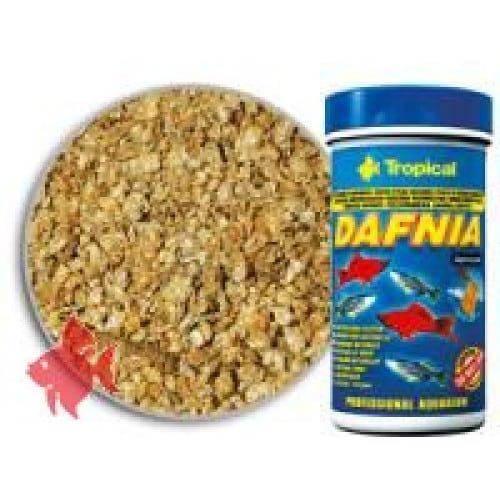
Tropical Dafnia 100ml
Dried Daphnia as a small supplementary variety. Adjust particle size and share among companions; never the only daily food.
Check retailer for price1 retailers
Compare pricesWater testing and equipment
Sera - GH test
For checking a water parameter in this care guide. Follow the manufacturer’s test instructions; a test is not a treatment recommendation.
Check retailer for price0 retailers
Compare pricesPrices from the latest retailer update, excluding shipping. Check stock and delivery with the retailer.
Sources & review
This care guide draws on several specialist sources and was last checked on .
View the sources
- ITIS — Melanotaenia boesemani — taxonomy
- Kadarusman et al. (2010) — West Papuan rainbowfishes — field record of M. boesemani
- Seriously Fish — Melanotaenia boesemani — comparison of care ranges
- Aquarium Co-Op — Boesemani rainbowfish — firsthand care and breeding
- Fluval — Boeseman’s rainbowfish — care profile
- Australian live-import assessment (2023) — Melanotaenia boesemani — size, distribution and biology