Green swordtail
Xiphophorus hellerii

The green swordtail, Xiphophorus hellerii, is an active livebearer needing much more space than its small shop size suggests. Adult females become substantial fish, while males stand out through the extended lower rays of the tail. This sword is not a stabbing weapon, although males can compete fiercely and chase one another or females. A long aquarium with both open swimming space and interrupted sightlines matters more than an attractive colour contrast with other fish. The many red, black and patterned aquarium forms often have complicated breeding histories. This guide covers ordinary swordtail care without assuming that every colour form has a pure wild ancestry. For keepers able to provide enough space and plan for reproduction, the species offers lively activity and interesting social behaviour.
Plan your aquarium →At a glance
- Temperature
- 22–26 °C
- pH
- 7.0–8.0
- GH
- 10–20 °dGH
- Aquarium length
- At least 120 cm
- Adult size
- Approximately 14 cm
- Group size
- At least 4 individuals
- Swimming zone
- Middle, Surface
- Temperament
- Territorial, May jump
- Cover
- Plants and sheltered areas
- Staple food
- Fine flakes
- Supplementary food
- Live food, Frozen food, Finely crumbled dried natural food
We choose at least one hundred and twenty centimetres aquarium length for a small appropriate group. Some advice mentions eighty centimetres, but the adult size, swimming speed and social space justify following the more generous recommendation. One hundred and fifty centimetres is more comfortable with several males or other active fish. Additional volume in a tall narrow tank does not replace swimming length.
About this species
When comparing size records, distinguish the sword from body length. Females may reach around twelve centimetres; specialist sources report up to fourteen centimetres standard length for the species, excluding the tail fin. The central maximum is therefore a cautious planning figure, not a prediction that every cultivated fish will grow to exactly that size.
Besides the sword, males have a gonopodium. Male characteristics can develop at different stages, so the temporary absence of a sword does not establish that a fish is female. Select fish with normal swimming posture and avoid severely distorted strains. Xiphophorus helleri is retained as a search variant of the scientific name used here, so older literature is not mistaken for a second species.
Natural habitat
The native range lies in Mexico and northern Central America. Swordtails use varied flowing waters; adults may occupy different parts from juveniles seeking sheltered margins. In an aquarium, this calls for variation rather than equally strong flow everywhere.
Aquatic plants, algae and bankside structures provide foraging and shelter. Retain open routes beside vegetation and ensure good oxygenation. A planted tank with moderate flow can supply these functions without claiming to reproduce an exact river scene. Field observations of males occupying home ranges also support the usefulness of sight barriers. A small bare aquarium in which a subordinate remains continuously visible offers little chance of ending a pursuit.
Aquarium and layout
We choose at least one hundred and twenty centimetres aquarium length for a small appropriate group. Some advice mentions eighty centimetres, but the adult size, swimming speed and social space justify following the more generous recommendation. One hundred and fifty centimetres is more comfortable with several males or other active fish. Additional volume in a tall narrow tank does not replace swimming length.
Create several robust plant stands, a broad open swimming area and more than one return route behind wood or vegetation. Avoid sharp or tight passages that can catch the tail. Cover the aquarium securely: swordtails can jump. Account for escape risk during maintenance too. Filtration can provide noticeable movement, while calmer areas remain necessary for females and young.
Water conditions
The maintenance range is 22–26 °C, pH 7–8 and GH 10–20. Published tolerance figures are wider; for everyday care we select moderate conditions appropriate to mineral-rich freshwater. A warm acidic tank for specialist South American fish is therefore not an obvious destination.
Swordtails feed actively, and adults produce more waste than little tetras. Reassess loading as the population grows and keep ammonia and nitrite undetectable. Remove debris behind plants and check that filter flow does not gradually decline. Match water changes to measurements and actual feeding load. An apparently clear aquarium may still have rising nitrate or insufficient oxygen, particularly in hot weather with numerous young fish.
Behaviour and group size
A male with at least three females is a useful starting point for a small mixed group. These are not tightly schooling fish. Males may fight over rank and chase repeatedly; adding more males is not automatically a solution to a dominant individual.
Research demonstrates differences between individual males and effects of previous social experiences. Observe your own group, including after rearrangements or introductions. Torn fins, exclusion from food and persistent retreat to an upper corner call for intervention. Other robust peaceful hard-water fish may work under suitable conditions. Tiny male Endlers, very shy species and long-finned fish are not automatic companions. With platies there is the additional issue of unwanted hybridisation.
Feeding
Swordtails are omnivores using animal food as well as algae and other plant material. Choose a matching complete food that adults can readily swallow. Flakes and appropriately sized granules can form the staple; sword and body length do not determine the necessary pellet diameter.
Offer suitable small live or frozen organisms as a limited supplement. Dried water fleas provide variety but do not replace the staple. Feed at several locations so a dominant male cannot intercept every portion. Watch smaller neighbours too: swordtail speed can restrict their food access without actual biting. Give young fish smaller particles and prevent excess from accumulating among their cover.
Breeding
After internal fertilisation, young develop within the female and are born free-swimming. Females can store sperm, allowing later broods without a new mating. A newly purchased female group is therefore not necessarily a permanently non-breeding population.
Prepare fine cover and, if necessary, a separate mature nursery aquarium. Adults may eat fry, so deliberate breeding requires protection. Avoid keeping a large female confined in a tiny breeding box for extended periods. Young need suitably fine food, safe filtration and space to grow. Record parents and possible crosses when maintaining a strain. The aim is healthy offspring with appropriate future homes, rather than keeping the greatest possible number in the same aquarium.
Keeping with other species

Guppy
Suitable with conditionsSwordtails are larger and busier. Provide long swimming space, balanced sex groups and quiet guppy feeding spots; fry may be eaten. Shared profile: 23–25 °C; pH 7–8; GH 10–20. Layout recommendation: from 150 cm.
View species profile →
Endler's livebearer
Not recommendedTiny Endlers can be overshadowed by large active swordtails. Water overlap does not remove feeding competition, fry predation or size imbalance.
View species profile →
Southern platyfish
Suitable with conditionsBoth can suit mineral-rich water, but swordtails need much more swimming space. Xiphophorus hybridisation is possible; avoid mixing for pure breeding. Shared profile: 22–25 °C; pH 7–8; GH 10–20. Layout recommendation: from 150 cm.
View species profile →
Boeseman's rainbowfish
Suitable with conditionsTwo large active groups need long broad swimming space. Manage sex ratios and distribute food; pair cards do not justify cumulative stocking. Shared profile: 25–26 °C; pH 7–8; GH 10–20. Layout recommendation: from 150 cm.
View species profile →
Bronze cory
Suitable with conditionsSwordtails use open water while bronze corys occupy the bottom. Retain ample sand and prevent livebearers intercepting bottom food. Shared profile: 23–26 °C; pH 7–7.5; GH 10–15. Layout recommendation: from 150 cm.
View species profile →
Sterba's cory
Suitable with conditionsOnly in the shared warm, moderately hard range. Sterbai need a full group and feeding spots beneath the busy swimming zone. Shared profile: 24–26 °C; pH 7–7.2; GH 10–15. Layout recommendation: from 150 cm.
View species profile →
Cockatoo dwarf cichlid
Suitable with conditionsUse captive stock suited to shared water. Swordtail fry can be prey; keep cichlid caves away from the busiest feeding lane. Shared profile: 24–25 °C; pH 7–7.5; GH 10–15. Layout recommendation: from 150 cm.
View species profile →Suitable plants

Straight vallisneria
Plants break sightlines beside, not across, the long swordtail lane. Ribbon leaves form a tall backdrop. Moderate to strong light, no compulsory CO₂; remove runners from open swimming or feeding areas. Shared profile: 22–26 °C; pH 7–8.
- Light
- Moderate, High
- CO₂
- CO₂ injection not essential

Java fern
Plants break sightlines beside, not across, the long swordtail lane. Java fern on wood gives cover without loose substrate cuttings. Keep the rhizome exposed; low to moderate light, no compulsory CO₂. Shared profile: 22–26 °C; pH 7–8.
- Light
- Low, Moderate
- CO₂
- CO₂ injection not needed
Suitable products
Recommended staple foods

Tetra Guppy Fish food Vlokken 100 ml
The manufacturer also lists swordtails. Complete small flakes with plant ingredients; distribute so subordinate fish can feed.
Check retailer for price0 retailers
Compare pricesSupplementary foods
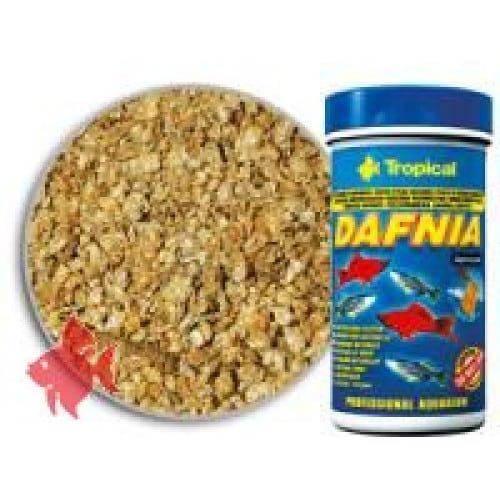
Tropical Dafnia 100ml
Dried Daphnia as a small supplementary variety. Adjust particle size and share among companions; never the only daily food.
Check retailer for price1 retailers
Compare pricesWater testing and equipment
Sera - GH test
For checking a water parameter in this care guide. Follow the manufacturer’s test instructions; a test is not a treatment recommendation.
Check retailer for price0 retailers
Compare pricesPrices from the latest retailer update, excluding shipping. Check stock and delivery with the retailer.
Sources & review
This care guide draws on several specialist sources and was last checked on .
View the sources
- Texas State University, Xiphophorus Genetic Stock Center — Xiphophorus Genetic Stock Center Manual — maculatus stocks
- LICG — Zwaarddrager — verzorging
- Seriously Fish — Xiphophorus hellerii — aquarium care and natural habitat
- Wilson et al. (2011), PLOS ONE — Integrating Personality Research and Animal Contest Theory: Aggressiveness in the Green Swordtail
- Behavioural Processes (1998) — Home ranges and satellite tactics of male green swordtails in nature
- Basolo & Wagner (2004) — Covariation between predation risk, body size and fin elaboration in green swordtails