Bronze cory
Osteogaster aenea

The bronze cory, Osteogaster aenea, is a familiar aquarium fish with a fascinating social side. As a group searches the bottom, individuals respond to one another's movements and regularly make contact. A group is therefore far more interesting than a solitary fish added as a cleaner. Both bronze and albino cultivated forms are sold under the former name Corydoras aeneus. The precise ancestry of trade lines is not always documented; this guide covers the familiar bronze aquarium form without implying a genetically verified wild population. It is relatively adaptable, but still needs its own complete meals, clean foraging ground and companions. Its habit of occasionally gulping surface air must never be used to excuse poor oxygenation or water quality.
Plan your aquarium →At a glance
- Temperature
- 23–26 °C
- pH
- 6.5–7.5
- GH
- 4–15 °dGH
- Aquarium length
- At least 80 cm
- Adult size
- Approximately 7.5 cm
- Group size
- At least 6 individuals
- Swimming zone
- Bottom
- Temperament
- Peaceful
- Cover
- Plants and sheltered areas
- Staple food
- Sinking tablet, small portions, Small granules
- Supplementary food
- Live food, Frozen food, Finely crumbled dried natural food
For at least six adults, use a tank from eighty centimetres long. One hundred centimetres is more comfortable with other bottom dwellers or a larger group. The usable floor must remain spacious after furnishing; a tall tank with a small footprint is not equivalent.
About this species
The normal colour form has a bronze to greenish-grey sheen on a sturdy body. Females are often noticeably fuller than males. Allow for a maximum standard length of roughly seven and a half centimetres, excluding the tail fin, rather than planning solely around small shop juveniles.
Osteogaster aenea is the current combination following the cory catfish revision. The species was originally described from Trinidad. Broad historical distribution records and some trade names probably include related forms. Other bronze-coloured catfish are therefore not automatically assigned to this profile. An albino appearance alone does not establish identity either: other cory species have albino strains. Provenance from a reliable breeder is especially useful when preserving or breeding particular lines.
Natural habitat
Bronze corys are associated with sheltered freshwater environments where they forage socially close to the bottom. Uncertainty around some historical records makes one precise habitat inappropriate for all trade fish. A broadly South American design is therefore a style choice, not proof of a particular collection locality.
For practical welfare, substrate structure and accessible cover matter more than a geographical label. Combine open sand pathways with low overhanging roots and marginal plants. A fish should be able to rest without becoming entirely cut off from the group. Keep it possible to remove debris beneath cover; decorations that can only be cleaned before fish are introduced become a maintenance problem later.
Aquarium and layout
For at least six adults, use a tank from eighty centimetres long. One hundred centimetres is more comfortable with other bottom dwellers or a larger group. The usable floor must remain spacious after furnishing; a tall tank with a small footprint is not equivalent.
Fine rounded sand allows substrate searching. Secure rocks before fish forage beside them and avoid sharp edges around feeding spots. Restrict dense carpeting plants to areas not needed for searching. Gently shaded resting zones help without darkening the entire aquarium. Protect the filter intake against smaller fish and leave a clear route to the surface.
Water conditions
For normal maintenance, we choose 23–26 °C, pH 6.5–7.5 and GH 4–15. This is a moderate portion of the wider published tolerances. Broader limits do not invite continual swings between extremes or immediate placement of unfamiliar trade fish at an extreme.
Air gulping is part of their physiology, but surface visits also relate to oxygen and social behaviour. Do not treat one gulp as illness, and do not ignore a sudden change across all fish. If they become unsettled, check water readings, temperature and filter function. Match water changes to the bioload and clean feeding areas. A mature system with consistent care is more reliable than attempting to compensate for poor conditions afterwards with extra equipment.
Behaviour and group size
Keep at least six of the same species and allow them to forage together. Research on bronze corys shows that tactile interactions and familiarity play a role in group coordination. They are not simply unrelated bottom dwellers that happen to find the same food.
Peaceful midwater fish are generally more logical companions than a collection of territorial bottom dwellers. Breeding cichlids in particular may block routes. A young cory may also fit in a larger predator's mouth, with strong fin spines increasing the danger. They do not normally damage healthy plants to eat them, but newly planted delicate cuttings may be dislodged during foraging. Allow roots to establish and protect fragile planting without closing off the floor.
Feeding
The downward-facing mouth suits searching for small food particles on and within the upper substrate layer. Experimental work confirms consumption of tiny bottom-dwelling invertebrates. This is not a specialist algae eater. Provide a complete sinking food containing suitable animal ingredients as the foundation, such as accessible bottom tablets or small granules.
Small worms, Artemia or other suitable frozen foods can supplement the diet. Particle size must suit the smallest group member too. Check feeding at several sites, especially alongside fast livebearers that also eat near the bottom. A vanished tablet does not prove every catfish received its share. Remove leftovers; adding excessive food to overcome competition increases the load on the substrate where these fish live.
Breeding
This widely bred aquarium form may spawn spontaneously under good care. Mature females become fuller and are followed by males. After the T-position, adhesive eggs are attached to suitable surfaces. There is no protective parental care; companions and the parents themselves may eat eggs.
Prepare a separate safe rearing space if you intend to keep fry. Water quality and accessible first foods matter more than collecting the largest possible number of eggs. After the yolk-sac stage, suitable small live foods and carefully selected fine rearing diets can be used. Check actual feeding and remove waste gently. Healthy laboratory groups have spawned without extreme stimuli, so repeated large cold water changes are not a necessary recipe for a home aquarium.
Keeping with other species

Black neon tetra
SuitableA calm school above a larger bottom group works practically. Give bronze corys open substrate and dedicated tablets, not leftovers. Shared profile: 23–26 °C; pH 6.5–7.5; GH 4–12. Layout recommendation: from 100 cm.
View species profile →
Zebra danio
Suitable with conditionsChoose the cooler common range. The larger cory group needs additional floor area; prevent danios continually intercepting sinking food. Shared profile: 23–24 °C; pH 6.5–7.5; GH 5–15. Layout recommendation: from 120 cm.
View species profile →
Cherry barb
SuitableDifferent zones and calm behaviour help. Larger corys need their own floor space and complete food, even when the barbs are already full. Shared profile: 23–25 °C; pH 6.5–7.5; GH 5–15. Layout recommendation: from 100 cm.
View species profile →
Southern platyfish
Suitable with conditionsUse the shared moderately hard range. Corys still need dedicated bottom food; platy fry must not silently overload the tank. Shared profile: 23–25 °C; pH 7–7.5; GH 10–15. Layout recommendation: from 100 cm.
View species profile →
Green swordtail
Suitable with conditionsSwordtails use open water while bronze corys occupy the bottom. Retain ample sand and prevent livebearers intercepting bottom food. Shared profile: 23–26 °C; pH 7–7.5; GH 10–15. Layout recommendation: from 150 cm.
View species profile →
Sterba's cory
Suitable with conditionsTwo larger cory groups need substantial floor area. Each needs its own companions; a small mixed group is not two complete groups. Shared profile: 24–26 °C; pH 6.5–7.2; GH 4–15. Layout recommendation: from 120 cm.
View species profile →
Bigspot otocinclus
SuitableDifferent foraging modes help, but neither lives on leftovers alone. Keep sand, mature growth and separately monitored feeding. Shared profile: 23–26 °C; pH 6.5–7.5; GH 4–12. Layout recommendation: from 100 cm.
View species profile →
Kuhli loach
Suitable with conditionsLarger corys can dominate food. Ample floor area, proper groups and small scattered feeding spots allow monitoring of kuhlis. Shared profile: 23–25 °C; pH 6.5–7; GH 4–8. Layout recommendation: from 120 cm.
View species profile →Suitable plants

Straight vallisneria
Robust marginal structure leaves open floor for larger bronze corys. Ribbon leaves form a tall backdrop. Moderate to strong light, no compulsory CO₂; remove runners from open swimming or feeding areas. Shared profile: 23–26 °C; pH 6.5–7.5.
- Light
- Moderate, High
- CO₂
- CO₂ injection not essential

Java fern
Robust marginal structure leaves open floor for larger bronze corys. Java fern on wood gives cover without loose substrate cuttings. Keep the rhizome exposed; low to moderate light, no compulsory CO₂. Shared profile: 23–26 °C; pH 6.5–7.5.
- Light
- Low, Moderate
- CO₂
- CO₂ injection not needed
Suitable products
Recommended staple foods
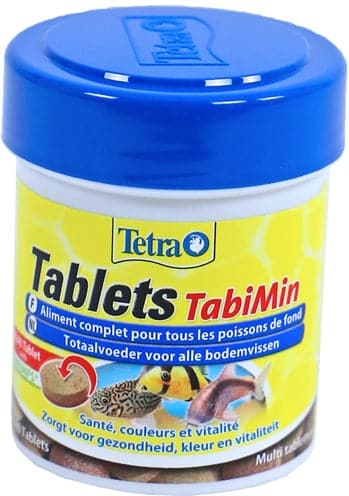
Tetra Tabimin Tabletten Fish food 120 st
Sinking complete food for larger bronze corys. Several small feeding areas prevent only the largest fish eating.
Check retailer for price0 retailers
Compare pricesSupplementary foods
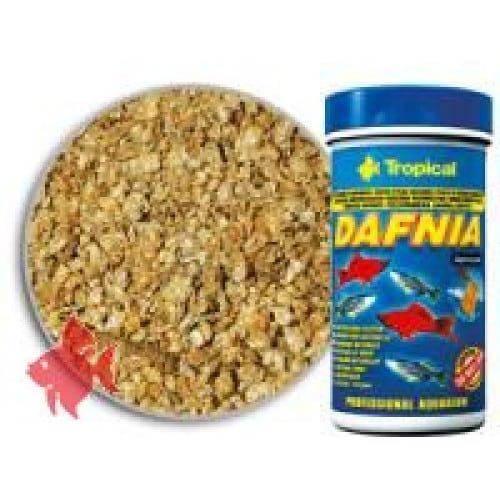
Tropical Dafnia 100ml
Small animal supplement, broken down and briefly soaked to reach the dedicated bottom feeding spot. Verify feeding; not a complete sinking-food replacement.
Check retailer for price1 retailers
Compare pricesWater testing and equipment
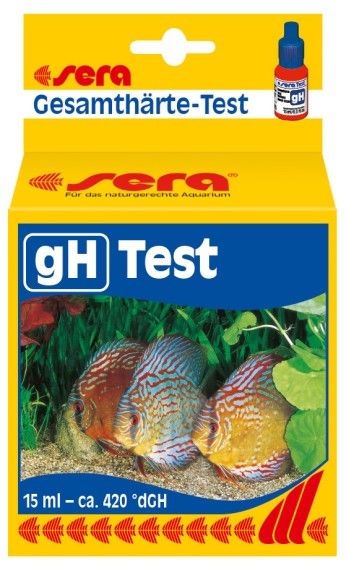
Sera - GH test
For checking a water parameter in this care guide. Follow the manufacturer’s test instructions; a test is not a treatment recommendation.
Check retailer for price0 retailers
Compare pricesPrices from the latest retailer update, excluding shipping. Check stock and delivery with the retailer.
Sources & review
This care guide draws on several specialist sources and was last checked on .
View the sources
- Dias et al. (2024), Zoological Journal of the Linnean Society — Corydoradinae revision — Hoplisoma panda
- LICG — Pantsermeervallen — care guidance
- Seriously Fish — Osteogaster aenea — identity and maintenance
- JAALAS (2024) — Comprehensive husbandry protocol for Corydoras catfish
- Riley et al. (2019), Royal Society Open Science — Coping with strangers: group coordination in Corydoras aeneus
- Pineda et al. (2020), Journal of Experimental Biology — Social dynamics obscure the effect of temperature on air breathing
- International Journal of Limnology (2018) — The early catfish catches the worm: predation on freshwater nematodes
- Circle City Aquarium Club — Corydoras aeneus — firsthand breeding report