Zebra danio
Danio rerio

The zebra danio, Danio rerio, is a small fish with a surprisingly large appetite for movement. Its horizontal stripes flash through the aquarium as a group searches for food or displays to one another. That speed makes it unsuitable for some community tanks. Calm, long-finned or very small companions may struggle with its constant activity. Choose a long aquarium, at least ten of its own species and water that is not automatically heated to the level required by particularly warmth-loving tropical fish. A well-designed zebra danio tank combines open swimming space with planted retreats. The species' widespread use in scientific research is no reason to copy small laboratory tanks or high experimental stocking densities at home. This guide focuses on a lasting home setup where fish can swim, forage and escape persistent pursuit.
Plan your aquarium →At a glance
- Temperature
- 20–24 °C
- pH
- 6.5–7.5
- GH
- 5–15 °dGH
- Aquarium length
- At least 90 cm
- Adult size
- Approximately 5 cm
- Group size
- At least 10 individuals
- Swimming zone
- Surface, Middle
- Temperament
- Peaceful, May jump
- Cover
- Plants and sheltered areas
- Staple food
- Fine flakes, Small granules
- Supplementary food
- Live food, Frozen food, Finely crumbled dried natural food
Use a minimum length of ninety centimetres for ten fish. One hundred and twenty centimetres provides more room for a larger community and separate feeding and resting areas. Zebra danios are small but fast, so a tall, short tank is not an equivalent alternative.
About this species
The slender body and dark horizontal stripes are distinctive. About five centimetres total adult length is a useful planning figure. Males generally look slimmer, while females become fuller, especially as eggs develop. An unusual belly shape can have several causes and is not a reliable sex or health diagnosis by itself.
Other colour patterns and long-finned forms are also sold. Their need for swimming room remains. Strongly extended fins may affect swimming, making powerful current particularly awkward. Choose fish that swim readily and upright and participate actively at feeding time. Assess the group as a whole, but also check whether one individual is consistently being driven away.
Natural habitat
Zebra danios originate from the Indian subcontinent, where shallow lowland waters are important habitats. Field research describes quiet stream margins, pools and human-modified waters, among other settings. It is therefore too simplistic to turn this active swimmer into a fish of permanently raging mountain torrents.
Water levels and conditions change seasonally. A temperature measured at a hot locality is not an instruction to maintain a home aquarium at that level continuously. A combination of open space, plants and quiet edges provides more useful design cues. Research on enrichment and social behaviour supports the importance of environmental structure and companions. It does not yield a universal number of litres per fish; the whole home setup still matters.
Aquarium and layout
Use a minimum length of ninety centimetres for ten fish. One hundred and twenty centimetres provides more room for a larger community and separate feeding and resting areas. Zebra danios are small but fast, so a tall, short tank is not an equivalent alternative.
Leave a long swimming lane and plant the rear and selected intervening areas. A pursued fish should be able to break visual contact without becoming trapped in a dead-end cave. Fit a secure cover, including around cables: startled fish can jump. Direct filter flow across part of the tank while preserving quieter areas. Use a mature filter and check the actual water temperature, even in a room that usually seems cool enough.
Water conditions
For routine aquarium care we choose 20–24 °C, pH 6.5–7.5 and GH 5–15. These are practical maintenance values within broader species recommendations. Higher temperatures in laboratory protocols are often selected for predictable development or reproduction and are not automatically the standard for a community aquarium.
The need for a heater depends on measured minimum temperatures and room fluctuations; unheated does not mean unmonitored. Prevent overheating from sunlight and provide adequate gas exchange. Ammonia and nitrite should not build up detectably. A reputation for hardiness does not justify using the fish to cycle a tank. Adjust water changes to the waste load and match replacement water's temperature and composition appropriately.
Behaviour and group size
Keep at least ten zebra danios so social attention can be distributed within a group. Brief chases are part of interaction, but a fish constantly pursued, injured or prevented from eating is not in an acceptable situation. Adding more fish to an undersized tank does not solve that problem.
The species mainly uses the middle and upper layers and reaches food quickly. Avoid slow, long-finned companions such as a betta and vulnerable tiny species unable to compete. With other active fish, assess the overall bustle and swimming length. Newborn fish and small shrimp may be eaten. A combination with warmth-loving species can be unsuitable even if their behaviour initially appears peaceful.
Feeding
Wild zebra danios take small invertebrates among other foods. In captivity, a fine complete food for small fish can be supplemented with suitable live or frozen organisms. A modest spread of small flakes or fine particles in the upper swimming zone is more practical than large tablets on the bottom.
The speed with which the group takes food can conceal uneven distribution. Feed in more than one place and check that smaller or subordinate fish actually eat. Do not give a large portion simply because the fish keep searching. Complete foods and supplements have different roles; dried water fleas do not constitute a complete diet. Check separately that companions' food has not already been intercepted by the danios.
Breeding
Zebra danios scatter eggs and provide no parental care. Spawning often occurs around the start of the light period. A separate breeding setup with fine material or a safe mesh can prevent adults from immediately finding and eating the eggs. Remove the parents once spawning has finished.
Prepare clean rearing space and suitably tiny first food. Larvae begin feeding after sufficient yolk reserves have been used; follow their development and food uptake rather than the clock alone. Larger particles can be introduced as they grow. The many research protocols for this fish are not an invitation to copy medicinal additives, extreme stocking densities or invasive procedures. Natural spawning, gentle filtration, careful maintenance and a plan for the growing fry are the foundations of a hobby breeding project.
Keeping with other species

Black neon tetra
Suitable with conditionsOnly within the cooler shared range, with ample swimming length. Danios are busier; monitor tetra hiding and feeding. Shared profile: 23–24 °C; pH 6.5–7.5; GH 5–12. Layout recommendation: from 120 cm.
View species profile →
Cherry barb
Suitable with conditionsWater can suit both, but cherry barbs need calmer planted margins. Keep full groups and feed at several locations. Shared profile: 22–24 °C; pH 6.5–7.5; GH 5–15. Layout recommendation: from 120 cm.
View species profile →
Panda cory
SuitableBoth suit the cooler regime. Keep quiet sand below the active school, target-feed pandas and maintain good oxygenation. Shared profile: 22–24 °C; pH 6.5–7.2; GH 5–12. Layout recommendation: from 120 cm.
View species profile →
Bronze cory
Suitable with conditionsChoose the cooler common range. The larger cory group needs additional floor area; prevent danios continually intercepting sinking food. Shared profile: 23–24 °C; pH 6.5–7.5; GH 5–15. Layout recommendation: from 120 cm.
View species profile →
Guppy
Suitable with conditionsOnly a guppy strain kept cooler in suitable harder water. Danios may harass flowing fins; choose short-finned fish and watch stress. Shared profile: 23–24 °C; pH 7–7.5; GH 9–15. Layout recommendation: from 120 cm.
View species profile →
Tiger barb
Suitable with conditionsBoth are active, but even a large tiger-barb group may nip. Use short-finned danios, broad swimming areas and a separation plan. Shared profile: 22–24 °C; pH 6.5–7.5; GH 5–12. Layout recommendation: from 120 cm.
View species profile →
Orange Mexican dwarf crayfish
Suitable with conditionsRisk to adultsThe dwarf crayfish can grab resting or low-feeding fish and is itself vulnerable when moulting. Territories, separate caves and a closed lid matter; this is not a guaranteed fish-safe species. Zebra danios mainly use open water but also visit food on the bottom. Retain their own group and at least 90 cm length; speed does not prevent grabbing a resting fish.
View species profile →Suitable plants

Straight vallisneria
Preserve swimming length for the danios. Ribbon leaves form a tall backdrop. Moderate to strong light, no compulsory CO₂; remove runners from open swimming or feeding areas. Shared profile: 20–24 °C; pH 6.5–7.5.
- Light
- Moderate, High
- CO₂
- CO₂ injection not essential

Java moss
Prioritise danio swimming length; with moss use the warmer shared temperature. Thinly attached moss gives fine shelter. Low to moderate light, no compulsory CO₂; keep debris and loose thread loops out. Shared profile: 22–24 °C; pH 6.5–7.5.
- Light
- Low, Moderate
- CO₂
- CO₂ injection not essential

Dwarf hygrophila
A trimmed group at the rear provides shelter. Thin the fast growth before it fills the swimming area; allow light and circulation to reach the lower leaves. Zebra danios remain active schooling fish: retain the existing minimum swimming length of 90 cm and do not let planting block it.
- Light
- Low, Moderate
- CO₂
- CO₂ injection not needed

Carolina bacopa
Firm stems provide cover along the edges. Plant loose groups with light reaching the base; keep the centre and bottom feeding area open. Use the shared temperature range rather than the warmest extremes. Zebra danios remain active schooling fish: retain the existing minimum swimming length of 90 cm and do not let planting block it.
- Light
- Moderate, High
- CO₂
- CO₂ injection not essential
Suitable products
Recommended staple foods
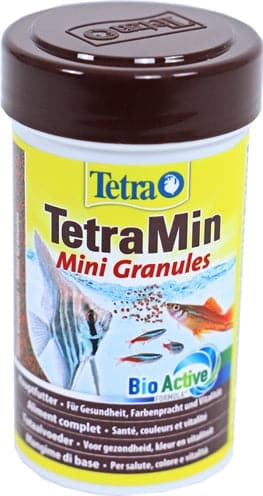
Tetra Min Minigranules Fish food 100 ml
Small complete granules suit rapid feeding. Distribute the ration; activity is no reason for constant extra feeding.
Check retailer for price0 retailers
Compare pricesSupplementary foods
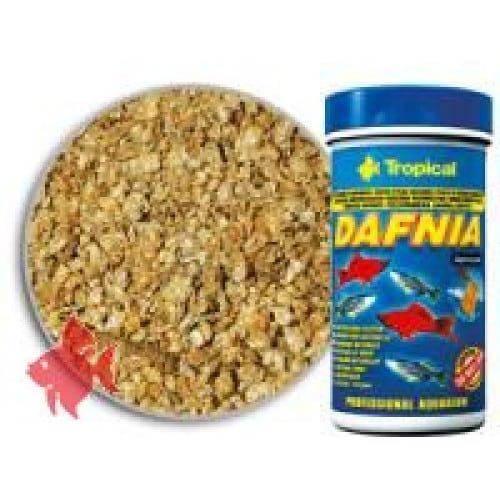
Tropical Dafnia 100ml
Dried Daphnia as a small supplementary variety. Adjust particle size and share among companions; never the only daily food.
Check retailer for price1 retailers
Compare pricesWater testing and equipment
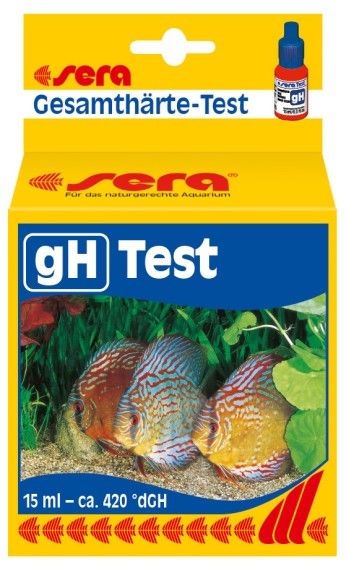
Sera - GH test
For checking a water parameter in this care guide. Follow the manufacturer’s test instructions; a test is not a treatment recommendation.
Check retailer for price0 retailers
Compare pricesPrices from the latest retailer update, excluding shipping. Check stock and delivery with the retailer.
Sources & review
This care guide draws on several specialist sources and was last checked on .
View the sources
- Seriously Fish — Danio rerio — aquarium requirements
- Engeszer et al., Zebrafish (2007) — Zebrafish in the wild: natural history and field observations
- David Parichy / eLife — Advancing biology through zebrafish ecology and evolution
- Engeszer et al., Animal Behaviour — Timing and plasticity of shoaling behaviour
- Laboratory animal welfare research — Pebble to the Metal: enrichment for Danio rerio
- Zebrafish research — Effects of diet and social housing on reproductive success
- ZFIN / University of Oregon — The Zebrafish Book — laboratory context