Guppy
Poecilia reticulata

The guppy, Poecilia reticulata, is famous for its colourful males and rapid reproduction. That familiarity sometimes leads people to underestimate its care. A healthy group needs swimming room, mineral-rich water and places to retreat; a little bowl does not become suitable because the fish is inexpensive or readily available. In ornamental guppies, large tails make the choice of current and companions particularly important. Females in mixed groups receive considerable male attention and may continue producing young after moving to a tank without males. Consider both the composition and future growth of the group before buying. This guide covers the common guppy and its aquarium forms. The closely related Endler has a separate guide, because breeding-line provenance and the prevention of unwanted crosses deserve specific attention.
Plan your aquarium →At a glance
- Temperature
- 23–25 °C
- pH
- 7.0–8.0
- GH
- 9–20 °dGH
- Aquarium length
- At least 60 cm
- Adult size
- Approximately 6 cm
- Group size
- At least 6 individuals
- Swimming zone
- Surface, Middle
- Temperament
- Peaceful
- Cover
- Plants and sheltered areas
- Staple food
- Fine flakes
- Supplementary food
- Live food, Frozen food, Finely crumbled dried natural food
Provide at least sixty centimetres length for a modest group. Eighty centimetres offers more escape space and is wiser for a growing colony or additional species. Plan for the adult population, rather than just the small fish brought home on purchase day. Extra height over a tiny footprint does not resolve pursuit between fish.
About this species
Males are usually smaller and more colourful than females. Allow around six centimetres for adult females; ornamental forms can differ noticeably in build and tail shape. The male's gonopodium, a narrow modified anal fin, is more useful for identifying sex than colour alone.
An enormous fan tail is not a sign of health. Check that the fish swims normally, uses its fins and feeds actively. A photograph of a fancy guppy does not reliably identify the geographical origin of its line. Prefer fish whose breeder knows their background and maintenance conditions. Keep those records if you intend to breed a recognisable strain yourself.
Natural habitat
The original range lies in northeastern South America and the southern Caribbean. Research on Trinidadian guppies shows that even neighbouring populations occupy different conditions. Food availability, shade and predators influence their way of life. Introduced populations now exist outside the native range too; that does not justify releasing aquarium fish.
Guppies use vegetated margins and surfaces where food can be found. Translate this into planted aquarium edges and accessible open patches. Their natural food is not everywhere limited to mosquito larvae: field studies also found algae, detritus and other small organisms. A varied environment is therefore more appropriate than a bare tank in which all feeding takes place at the surface.
Aquarium and layout
Provide at least sixty centimetres length for a modest group. Eighty centimetres offers more escape space and is wiser for a growing colony or additional species. Plan for the adult population, rather than just the small fish brought home on purchase day. Extra height over a tiny footprint does not resolve pursuit between fish.
Distribute tall plants and shelter across several places, retaining open swimming space at the front. Hanging roots can shelter fry provided they do not cover the entire surface. Position the filter outlet so long-finned fish need not constantly battle a strong current. Protect the intake when expecting young and close escape gaps. Thin excessive planting gradually rather than removing all retreats at once.
Water conditions
For routine care we use 23–25 °C, pH 7–8 and GH 9–20. This is a maintenance recommendation for aquarium guppies, not a compilation of every extreme occupied by wild populations. Soft acidic water is not an obvious choice simply because some small tetras require it.
Compare your tap water with the breeder's and avoid abrupt changes in composition. Adding ordinary salt does not replace suitable hardness. Increasing fry numbers can quietly raise the waste load: test ammonia, nitrite and nitrate and adapt water changes to the actual population. Watch breathing and oxygen availability in hot weather. Repeated shimmying or clamped fins calls for investigation, not automatically another additive.
Behaviour and group size
Guppies are social, but a peaceful reputation does not rule out trouble within a group. For mixed groups, a male with several females is a useful starting point; allow approximately two to five females per male. Then observe the fish themselves. Constant hiding or failure to feed means the arrangement or sex balance is not working.
A male-only group prevents births but can still show persistent chasing. Provide escape routes and observe behaviour after changes. A female-only group is not necessarily free of fry if its members have previously mated. Avoid fin-nippers and large predators, and do not assess companions solely by shared temperature. Keep guppies and Endlers apart when preserving ancestry matters.
Feeding
Use a fine complete food for small omnivorous fish, containing both animal and plant ingredients. Guppies take food at the surface and in the water column. Small flakes or slow-sinking granules are practical when readily swallowed. Pecking at algae does not mean an aquarium supplies enough nutrition without deliberate feeding.
Suitable small live or frozen foods and a supplement such as dried water fleas can add variety. Allow several fish access to each ration, including slower females. Check for leftovers among dense plants. Young guppies need finer food and appropriately small portions; pouring increasing amounts into the adult aquarium is not a considered rearing plan. Assess growth and condition as well as enthusiasm at feeding time.
Breeding
Following internal fertilisation, the female gives birth to free-swimming young. There is no jointly guarded nest. Sperm storage allows later broods without males being present again. The males currently in the tank therefore do not necessarily identify a fry's father. Carefully separating the sexes early is necessary for controlled line breeding.
Dense fine vegetation gives fry shelter, while adults may eat them. Anyone intending to raise large numbers should prepare a mature nursery aquarium and suitable future homes. A small floating box is not long-term housing for a heavily pregnant female or growing fry. Move fish calmly and avoid repeated catching in an attempt to force a birth. Rapid reproduction is only a success when the next generation can also be kept responsibly and in good health.
Keeping with other species

Zebra danio
Suitable with conditionsOnly a guppy strain kept cooler in suitable harder water. Danios may harass flowing fins; choose short-finned fish and watch stress. Shared profile: 23–24 °C; pH 7–7.5; GH 9–15. Layout recommendation: from 120 cm.
View species profile →
Tiger barb
UnsuitableShowy guppy fins and tiger-barb fin-nipping make an unsafe combination. More tiger-barb companions do not reliably remove the risk.
View species profile →
Endler's livebearer
Suitable with conditionsCare can overlap, but the species can hybridise. Avoid mixing for pure-line breeding; manage sex ratio, fry and food access. Shared profile: 24–25 °C; pH 7–8; GH 15–20. Layout recommendation: from 100 cm.
View species profile →
Southern platyfish
SuitableSuitable mineral-rich water and calm varieties can work. Both reproduce readily; plan for offspring and ensure smaller guppies feed. Shared profile: 23–25 °C; pH 7–8; GH 10–20. Layout recommendation: from 100 cm.
View species profile →
Green swordtail
Suitable with conditionsSwordtails are larger and busier. Provide long swimming space, balanced sex groups and quiet guppy feeding spots; fry may be eaten. Shared profile: 23–25 °C; pH 7–8; GH 10–20. Layout recommendation: from 150 cm.
View species profile →
Boeseman's rainbowfish
Suitable with conditionsLarge rainbowfish may outcompete guppies. Use shared water conditions, ample length and adult short-finned fish; fry face predation. Shared profile: 25 °C; pH 7–8; GH 10–20. Layout recommendation: from 150 cm.
View species profile →
Cockatoo dwarf cichlid
Suitable with conditionsOnly captive stock suited to the shared water profile. Apistogramma eats guppy fry and defends broods; separate bottom territory from calm surface feeding. Shared profile: 24–25 °C; pH 7–7.5; GH 9–15. Layout recommendation: from 100 cm.
View species profile →
Cherry shrimp
Suitable with conditionsRisk to juvenilesRisk to adultsAdult dwarf shrimp may persist with quiet small fish; a species aquarium is safer for a breeding colony. Guppies actively investigate small food and may take young shrimp. Consider harder water, stocking and feeding competition; adult survival does not establish safe juvenile recruitment.
View species profile →
Bee shrimp
UnsuitableRisk to juvenilesRisk to adultsAdult dwarf shrimp may persist with quiet small fish; a species aquarium is safer for a breeding colony. Guppies actively investigate small food and may take young shrimp. Consider harder water, stocking and feeding competition; adult survival does not establish safe juvenile recruitment. The selected central husbandry ranges do not overlap sufficiently; do not force a compromise.
View species profile →
Tiger shrimp
Suitable with conditionsRisk to juvenilesRisk to adultsAdult dwarf shrimp may persist with quiet small fish; a species aquarium is safer for a breeding colony. Guppies actively investigate small food and may take young shrimp. Consider harder water, stocking and feeding competition; adult survival does not establish safe juvenile recruitment.
View species profile →
Amano shrimp
Suitable with conditionsRisk to juvenilesAdult Amanos are larger than dwarf shrimp but vulnerable after moulting. Larvae also face predation and do not complete normal development in freshwater alone. Guppies actively investigate small food and may take young shrimp. Consider harder water, stocking and feeding competition; adult survival does not establish safe juvenile recruitment.
View species profile →
Bamboo shrimp
Suitable with conditionsRisk to juvenilesThis fan shrimp needs its own current perch and fine suspended food. Quiet fish must not intercept all food; protect fans, antennae and moulting animals. Guppies actively investigate small food and may take young shrimp. Consider harder water, stocking and feeding competition; adult survival does not establish safe juvenile recruitment.
View species profile →
African giant fan shrimp
Suitable with conditionsRisk to juvenilesThis fan shrimp needs its own current perch and fine suspended food. Quiet fish must not intercept all food; protect fans, antennae and moulting animals. Guppies actively investigate small food and may take young shrimp. Consider harder water, stocking and feeding competition; adult survival does not establish safe juvenile recruitment.
View species profile →
Horned nerite
SuitableA shell does not protect the extended foot and tentacles. End the combination after persistent withdrawal or injuries. Guppies are not specialised snail predators and their water often suits snails better than very acidic breeding water. Still watch for picking at foot or tentacles and competition for growth.
View species profile →
Zebra nerite
SuitableA shell does not protect the extended foot and tentacles. End the combination after persistent withdrawal or injuries. Guppies are not specialised snail predators and their water often suits snails better than very acidic breeding water. Still watch for picking at foot or tentacles and competition for growth.
View species profile →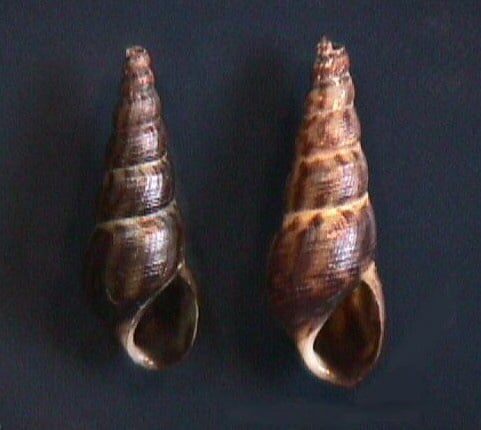
Malaysian trumpet snail
SuitableA shell does not protect the extended foot and tentacles. End the combination after persistent withdrawal or injuries. Guppies are not specialised snail predators and their water often suits snails better than very acidic breeding water. Still watch for picking at foot or tentacles and competition for growth.
View species profile →
Ramshorn snail
SuitableA shell does not protect the extended foot and tentacles. End the combination after persistent withdrawal or injuries. Guppies are not specialised snail predators and their water often suits snails better than very acidic breeding water. Still watch for picking at foot or tentacles and competition for growth.
View species profile →
Matano rabbit snail
UnsuitableA shell does not protect the extended foot and tentacles. End the combination after persistent withdrawal or injuries. Guppies are not specialised snail predators and their water often suits snails better than very acidic breeding water. Still watch for picking at foot or tentacles and competition for growth. The selected central husbandry ranges do not overlap sufficiently; do not force a compromise.
View species profile →
Orange Mexican dwarf crayfish
Not recommendedRisk to adultsThe dwarf crayfish can grab resting or low-feeding fish and is itself vulnerable when moulting. Territories, separate caves and a closed lid matter; this is not a guaranteed fish-safe species. Long-finned guppies can be grabbed while resting or feeding low. Matching harder water does not remove that physical risk.
View species profile →Suitable plants

Straight vallisneria
Cover helps guppy fry but does not prevent overstocking. Ribbon leaves form a tall backdrop. Moderate to strong light, no compulsory CO₂; remove runners from open swimming or feeding areas. Shared profile: 23–25 °C; pH 7–8.
- Light
- Moderate, High
- CO₂
- CO₂ injection not essential

Water sprite
Cover helps guppy fry but does not prevent overstocking. Floating fern can provide shade and root shelter. Moderate light, CO₂ not compulsory; never seal the whole surface. Shared profile: 23–25 °C; pH 7–7.5.
- Light
- Moderate
- CO₂
- CO₂ injection not essential
Suitable products
Recommended staple foods

Tetra Guppy Fish food Vlokken 100 ml
Small complete flakes for guppies; check the smallest males and avoid overfeeding full-bodied females.
Check retailer for price0 retailers
Compare pricesSupplementary foods
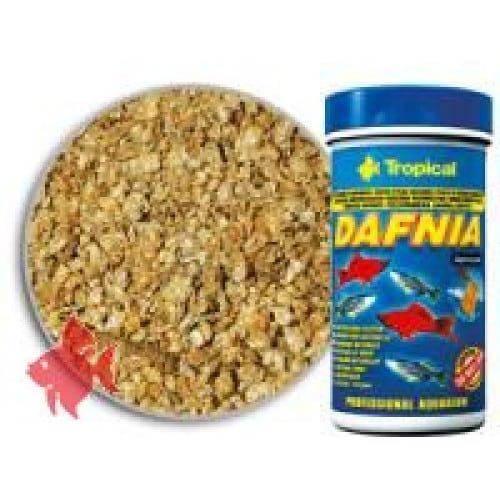
Tropical Dafnia 100ml
Dried Daphnia as a small supplementary variety. Adjust particle size and share among companions; never the only daily food.
Check retailer for price1 retailers
Compare pricesWater testing and equipment
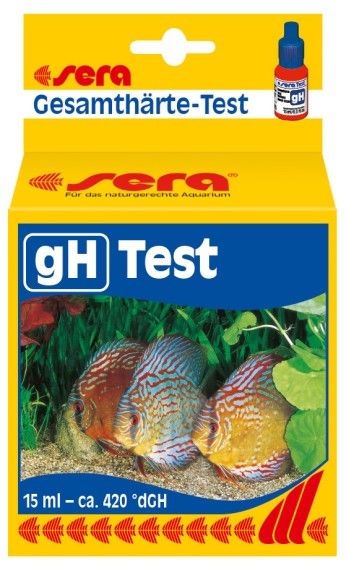
Sera - GH test
For checking a water parameter in this care guide. Follow the manufacturer’s test instructions; a test is not a treatment recommendation.
Check retailer for price0 retailers
Compare pricesPrices from the latest retailer update, excluding shipping. Check stock and delivery with the retailer.
Sources & review
This care guide draws on several specialist sources and was last checked on .
View the sources
- LICG — Guppy — verzorging
- Seriously Fish — Poecilia reticulata — aquarium care
- Federation of British Aquatic Societies — Fish care sheet 24 — Livebearers (Source currently unavailable)
- Poeser, Kempkes & Isbrücker (2005), Contributions to Zoology — Description of Poecilia wingei and review of Poecilia reticulata
- Zandonà et al. (2015), PLOS ONE — Contrasting Population and Diet Influences on Gut Length of the Trinidadian Guppy
- Darden & Croft (2008), Biology Letters — Male harassment drives females to alter habitat use
- Darden & Watts (2012), Biology Letters — Male sexual harassment alters female social behaviour
- Olivera-Tlahuel et al. (2017) — Morphological structures for potential sperm storage in poeciliid fishes