Bamboo shrimp
Atyopsis moluccensis

The bamboo shrimp catches food with fine fans on its front limbs. Atyopsis moluccensis is therefore not simply an enlarged cherry shrimp: food must be delivered past a suitable perch. It may remain in one place with fans spread, periodically bringing them to its mouth. This specialised behaviour requires a thoughtful layout. A clean aquarium with strong flow does not automatically contain enough edible particles. The species best suits a keeper prepared to feed selectively, observe capture and manage water quality. Ordinary sinking shrimp food is not recommended as a staple here without evidence that it suits this feeding method.
Plan your aquarium →At a glance
- Temperature
- 22–28 °C
- pH
- 6.5–8.5
- GH
- 6–25 °dGH
- KH
- 3–15 °dKH
- Difficulty
- Difficult
- Diet
- Filters small suspended food particles
- Plant safety
- Yes
- Aquarium length
- At least 60 cm
- Minimum aquarium volume
- At least 54 L
- Adult size
- Approximately 6–10 cm
- Group size
- At least 3 individuals
- Swimming zone
- Bottom
- Temperament
- Peaceful
- Cover
- Wood, Caves and narrow shelters
Figures are cautious husbandry guidance, not a full stocking calculation. Missing values are insufficiently supported. Read layout, water and pairing conditions together.
About this species
The robust adult reaches roughly six to ten centimetres. Brown, reddish and lighter colours occur; colour alone is not a reliable health test. Its fans collect food rather than acting as predatory grasping claws. Confusing it with Atya gabonensis is undesirable because that species can grow considerably larger. Consider body structure, feeding limbs and reliable identification together. The photograph shows the animal on a perch, illustrating where it can collect particles carried past in the water.
Natural habitat
Atyopsis moluccensis originates in Southeast Asia and is associated with flowing-water habitats. It uses places where current delivers food and where it can grip securely. That combination matters more than an arbitrary pump rating. A smooth bare tank with rushing water offers few useful perches. Direct flow past wood or stable stones while retaining quieter resting areas. Allowing organic waste to accumulate is not a reliable method of producing suitable suspended food.
Aquarium and layout
Start with an aquarium about 60 centimetres long and 54 litres or more, preferably larger for a small group and fish. Provide several secure perches in useful current, rather than one permanently occupied feeding point. Position the outlet so shrimp can filter comfortably without being pushed away. Include shelters outside the strongest flow. Close escape routes and protect filter intakes. Maintain access for targeted feeding and inspection of accumulating residues.
Water conditions
Warm, well-oxygenated conditions, usually within 22–28 °C, fit common maintenance recommendations. Avoid high temperature combined with inadequate oxygen. Use the central pH, GH and KH ranges as assessed husbandry guidance, not permission for large fluctuations. Prepare replacement water to match existing conditions. pH alone does not establish mineral suitability. No exact TDS or calcium target is provided where sufficiently specific evidence is lacking.
Behaviour and group size
This peaceful shrimp can be kept with a few conspecifics when each has a functional feeding place; it is not a schooling animal. Watch for displacement from good perches or fish picking at fans and antennae. Persistent scraping along the substrate is a reason to investigate food delivery and availability, not a definitive diagnosis by itself. Allow a freshly moulted shrimp to hide rather than returning it forcibly to the outlet.
Feeding
Food consists of small edible particles carried to the fans. Targeted provision of suitable fine food is often necessary in a clear, efficiently filtered aquarium. Observe active capture and movement of fans to the mouth. A hard sinking pellet does not automatically serve this function. Adding more powder when nothing is being captured may only pollute the tank: check position, particles and flow first. Use small feedings and assess filter load and water quality. Algae on glass do not replace this feeding method.
Breeding
Reproduction includes a free-swimming larval stage developing in more saline water. An egg-carrying female does not produce straightforward freshwater offspring. Successful specialist breeding differs from leaving larvae in a normal community tank. A separate system, suitable microscopic food and controlled transitions are required. This guide therefore gives no simple salt recipe or guaranteed development time. Adult welfare and sufficient feeding remain the ordinary keeper’s priorities.
Keeping with fish
Quiet small fish may be compatible if they leave the shrimp alone and also suit the flow pattern. Curious or territorial fish can injure fans and antennae without swallowing the entire shrimp. Large predators are unsuitable. Fish intercepting all suspended food can also be poor companions. Assess the food route as well as size and water. The shrimp must be able to filter undisturbed even while fish are actively feeding.
Keeping with other invertebrates
Small grazing shrimp and peaceful snails may occupy other parts of the aquarium, but their food must not be confused with suspended food for the bamboo shrimp. Additional large fan shrimp need more usable perches and sufficient supply. Crayfish can grasp vulnerable animals or limbs, especially around moulting, and do not belong in this combination. Check temperature and hardness for every species; the shrimp label does not guarantee shared requirements.
Exoskeleton, shell and minerals
During and after moulting, provide shelter where neighbours cannot continually push or pick. Let the animal decide when to return to a feeding perch. Minerals are required for the exoskeleton, but appropriate food and water are the starting point. Colour change does not prove a deficiency or justify automatic dosing. Repeated problems call for investigation of water changes and feeding. Never mechanically assist an animal out of its old exoskeleton.
Possible problems
Long-term underfeeding is an important practical risk for this filter feeder. Check regular effective feeding, not merely survival. Investigate oxygen, temperature, pollution and harassment if condition declines. Do not apply fish medicines or copper-containing treatments without checking suitability. Avoid simultaneously increasing current, food and additives without identifying the problem. Persistent abnormalities require knowledgeable help and a description of how the animal actually filters.
Keeping with other species

Neon tetra
Suitable with conditionsRisk to juvenilesThis fan shrimp needs its own current perch and fine suspended food. Quiet fish must not intercept all food; protect fans, antennae and moulting animals. Small neon tetras can eat newborn shrimp. Retain their own group and swimming space; moss reduces encounters without making young safe.
View species profile →
Pygmy cory
Suitable with conditionsRisk to juvenilesThis fan shrimp needs its own current perch and fine suspended food. Quiet fish must not intercept all food; protect fans, antennae and moulting animals. Pygmy corys share the substrate and feeding places. Quiet behaviour does not exclude taking tiny young; retain their group and separately accessible food.
View species profile →
Siamese fighting fish
Not recommendedRisk to juvenilesRisk to adultsThis fan shrimp needs its own current perch and fine suspended food. Quiet fish must not intercept all food; protect fans, antennae and moulting animals. A betta may deliberately hunt or pick at exposed parts. Individuals differ; dense plants and shells do not guarantee protection. Separation must be possible.
View species profile →
Freshwater angelfish
Not recommendedRisk to juvenilesRisk to adultsThis fan shrimp needs its own current perch and fine suspended food. Quiet fish must not intercept all food; protect fans, antennae and moulting animals. Adult angelfish are large and territorial and can seize smaller animals. Predation, picking and moulting vulnerability matter despite water overlap; their own large aquarium is still required.
View species profile →
Guppy
Suitable with conditionsRisk to juvenilesThis fan shrimp needs its own current perch and fine suspended food. Quiet fish must not intercept all food; protect fans, antennae and moulting animals. Guppies actively investigate small food and may take young shrimp. Consider harder water, stocking and feeding competition; adult survival does not establish safe juvenile recruitment.
View species profile →
African giant fan shrimp
Suitable with conditionsBoth filter suspended food. Give each a working current perch, large shelters and targeted food; one outlet branch is insufficient.
View species profile →Suitable plants

Dwarf Anubias
Sturdy Anubias leaves and roots provide grazing surfaces and shelter. Attach the rhizome rather than burying it.
- Light
- Low, Moderate
- CO₂
- CO₂ injection not needed

Java fern
Java fern on wood offers lasting leaves and cover. Keep the rhizome exposed and leave access for maintenance and feeding.
- Light
- Low, Moderate
- CO₂
- CO₂ injection not needed

African water fern
Bolbitis attached to wood suits local current. Leave a firm bare branch for filtering; fern leaves do not replace suspended food.
- Light
- Moderate
- CO₂
- Recommended
Suitable products
Recommended staple foods
No existing product sufficiently verified as fine suspended food for this filter feeder. Ordinary sinking shrimp food is not a suitable substitute. Follow targeted feeding advice above.
Water testing and equipment
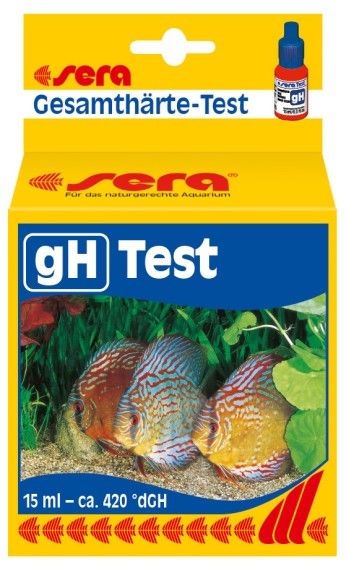
Sera - GH test
For checking a water parameter in this care guide. Follow the manufacturer’s test instructions; a test is not a treatment recommendation.
Check retailer for price0 retailers
Compare pricesPrices from the latest retailer update, excluding shipping. Check stock and delivery with the retailer.
Sources & review
This care guide draws on several specialist sources and was last checked on .