Honey gourami
Trichogaster chuna

The honey gourami, Trichogaster chuna, is a small labyrinth fish distinguished by its quiet exploration and the warm colouring of adult males. During courtship the throat can become very dark. It is an attractive planted-aquarium resident, but not one that automatically thrives among much larger, boisterous neighbours. Sheltered upper areas, calm feeding places and access to air are essential. Shops also sometimes use the name honey gourami for other, larger-growing species. Confirm the actual identity before using a small adult size in your stocking plan. This guide concerns true Trichogaster chuna. We favour a generously housed small group with a clearly structured layout, assessing companions particularly for calm behaviour, food competition and room around the surface.
Plan your aquarium →At a glance
- Temperature
- 24–26 °C
- pH
- 6.0–7.5
- GH
- 4–12 °dGH
- Aquarium length
- At least 80 cm
- Adult size
- Approximately 5.5 cm
- Group size
- At least 4 individuals
- Swimming zone
- Surface, Middle
- Temperament
- Territorial
- Cover
- Plants and sheltered areas
- Staple food
- Fine flakes
- Supplementary food
- Live food, Frozen food, Finely crumbled dried natural food
For the small group of four selected here, provide at least eighty centimetres length, preferably one hundred centimetres with additional species. Advice for a pair sometimes mentions sixty centimetres. That does not automatically accommodate several males requiring separate surface areas.
About this species
The species stays small; a specialist maximum measurement is approximately five and a half centimetres standard length, excluding the tail fin. Females are often less intensely coloured and may show a dark longitudinal stripe. In the natural colour form, a courting male develops a dark throat and underside. Cultivated colour forms may differ in their markings.
A yellow or orange fish is not automatically a honey gourami. The larger thick-lipped gourami, Trichogaster labiosa, is especially prone to confusing trade labels. Confirm the name and consider provenance and adult build. Older names such as Colisa chuna and Colisa sota refer to this honey gourami in the sources used here; they should not become additional database species.
Natural habitat
The species is known from the Ganges and Brahmaputra regions of India and Bangladesh, with additional regional records. Quiet, densely vegetated lowland waters are important habitats. Seasonal change affects water levels and conditions there, but such fluctuations need not be deliberately recreated in a home aquarium.
Plants approaching the surface provide a sheltered transition between cover and breathing. Thread-like pelvic fins help the fish explore its surroundings. Arrange quiet routes between plants so it need not repeatedly cross a more forceful resident's territory. The labyrinth organ does not justify an unfiltered tank: breathing air does not replace clean water and a mature biological system.
Aquarium and layout
For the small group of four selected here, provide at least eighty centimetres length, preferably one hundred centimetres with additional species. Advice for a pair sometimes mentions sixty centimetres. That does not automatically accommodate several males requiring separate surface areas.
Create several planted zones with cover high in the tank. Floating plants are useful, but retain openings for easy air access. Direct the outlet along a wall or diffuse it to avoid strong disturbance across the whole surface. Leave space beneath the cover for warm humid air, with normal ventilation. Do not seal the aquarium airtight. Check that the most withdrawn fish also has a safe route upwards.
Water conditions
The maintenance range is 24–26 °C, pH 6–7.5 and GH 4–12. It sits within broader published advice and offers a moderate starting point for captive-bred honey gouramis. If water differs, ask about the conditions in which the fish grew up rather than abruptly moving them to a table value.
Gentle flow does not mean allowing waste to accumulate. Monitor ammonia and nitrite, control nitrate and remove dying vegetation. If the surface becomes almost covered, assess both light reaching submerged plants and access to air. Observe normal breathing: occasional air intake is characteristic, but persistent gasping or a sudden behavioural change calls for investigation of water quality and health.
Behaviour and group size
This is not a tightly schooling fish. Sources differ on solitary, paired and group keeping; a well-arranged group allows social interaction but needs more room and checks for dominance. With four fish, prefer a female-biased composition to a collection of brightly coloured males.
A dominant female can also displace another fish, so distribute both cover and feeding places. Small peaceful rasboras and appropriate bottom dwellers are better candidates than tiger barbs, boisterous swordtails or competing territorial labyrinth fish. A male tending a bubble nest may become more assertive. Baby shrimp are not safe merely because the gourami is peaceful towards adult fish. Judge each combination against the actual aquarium and retain an alternative housing option.
Feeding
The small mouth and unhurried feeding call for finely presented food. Small invertebrates feature in the natural diet; an appropriate fine complete food can be used in captivity, supplemented with small live or frozen organisms. Confirm actual ingestion, especially alongside quicker fish.
Offering a little food within cover can help without increasing the whole aquarium's waste load. Crush suitable flakes if necessary; small slow-sinking particles should not immediately fall out of reach. Dried water fleas are supplementary, not a complete staple. Scattering food and assuming a shy fish will later find leftovers is inadequate. Assess abdominal condition and activity across several days, not colour during a single feeding.
Breeding
The male builds a surface bubble nest and cares for the eggs. The spawning pair bond is temporary. Afterwards the female may be driven away, so a deliberate breeding arrangement provides her with safe alternative housing. Gentle filtration prevents repeated disruption of the nest.
Prepare extremely small first foods before fry arrive. Newly free-swimming larvae are not automatically large enough for adult food or every brine-shrimp ration. Remove the male when his care phase ends and fry begin swimming freely. Maintain warm humid air beneath a ventilated cover while the labyrinth organ develops. Small careful water changes and safe filtration matter more than a forced timetable intended to produce the maximum number of eggs.
Keeping with other species

Black neon tetra
Suitable with conditionsThe school is generally calm enough, but honey gouramis must reach food. Retain floating cover and escape space around bubble nests. Shared profile: 24–26 °C; pH 6–7.5; GH 4–12. Layout recommendation: from 100 cm.
View species profile →
Cherry barb
SuitablePlanted shelter suits both. Keep a proper barb group and let honey gouramis feed calmly above; watch closely around nests. Shared profile: 24–25 °C; pH 6–7.5; GH 5–12. Layout recommendation: from 100 cm.
View species profile →
Tiger barb
UnsuitableSmall honey gouramis may be chased and have their feelers damaged. Shelter does not compensate for this temperamental mismatch.
View species profile →
Endler's livebearer
Not recommendedHardness preferences differ, and calm honey gouramis feed at a different pace. Do not force a poor water compromise.
View species profile →
Dwarf gourami
Not recommendedBoth use quiet upper layers and defend nest areas. Smaller honey gouramis can be displaced; prefer one gourami species in a modest tank.
View species profile →
Chili rasbora
Not recommendedChili rasboras are exceptionally small and shy. Even calm honey gouramis may intimidate them or take food; similarly tiny companions are safer.
View species profile →
Bigspot otocinclus
Suitable with conditionsCalm behaviour helps, but use a mature tank with established grazing. Keep surface access clear and give Otocinclus accepted dedicated food. Shared profile: 24–26 °C; pH 6–7.5; GH 4–12. Layout recommendation: from 100 cm.
View species profile →
Kuhli loach
SuitableA calm upper layer complements sheltered bottom space. Keep a full kuhli group, safe crevices and separate feeding spots without strong flow. Shared profile: 24–25 °C; pH 6–7; GH 4–8. Layout recommendation: from 100 cm.
View species profile →Suitable plants

Water sprite
Quiet corners for honey gouramis; always preserve a route to air. Floating fern can provide shade and root shelter. Moderate light, CO₂ not compulsory; never seal the whole surface. Shared profile: 24–26 °C; pH 6.5–7.5.
- Light
- Moderate
- CO₂
- CO₂ injection not essential

Dwarf ambulia
Quiet corners for honey gouramis; always preserve a route to air. Fine stems at the margins provide cover; low to moderate light, optional CO₂. Trim regularly and retain an open swimming lane. Shared profile: 24–26 °C; pH 6–7.5.
- Light
- Low, Moderate
- CO₂
- CO₂ injection not essential
Suitable products
Recommended staple foods
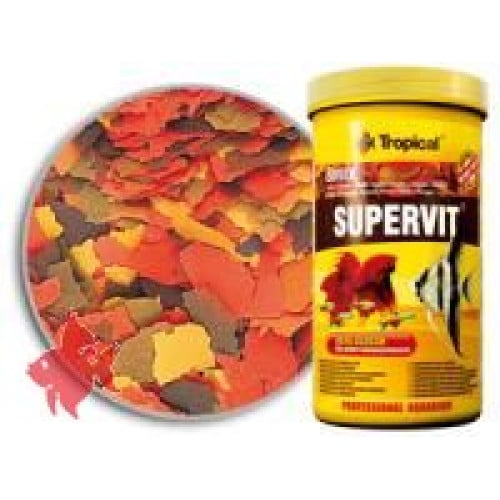
Tropical Supervit Basic 100ml
Complete flakes for animal-oriented feeders, crushed very finely. Give honey gouramis a calm surface spot and check acceptance.
Check retailer for price1 retailers
Compare pricesSupplementary foods
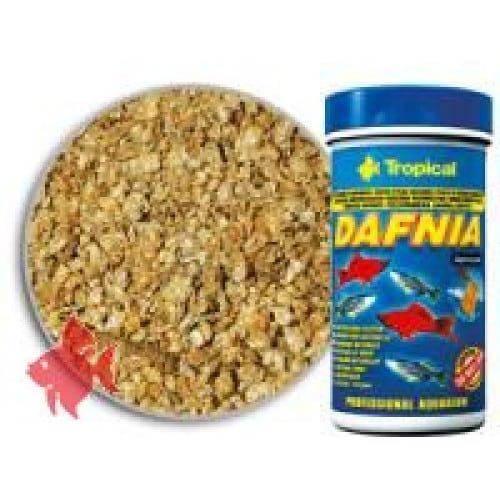
Tropical Dafnia 100ml
Very finely crumbled dried Daphnia, only as variety alongside complete food. Check the small mouth accepts it; not newly hatched fry food.
Check retailer for price1 retailers
Compare pricesWater testing and equipment
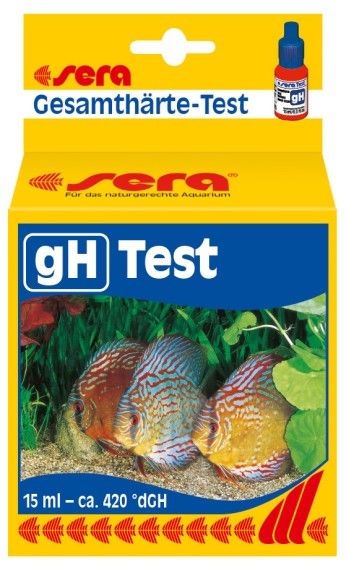
Sera - GH test
For checking a water parameter in this care guide. Follow the manufacturer’s test instructions; a test is not a treatment recommendation.
Check retailer for price0 retailers
Compare pricesPrices from the latest retailer update, excluding shipping. Check stock and delivery with the retailer.
Sources & review
This care guide draws on several specialist sources and was last checked on .
View the sources
- Seriously Fish — Trichogaster chuna — habitat and aquarium care
- Tropical Fish Hobbyist — Trichogaster chuna — keeping and identification
- Aquarium Co-Op — Honey gouramis — firsthand keeping and breeding guide
- Aquaculture (2021) — Preference of breeding substratum, embryonic development and seed production of Trichogaster chuna
- Frankel (2008), Journal of Genetics — Monogenic control of sex-limited colouration in the honey gourami