Chili rasbora
Boraras brigittae

The chili rasbora, Boraras brigittae, is an exceptionally small fish that brings considerable activity when kept in a quiet group. Its red colour and dark longitudinal markings become particularly striking when the fish feel secure among cover and open swimming lanes. Small size does not, however, make this species suitable for every tiny container. A mature, stable aquarium and food that genuinely fits its minute mouth matter more than the appealing label nano fish. Busy or larger companions can keep the group permanently in the background without visibly chasing it. Consider food competition and predation before combining species. A species-focused aquarium with enough companions is often easier to manage than a collection of small fish with different requirements. This guide concerns Boraras brigittae, not every red Boraras sold under the same trade name.
Plan your aquarium →At a glance
- Temperature
- 24–26 °C
- pH
- 5.5–6.8
- GH
- 2–6 °dGH
- Aquarium length
- At least 45 cm
- Adult size
- Approximately 2 cm
- Group size
- At least 10 individuals
- Swimming zone
- Middle
- Temperament
- Peaceful
- Cover
- Plants and sheltered areas
- Staple food
- Fine flakes, Fine powdered food
- Supplementary food
- Live food, Frozen food, Finely crumbled dried natural food
Provide an aquarium from forty-five centimetres long for at least ten fish. Sixty centimetres is more comfortable, leaving additional space for plants and a larger group. Their minute body size does not justify an unfiltered vase or newly started miniature tank.
About this species
Adults reach about two centimetres standard length, excluding the tail fin. Males are often slimmer and more intensely red, while females are generally fuller. Colour also varies with age, condition and stress. A pale newcomer is not necessarily misidentified, but colour alone does not prove identity either.
Compare body shape and dark flank markings together. Boraras merah and Boraras urophthalmoides can be confused with this species. Use clear photographs and origin information rather than treating every tiny red rasbora alike. The current classification places it in Danionidae. Rasbora remains a useful common name even though the scientific genus is Boraras.
Natural habitat
Chili rasboras originate from southwestern Borneo. Forest swamps and slow or still waters rich in organic material form their known habitat. Leaves and wood stain the water, while forest and marginal vegetation reduce light. Consequently, submerged plants need not cover every part of the natural substrate.
A planted aquarium can nevertheless provide a practical equivalent: plants offer shelter and interrupt sight lines. Suitable leaves are optional, but brown water does not prove that pH and hardness are correct. Keep quiet open spaces between dense areas so feeding and social behaviour remain observable. An exact biotope recreation and a functional care aquarium are different choices; both demand good water quality.
Aquarium and layout
Provide an aquarium from forty-five centimetres long for at least ten fish. Sixty centimetres is more comfortable, leaving additional space for plants and a larger group. Their minute body size does not justify an unfiltered vase or newly started miniature tank.
Use subdued light, fine shelter and gentle water movement. A sponge filter or safely protected intake prevents small fish disappearing into filtration. Do not allow floating plants to seal the whole surface. Arrange cover so subordinate fish can leave each other's sight without entering a bare corner. Keep the aquarium covered and plan maintenance to avoid accidentally removing fish with plant trimmings or siphoned water.
Water conditions
Our practical maintenance choice is 24–26 °C, pH 5.5–6.8 and GH 2–6. Some keepers report success in harder or alkaline water, whereas other sources specifically recommend soft acidic conditions. We adopt the softer, mildly acidic profile conservatively without making extreme natural acidity compulsory.
Measure tap water before buying a group. If adjustment is necessary, it should be repeatable and gradual. Adding acid without understanding buffering is not a care plan. Carry out modest maintenance appropriate to the aquarium with prepared water and preserve biological filtration. Mistakes have rapid consequences in small tanks. Achieving the preferred numerical ranges never makes detectable ammonia or nitrite acceptable.
Behaviour and group size
A group of at least ten allows more social interaction and distributes attention between males. Small temporary territories may form during courtship. This does not justify keeping isolated pairs in undersized tanks; cover and group space are helpful.
Suitable neighbours are small, quiet and unable to swallow adult rasboras. Even a peaceful larger fish may therefore be unsuitable. Assess feeding as well: fast livebearers or energetic barbs can outcompete the group. Adult dwarf shrimp are usually left alone, but tiny shrimplets are not guaranteed protection. A mature group that constantly hides or loses weight needs its community reassessed, not automatically more fish.
Feeding
This miniature predator takes tiny invertebrates and other appropriately sized particles from the water column. Choose a complete microfood with suitable animal ingredients and a demonstrably usable particle size. Mini or tropical on the packaging is insufficient: check that the smallest fish swallow it rather than repeatedly spitting it out.
Finely crushed flakes may work provided they do not immediately disperse as uneaten dust. Small live or frozen foods, such as suitable Cyclops or young Artemia, can supplement the diet. Offer small portions across the quiet swimming area without allowing everything to sink straight to the bottom. More food cannot compensate for the wrong size. A careful species-specific recommendation may therefore contain fewer shop products than one for a larger tetra.
Breeding
Well-conditioned adults may deposit small numbers of eggs among fine structures. There is no protective parental care, and eggs or fry can be eaten. Deliberate rearing benefits from separate mature accommodation with fine plants or a suitable spawning mop and protected filtration.
First feeding is a major difficulty. Newly feeding fry initially need food smaller than Artemia nauplii. Prepare a dependable culture of suitable microscopic food and move to larger items according to actual ingestion rather than a calendar alone. Remove adults after observed spawning to reduce predation. Keep rearing conditions clean without stripping away all microfauna. A few spontaneously surviving fry are encouraging but do not demonstrate that a larger breeding project needs no preparation.
Keeping with other species

Tiger barb
UnsuitableTiny chili rasboras are easily crowded, threatened or treated as prey. Their quiet soft-water setup does not suit busy tiger barbs.
View species profile →
Honey gourami
Not recommendedChili rasboras are exceptionally small and shy. Even calm honey gouramis may intimidate them or take food; similarly tiny companions are safer.
View species profile →
Panda cory
Suitable with conditionsOur profiles share only a narrow temperature overlap. Use stable common conditions and feed chilis fine food above calm bottom fish. Shared profile: 24 °C; pH 6–6.8; GH 2–6. Layout recommendation: from 80 cm.
View species profile →
Bigspot otocinclus
SuitableBoth are small and calm with different food resources. Mature grazing, fine shelter and targeted microfood are needed for two proper groups. Shared profile: 24–26 °C; pH 6–6.8; GH 2–6. Layout recommendation: from 80 cm.
View species profile →
Kuhli loach
Suitable with conditionsCalm pairing in shared soft water. Chilis need daytime microfood; kuhlis need dedicated bottom food and safe crevices, not accumulated leftovers. Shared profile: 24–25 °C; pH 6–6.8; GH 2–6. Layout recommendation: from 80 cm.
View species profile →
Ember tetra
SuitableSmall calm schools taking fine food can suit shared soft water. Keep enough of each species and check the smallest chilis at every feed. Shared profile: 24–26 °C; pH 5.5–6.8; GH 4–6. Layout recommendation: from 80 cm.
View species profile →Suitable plants

Java moss
Fine shelter for tiny chilis with open patches to monitor microfood. Thinly attached moss gives fine shelter. Low to moderate light, no compulsory CO₂; keep debris and loose thread loops out. Shared profile: 24–26 °C; pH 5.5–6.8.
- Light
- Low, Moderate
- CO₂
- CO₂ injection not essential

Dwarf ambulia
Fine shelter for tiny chilis with open patches to monitor microfood. Fine stems at the margins provide cover; low to moderate light, optional CO₂. Trim regularly and retain an open swimming lane. Shared profile: 24–26 °C; pH 5.5–6.8.
- Light
- Low, Moderate
- CO₂
- CO₂ injection not essential
Suitable products
Recommended staple foods
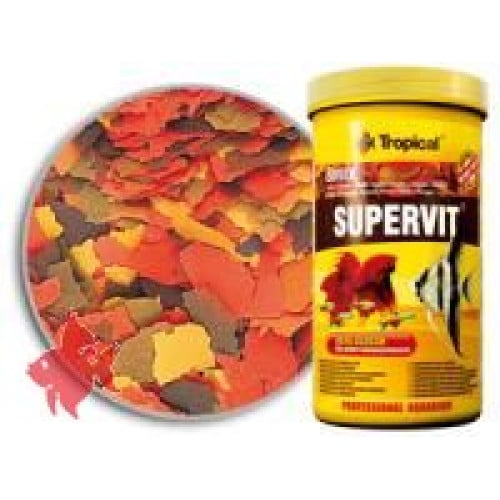
Tropical Supervit Basic 100ml
Use only very finely ground for adult chili rasboras. This complete food is not microscopic first fry food; check every tiny mouth.
Check retailer for price1 retailers
Compare pricesSupplementary foods
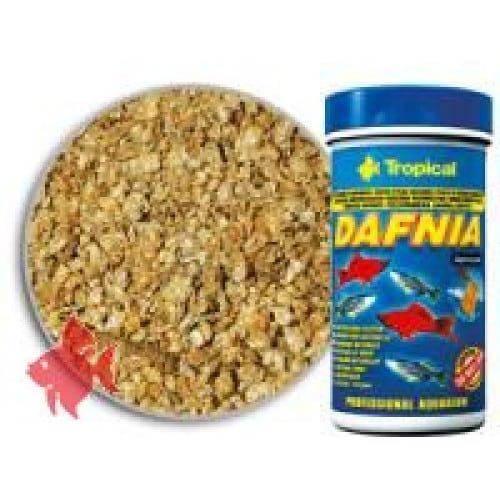
Tropical Dafnia 100ml
Very finely crumbled dried Daphnia, only as variety alongside complete food. Check the small mouth accepts it; not newly hatched fry food.
Check retailer for price1 retailers
Compare pricesWater testing and equipment
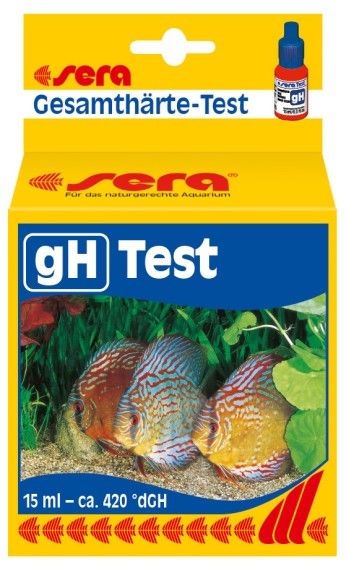
Sera - GH test
For checking a water parameter in this care guide. Follow the manufacturer’s test instructions; a test is not a treatment recommendation.
Check retailer for price0 retailers
Compare pricesPrices from the latest retailer update, excluding shipping. Check stock and delivery with the retailer.
Sources & review
This care guide draws on several specialist sources and was last checked on .
View the sources
- Eschmeyer’s Catalog of Fishes — Boraras brigittae — accepted taxonomy
- Seriously Fish — Boraras brigittae — species profile
- Practical Fishkeeping — Chilli rasbora care — habitat and aquarium
- Aquarium Co-Op — Chili rasboras — firsthand feeding and breeding
- Aquariumforum keeper breeding log — Boraras brigittae Nachzucht — documented observations
- Australian live-import assessment dossier — Boraras brigittae — species assessment