Rummy-nose tetra
Petitella bleheri

The rummy-nose tetra, Petitella bleheri, is instantly recognisable by its red head, silver body and black-and-white tail. A group moving through a long open swimming lane is far more striking than a few individuals in a crowded community aquarium. This is a peaceful fish, but not an undemanding beginner's choice: soft water, a biologically stable tank and suitable companions matter. Keep at least ten of its own species and allow a minimum length of ninety centimetres for the setup described here. Provide a clear swimming route with shelter around the edges. Colour may fade temporarily after transport; a red head is never a substitute for testing the water. Even brightly coloured fish still need effective filtration, adequate oxygen and reliable access to food. If you mainly want a splash of colour for a small tank, reconsider the available swimming space first.
Plan your aquarium →At a glance
- Temperature
- 24–26 °C
- pH
- 6.0–6.5
- GH
- 2–4 °dGH
- Aquarium length
- At least 90 cm
- Adult size
- Approximately 5 cm
- Group size
- At least 10 individuals
- Swimming zone
- Middle
- Temperament
- Peaceful
- Cover
- Plants and sheltered areas
- Staple food
- Fine flakes, Small granules
- Supplementary food
- Live food, Frozen food, Finely crumbled dried natural food
For at least ten fish we use ninety centimetres as the minimum length; one hundred and twenty centimetres offers more comfortable space for a larger school or companions. Care sources disagree about the lower limit. We choose the more generous length because these fish swim actively together. A tall tank cannot compensate for a short swimming route, so we do not present a calculated number of litres as a biological minimum.
About this species
Older books and shop labels may call this species Hemigrammus bleheri. Its current genus is Petitella. Related rummy-nose tetras are very similar; in this species the red usually extends beyond the gill covers. Where identification is uncertain, consider several features and the fish's provenance, because stressed, pale shop specimens can be difficult to recognise. A sales label alone is not conclusive.
Allow for a total length of about five centimetres. Females may be fuller-bodied than males, particularly when carrying eggs. The difference is not always obvious in young or thin fish. When buying, look for normal swimming posture, intact fins and well-filled bellies. A group containing several fish that are wasting away or isolating themselves needs investigation before you take any home.
Natural habitat
Petitella bleheri comes from South American river systems, with documented localities in the Negro and Meta regions. Shaded, mineral-poor water is an important starting point for its care. Branches, leaves and other structures shape the bed and margins; its natural habitat is not a bare, brightly lit container.
Recreate a gradual transition from sheltered edges to open swimming water. A dark background and overhanging plants can help. Leaves are only an addition to a stable setup: a large mass of decomposing material can overload it. Add them gradually and monitor the effect on the water. Useful cover and a calm environment are the aims, rather than matching the exact brown colour of a habitat photograph.
Aquarium and layout
For at least ten fish we use ninety centimetres as the minimum length; one hundred and twenty centimetres offers more comfortable space for a larger school or companions. Care sources disagree about the lower limit. We choose the more generous length because these fish swim actively together. A tall tank cannot compensate for a short swimming route, so we do not present a calculated number of litres as a biological minimum.
Place tall plants towards the back and leave much of the middle open. Spread the filter outlet's flow: water should circulate without making the fish struggle against a concentrated jet. Cover the tank and close gaps through which a startled fish could escape. Allow the aquarium to mature biologically before stocking, and avoid adding a large number of other fish at the same time.
Water conditions
The maintenance range selected here is 24–26 °C, pH 6–6.5 and GH 2–4. This soft-water choice applies to Petitella bleheri and should not automatically be copied to every fish with a red nose. Wider tolerance ranges quoted elsewhere do not justify putting this school in hard, alkaline tap water.
Check replacement water as well. Low mineral levels may coincide with limited buffering, so aim for stable conditions and monitor changes. Keep ammonia and nitrite undetectable and watch nitrate trends. If several fish turn pale, breathe rapidly or stop eating, first investigate water quality, temperature and disturbance. Do not respond to an unknown cause by adding treatments at random.
Behaviour and group size
This species needs company of its own kind. Ten is the minimum used here; a larger group is worthwhile where the layout and total stocking allow it. Frequent coordinated swimming is normal. Persistent crowding just below the surface or constant flight calls for a closer look at the conditions.
Choose calm fish that tolerate soft water and cannot prey on them. Large cichlids and persistent fin-nippers are unsuitable. Small bottom dwellers can use another part of the aquarium, but must receive their own food. A second substantial school needs additional length and may make the aquarium busier. Young shrimp are not safe merely because this tetra is peaceful towards other fish.
Feeding
Offer a fine complete food that remains accessible in the swimming zone. Small flakes or appropriately sized slow-sinking particles are useful if the fish actually swallow them. A label saying tropical food tells you little about particle size; crumble it when necessary and watch for repeated spitting out.
Vary the diet with small live or frozen food organisms from a dependable supplier. Dried water fleas can supplement the diet, but should not form its sole basis. Distribute small portions along the tank. This gives less competitive individuals a chance to eat and reduces food disappearing unnoticed between plants. Feed cautiously after a move and assess belly condition and activity over the following days.
Breeding
Rummy-nose tetras scatter eggs and do not care for their young. Deliberate breeding requires a separate setup with carefully controlled soft water, fine spawning material and protection from egg predation. It is a more specialised undertaking than maintaining a healthy adult school.
Eggs and early larvae need subdued light and clean water. Prepare microscopic first foods before attempting breeding; ordinary flakes are not an appropriate starter diet. Remove the adults after spawning and increase food particle size only when the fry can take it. We do not prescribe forced heating: breeding recommendations vary, and an extremely high temperature is not a routine maintenance setting. An occasional youngster in dense planting is welcome, but does not make a community aquarium a dependable rearing system.
Keeping with other species

Cardinal tetra
Suitable with conditionsTwo complete schools need a long clear swimming lane. Rummynoses are more active; distribute fine food so cardinals feed too. Shared profile: 24–26 °C; pH 6–6.5; GH 2–4. Layout recommendation: from 120 cm.
View species profile →
Black neon tetra
Suitable with conditionsBoth schools occupy midwater. A long tank and distributed feeding help prevent active rummynoses crowding out the calmer school. Shared profile: 24–26 °C; pH 6–6.5; GH 3–4. Layout recommendation: from 120 cm.
View species profile →
Sterba's cory
SuitableOpen swimming above a sand area suits both groups. Protect bottom food from fast rummynoses; keep complete groups of each species. Shared profile: 24–26 °C; pH 6–6.5; GH 2–4. Layout recommendation: from 120 cm.
View species profile →
Bigspot otocinclus
Suitable with conditionsOtocinclus cannot rely on a food-poor new tank. Keep quiet mature grazing patches beside the swimming lane and prevent the fast school stealing food. Shared profile: 24–26 °C; pH 6–6.5; GH 2–4. Layout recommendation: from 120 cm.
View species profile →
Kuhli loach
SuitableA long midwater lane complements a sheltered sand bottom. Offer kuhlis dedicated sinking food when the school is less active. Shared profile: 24–25 °C; pH 6–6.5; GH 2–4. Layout recommendation: from 120 cm.
View species profile →
Cockatoo dwarf cichlid
Not recommendedOur selected hardness profiles do not overlap. Apistogramma also defends breeding territories; choose a better-matched school rather than forcing water chemistry.
View species profile →
Ram cichlid
Not recommendedThe selected rummynose range ends below the ram’s long-term warm regime. Forcing a boundary is poor practice; both require excellent water quality.
View species profile →Suitable plants

Dwarf ambulia
Leave a long rummynose swimming lane in front. Fine stems at the margins provide cover; low to moderate light, optional CO₂. Trim regularly and retain an open swimming lane. Shared profile: 24–26 °C; pH 6–6.5.
- Light
- Low, Moderate
- CO₂
- CO₂ injection not essential

Dwarf Anubias
Leave a long rummynose swimming lane in front. Sturdy Anubias leaves provide sheltered surfaces. Attach the rhizome to wood without burying; gentle light, no compulsory CO₂. Shared profile: 24–26 °C; pH 6–6.5.
- Light
- Low, Moderate
- CO₂
- CO₂ injection not needed
Suitable products
Recommended staple foods
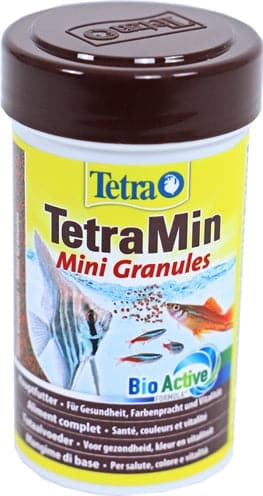
Tetra Min Minigranules Fish food 100 ml
Fine complete granules for active midwater fish. Spread a small ration across the school; mini does not guarantee every particle fits.
Check retailer for price0 retailers
Compare pricesSupplementary foods
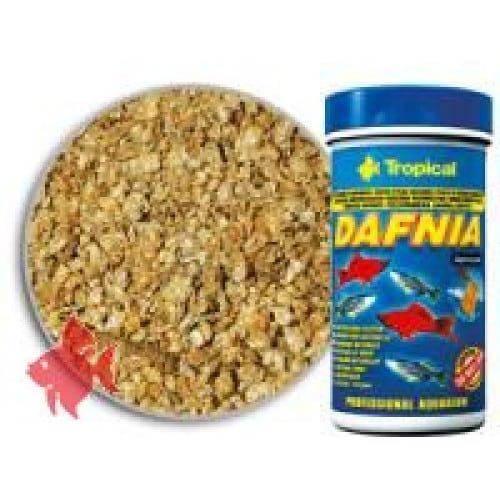
Tropical Dafnia 100ml
Dried Daphnia as a small supplementary variety. Adjust particle size and share among companions; never the only daily food.
Check retailer for price1 retailers
Compare pricesWater testing and equipment
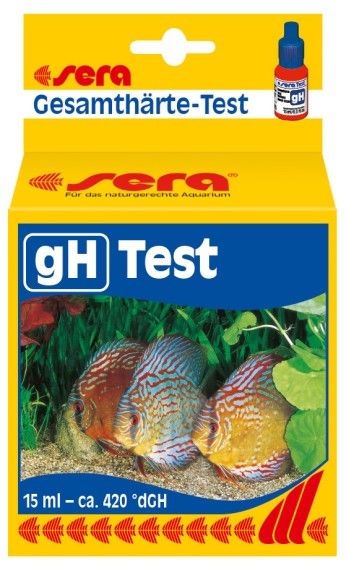
Sera - GH test
For checking a water parameter in this care guide. Follow the manufacturer’s test instructions; a test is not a treatment recommendation.
Check retailer for price0 retailers
Compare pricesPrices from the latest retailer update, excluding shipping. Check stock and delivery with the retailer.
Sources & review
This care guide draws on several specialist sources and was last checked on .
View the sources
- LICG — Roodkopzalm — verzorging
- Seriously Fish — Petitella bleheri
- Neotropical Ichthyology / Bittencourt et al. — Phylogenetic relationships of the neon tetras and transfer to Petitella (2020)
- Eschmeyer's Catalog of Fishes — Petitella — current taxonomy
- IUCN — Petitella bleheri — assessment and identification