Cardinal tetra
Paracheirodon axelrodi

The cardinal tetra, Paracheirodon axelrodi, is a small shoaling fish with a brilliant blue stripe above an almost continuous red lower body. A substantial group in a peaceful planted aquarium reveals much more of its behaviour than a few individuals among larger fish. Although it resembles the neon tetra, temperature, origin and companions need their own assessment. Newly imported fish in particular should never be used to test a newly established aquarium. Choose a mature system, soft water and at least ten of their own species. Provide sheltered margins as well as an open swimming lane. Colour alone is not a health test: fading at night is normal, whereas persistent daytime colour loss combined with poor feeding warrants a check of conditions. This guide concerns everyday care; the particular requirements of eggs and larvae are discussed separately under breeding.
Plan your aquarium →At a glance
- Temperature
- 24–27 °C
- pH
- 6.0–7.0
- GH
- 1–8 °dGH
- Aquarium length
- At least 60 cm
- Adult size
- Approximately 4 cm
- Group size
- At least 10 individuals
- Swimming zone
- Middle
- Temperament
- Peaceful
- Cover
- Plants and sheltered areas
- Staple food
- Fine flakes
- Supplementary food
- Live food, Frozen food, Finely crumbled dried natural food
Use at least sixty centimetres of aquarium length for a dedicated group of ten or more; eighty centimetres or longer makes it easier to combine cover and swimming room. Adding a second shoal requires reassessment of the whole stocking plan. An elongated tank provides a more useful swimming route than a tall cube of equal volume. We therefore do not give a separate biological minimum in litres here.
About this species
A cardinal tetra's red band extends much farther forward than a neon tetra's, which leaves the front of the belly pale. Allow for an adult total length of about four centimetres when planning the aquarium. Scientific sources often give a shorter standard length, excluding the tail fin; this does not mean they describe different fish. Mature females generally look fuller, but reliably sexing an entire group at a shop is difficult.
Both captive-bred and wild-collected fish are sold under this name. Ask about their origin and the supplier's water conditions. A colour variety or attractive photograph cannot establish a fish's population of origin. At purchase, concentrate on body condition, normal swimming and actual feeding.
Natural habitat
The natural range lies in the Rio Negro and Orinoco drainage systems. Forest streams, shaded margins and flooded vegetation provide food and shelter. Localities are not all alike: dark, mineral-poor Rio Negro water and clearer water elsewhere should not be compressed into one precise recipe for natural conditions.
Changing water levels affect the space and cover available. In an aquarium, the useful interpretation is several sheltered areas opening into clear swimming space, rather than imitation of extreme seasonal fluctuations. Roots, shaded leaves and thoughtfully positioned plants can help. Brown water alone does not make hard tap water soft. Origin also matters when buying: Project Piaba illustrates how carefully managed ornamental fisheries can connect local livelihoods with forest protection. Seek traceable fish in good condition, without assuming that all wild collection is harmful or every captive strain is trouble-free.
Aquarium and layout
Use at least sixty centimetres of aquarium length for a dedicated group of ten or more; eighty centimetres or longer makes it easier to combine cover and swimming room. Adding a second shoal requires reassessment of the whole stocking plan. An elongated tank provides a more useful swimming route than a tall cube of equal volume. We therefore do not give a separate biological minimum in litres here.
Keep part of the middle layer open. Position taller plants around the edges, soften intense lighting and provide gentle water movement without stagnant debris traps. Protect the filter intake against small fish. Arrange refuges with more than one escape route: a single narrow opening does not necessarily make a safe retreat for a chased fish.
Water conditions
This guide uses 24–27 °C, pH 6–7 and GH 1–8 as a practical maintenance range. This is an editorial husbandry choice within the consulted advice, not an instruction to adjust the tank towards its limits every day. Wild and captive-bred fish may have different acclimatisation histories; discuss major differences with the supplier.
Test replacement water and alter its composition gradually. Very soft water requires particular attention to stability: GH and buffering capacity are different properties. Check ammonia, nitrite and nitrate trends. Match water changes to stocking, feeding and measurements. Do not add acid or water-softening products merely to reach a number printed on a care card.
Behaviour and group size
Keep at least ten cardinal tetras, preferably more where swimming room permits. Other tetra species do not replace their own companions. A relaxed group need not swim in tight formation continuously; persistent close shoaling can also be a response to danger.
Small peaceful fish are better candidates than large-mouthed or strongly territorial companions. An adult angelfish may treat a cardinal tetra as prey even if the arrangement initially worked with juveniles. Assess feeding competition separately: an active shoal can finish food before quiet bottom dwellers reach it. Very young shrimp may be eaten. A 'suitable' assessment still depends on sufficient space and appropriate numbers for both species.
Feeding
Research on wild cardinal tetras identifies small invertebrates as an important part of their food. They should therefore not be treated as algae eaters. In an aquarium, a fine complete fish food can form the nutritional base, supplemented with suitably small live or frozen animals.
Watch what is actually swallowed. Break up flakes and oversized particles; repeated spitting may indicate an awkward food size. Spread a modest portion through the swimming area so smaller individuals also eat. Dried Daphnia provide variety, not a replacement for a complete diet. Remove leftovers and assess individual body condition rather than judging success solely by food disappearing from the tank.
Breeding
Cardinal tetras scatter eggs and provide no parental care. Raising fry is considerably more demanding than keeping adults. A separate quiet breeding arrangement makes it easier to protect light-sensitive eggs and manage the very small first foods.
Provide fine material through which eggs can fall, and prevent the adults from eating them. Sources disagree on the precise breeding temperature; no single figure guarantees success. Soft, carefully monitored water, healthy breeding fish and cleanliness matter more than forcing a temperature increase. Prepare appropriate microscopic first foods before fry appear. Offer larger foods only when the larvae can demonstrably take them. A community aquarium is not a dependable rearing tank.
Keeping with other species

Rummy-nose tetra
Suitable with conditionsTwo complete schools need a long clear swimming lane. Rummynoses are more active; distribute fine food so cardinals feed too. Shared profile: 24–26 °C; pH 6–6.5; GH 2–4. Layout recommendation: from 120 cm.
View species profile →
Black neon tetra
SuitablePeaceful tetras of comparable size. Keep a separate school of each; black neons do not replace cardinal companions. Plant the margins. Shared profile: 24–26 °C; pH 6–7; GH 3–8. Layout recommendation: from 100 cm.
View species profile →
Sterba's cory
SuitableA calm warmer-water school with a separate bottom group. Feed Sterbai sinking complete food; cardinals must not intercept everything. Shared profile: 24–27 °C; pH 6–7; GH 2–8. Layout recommendation: from 100 cm.
View species profile →
Bigspot otocinclus
Suitable with conditionsLittle mutual threat, but Otocinclus needs mature grazing surfaces. Check its food intake separately from the tetras. Shared profile: 24–26 °C; pH 6–7; GH 2–8. Layout recommendation: from 80 cm.
View species profile →
Kuhli loach
SuitableDifferent feeding zones reduce competition. Keep a proper kuhli group with sand and crevices; target-feed the bottom under dim light. Shared profile: 24–25 °C; pH 6–7; GH 2–8. Layout recommendation: from 80 cm.
View species profile →
Cockatoo dwarf cichlid
Suitable with conditionsAdult cardinals can occupy upper space above separate bottom territories. Tiny tetras and fry remain vulnerable; reassess during cichlid breeding. Shared profile: 24–25 °C; pH 6–7; GH 5–8. Layout recommendation: from 100 cm.
View species profile →
Freshwater angelfish
Not recommendedAngelfish may prey on small or slender cardinals. Growing up together does not establish permanent safety; extra length does not remove this risk.
View species profile →Suitable plants

Dwarf ambulia
Cover above and beside the calm cardinal school. Fine stems at the margins provide cover; low to moderate light, optional CO₂. Trim regularly and retain an open swimming lane. Shared profile: 24–27 °C; pH 6–7.
- Light
- Low, Moderate
- CO₂
- CO₂ injection not essential

Java moss
Cover above and beside the calm cardinal school. Thinly attached moss gives fine shelter. Low to moderate light, no compulsory CO₂; keep debris and loose thread loops out. Shared profile: 24–27 °C; pH 6–7.
- Light
- Low, Moderate
- CO₂
- CO₂ injection not essential
Suitable products
Recommended staple foods
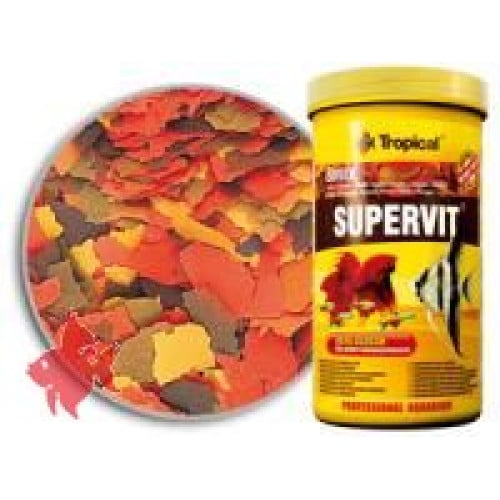
Tropical Supervit Basic 100ml
Crushed complete flakes suitable for small animal feeders. Let small pieces descend and check every cardinal swallows.
Check retailer for price1 retailers
Compare pricesSupplementary foods
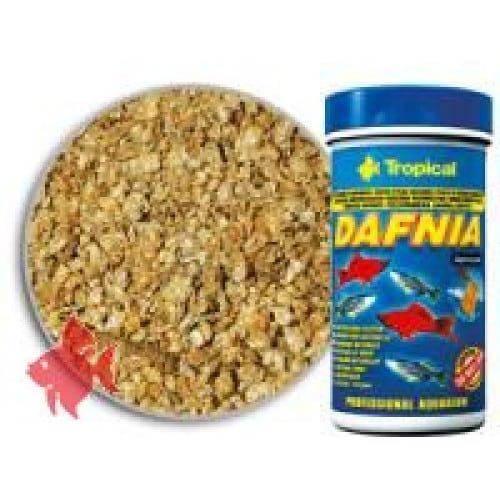
Tropical Dafnia 100ml
Very finely crumbled dried Daphnia, only as variety alongside complete food. Check the small mouth accepts it; not newly hatched fry food.
Check retailer for price1 retailers
Compare pricesWater testing and equipment

Sera - GH test
For checking a water parameter in this care guide. Follow the manufacturer’s test instructions; a test is not a treatment recommendation.
Check retailer for price0 retailers
Compare pricesPrices from the latest retailer update, excluding shipping. Check stock and delivery with the retailer.
Sources & review
This care guide draws on several specialist sources and was last checked on .
View the sources
- LICG — Kardinaaltetra — verzorging
- Seriously Fish — Paracheirodon axelrodi
- FishBase — Paracheirodon axelrodi — biological record
- Eschmeyer's Catalog of Fishes — Paracheirodon — current taxonomy
- Acta Amazonica / Ilse Walker — The food spectrum of the cardinal tetra in its natural habitat (2004)
- Project Piaba / Michael Tuccinardi — Cardinal Sins — fishery and conservation
- Reviews in Fisheries Science & Aquaculture — From Amazonia to the World: Biology, Cultivation, and Conservation of Cardinal Tetra (2026)