Serpae tetra
Megalamphodus eques

The serpae tetra, currently accepted as Megalamphodus eques, is a vivid red South American shoaling fish. Older names such as Hyphessobrycon eques and Hyphessobrycon serpae remain common in shops and older guides. It is widely available, but is not the calmest choice for every community aquarium: fin-nipping can occur, particularly when the group is too small or swimming space is restricted. Keep a substantial shoal and choose robust, similarly active companions without long flowing fins. Cycle the aquarium fully and watch feeding behaviour and fin condition after introducing any new combination.
Plan your aquarium →At a glance
- Temperature
- 20–28 °C
- pH
- 5.0–7.5
- GH
- 1–15 °dGH
- Aquarium length
- At least 80 cm
- Minimum aquarium volume
- At least 72 L
- Adult size
- Up to 4 cm
- Group size
- At least 12 individuals
- Temperament
- May nip fins
About this species
The serpae tetra has a red to orange-red body, usually with a dark shoulder mark. Colour and mark shape vary among wild populations and captive strains. Selectively bred forms, including long-fin and balloon forms, are also sold; their altered shapes should not be treated as representative of the standard fish. Current taxonomic sources use Megalamphodus eques (Steindachner, 1882). Hyphessobrycon eques is a familiar older combination; Hyphessobrycon serpae and several historical combinations are treated as synonyms.
Seriously Fish reports about 40 mm standard length, measured without the caudal fin; FishBase also gives approximately 4 cm standard length. The species occurs across parts of the Amazon and Paraguay basins in Brazil, Peru, Bolivia, Paraguay and Argentina. Colour pattern varies by population, and the broad range includes different habitats.
Natural habitat
In nature Megalamphodus eques is usually found in still or sluggish water, including quiet tributaries, ponds and small lakes. Fish aggregate around marginal vegetation and submerged roots. In an aquarium, provide planted or woody shelter around the edges while retaining open swimming space for the shoal. A dark substrate and subdued light may show the colours well, but are not health requirements.
Leaf litter or peat is optional and requires sensible maintenance; neither replaces stable water quality. Use aquarium-safe materials and maintain good oxygen exchange. The species can live in a biotope-style tank or a carefully planned community aquarium.
Aquarium and layout
Seriously Fish gives a minimum aquarium footprint of about 80 × 30 cm, equivalent to roughly 72 litres at a typical water depth. This is a source-based minimum guideline, not a guarantee that every tank of that volume is suitable. A longer aquarium gives the shoal more horizontal room. Keep at least twelve fish; a larger group helps social attention remain within the species and reduces the chance that tankmates become targets.
Place plants and wood along the margins and leave a clear central swimming area. Use a mature filter, regular water changes and flow that allows normal swimming. The source suggests four to five tank turnovers per hour for the minimum footprint. Direct the outlet so that it does not create a strong jet across the whole swimming area. Introduce fish gradually and check that every individual reaches food.
A small group in a cramped tank is not a safe temporary arrangement: space and shoal size are part of the care requirement. Avoid sharp decor and cover the aquarium securely; active tetras may jump when startled.
Water conditions
The specialist care profile gives 20–28 °C, pH 5.0–7.5 and GH 1–15 dGH. These are broad species ranges, not a reason to move quickly between extremes. Captive-bred fish are described as adaptable; mildly acidic to neutral water is a cautious choice for wild fish. FishBase lists partly different ecological values and another temperature range, neither established specifically as an aquarium optimum. We therefore use the explicit aquarium range from Seriously Fish for routine care.
Most important is stability appropriate to the fish’s source. The reviewed sources do not establish a species-specific KH target. Do not add salt: this is a freshwater fish. Measure changes and make them gradually while watching breathing, colour and appetite.
Behaviour and group size
Serpae tetras form loose social groups with hierarchy, and males may display against one another. Their reputation for fin-nipping is real. Seriously Fish notes that it can be more pronounced when too few fish are kept or space is limited. A group of at least twelve is therefore important. A larger shoal still needs observation because individuals and aquarium layout matter.
Choose sturdy, active tankmates of suitable size. Slow, shy or long-finned fish such as some gouramis, angelfish and guppies face greater risk of stress or fin damage. Shared temperature or pH alone does not establish compatibility. Give each group enough room and feed in more than one place when needed. Separate fish if persistent chasing, damaged fins or missed meals occur.
Sex differences are subtle; mature females are generally rounder and slightly larger than males. Colour alone is not a reliable way to determine sex.
Feeding
This is an omnivore. In the wild it eats small invertebrates, crustaceans, insects and plant material. In aquaria, a quality dry food can form the staple, supplemented with small frozen or live foods such as Daphnia, mosquito larvae and bloodworms. Variety is more useful than treating one food as a complete menu.
Fine granules or flakes are practical for a fish around four centimetres long. The linked TetraMin Mini Granules is a small complete food; offer modest portions and check that all fish actually eat it. Add varied animal-based supplemental foods. Remove leftovers to protect water quality. Let appetite and body condition guide feeding, and avoid giving more than the shoal can eat promptly.
Breeding
The serpae tetra is an egg-scatterer with no parental care. Adults may eat the eggs. For controlled breeding, use a separate mature tank with subdued light and fine-leaved plants, a spawning mop or a mesh barrier. Choose a mesh that lets eggs fall beyond the adults’ reach. An air-driven sponge filter reduces the risk of eggs or fry being drawn in.
Seriously Fish describes mildly acidic to neutral water and a temperature near the upper end of the normal care range; after conditioning, a pair or small breeding group may be introduced. Eggs are often noticed the following morning. Newly hatched fry need very small food such as infusoria or suitable fine starter food; add Artemia nauplii only once they are large enough. These are source-based general guidelines, not a guarantee of breeding success. Keep water quality stable and avoid abrupt corrections.
Keeping with other species

Head-and-tail light tetra
Not recommendedSerpae tetras are known to nip fins, especially in undersized groups or restricted space. The smaller, peaceful head-and-tail light tetra is therefore at increased risk despite some water overlap. Not recommended as a standard combination; reconsider only in a spacious aquarium with a full serpae shoal and close observation.
View species profile →
Ornate tetra
Not recommendedThe ornate tetra is peaceful, but serpae tetras may nip fins, especially when their shoal is too small or swimming space is limited. The ornate tetra’s conspicuous dorsal and anal fins add uncertainty. Overlapping water values do not remove this behavioural risk. We therefore do not recommend this as a standard pairing; reconsider only with a spacious tank, a full serpae shoal and daily observation.
View species profile →
Rosy tetra
Not recommendedDiscouraged: the rosy tetra is a calm, relatively delicate shoaling fish, and Seriously Fish warns that it does not compete well with boisterous tankmates. Serpae tetras may also nip fins, particularly when under-grouped or short of space. Overlapping temperatures do not remove this behavioural risk. Choose calmer companions and observe any community combination closely.
View species profile →
Black phantom tetra
Not recommendedDiscouraged: the black phantom tetra is peaceful, but Serpae tetras may nip fins. The prominent, enlarged fins of adult males are especially vulnerable. Even where temperatures overlap, the behavioural risk remains; a larger aquarium does not automatically make the combination safe. Choose calmer companions and watch for fin damage and feeding competition after any introduction.
View species profile →
Red phantom tetra
Not recommendedDiscouraged: Serpae tetras are active and may nip fins, while red phantom tetras display their extended fins and are calmer. Small tanks, undersized groups or food competition increase risk. Overlapping water values do not remove this behavioural concern.
View species profile →
Flame tetra
Not recommendedDiscouraged: Serpae tetras are more boisterous and may nip fins; the small, peaceful flame tetra can be stressed or injured. Food competition and inadequate group size increase risk. Shared water values do not make this pairing automatically suitable.
View species profile →
Colombian tetra
Not recommendedDiscouraged: Serpae tetras may nip fins, while Colombian tetras have extended fins and rely on a social shoal. This can create stress, injury and food competition. Shared water values do not remove this behavioural risk.
View species profile →
Bleeding Heart Tetra
Not recommendedDiscouraged: adult Serpae tetras may nip fins. The bleeding heart tetra has extended fins and needs calm tankmates; injury, stress and food competition are credible risks. Overlapping water values do not make this pairing safe.
View species profile →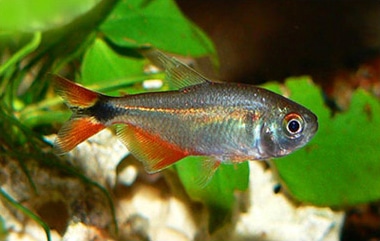
Buenos Aires Tetra
Not recommendedDiscouraged: both species may nip fins and are active shoaling characins. Together they can increase pressure on fins and shy tankmates; a larger aquarium and proper group sizes do not remove this behaviour.
View species profile →Suitable products
Recommended staple foods
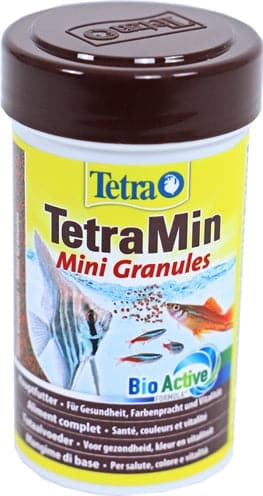
Tetra Min Minigranules Fish food 100 ml
Fine mini granules provide a practical staple for an omnivorous tetra around 4 cm long. Check that the fish eat them readily and supplement with suitable frozen or live foods.
Check retailer for price0 retailers
View retailersPrices from the latest retailer update, excluding shipping. Check stock and delivery with the retailer.
Sources & review
This care guide draws on several specialist sources and was last checked on .
View the sources
- Tetra — TetraMin Mini Granules — manufacturer product information
- Zoological Journal of the Linnean Society — Melo et al. 2024, Phylogenomics of Characidae and phylogenetic classification
- Seriously Fish — Megalamphodus eques — specialist aquarium profile, revised 2026
- FishBase Consortium — Megalamphodus eques — FishBase
- California Academy of Sciences — Eschmeyer’s Catalog of Fishes — Megalamphodus
- Wikimedia Commons / Francesco Loda — Hyphessobrycon serpae - Serpae Tetra.jpg
- Creative Commons — Creative Commons Attribution 3.0 Unported