Rosy tetra
Megalamphodus rosaceus

The rosy tetra (Megalamphodus rosaceus) is a small, peaceful shoaling fish from Guyana, Suriname and Brazil. It resembles the ornate tetra but lacks the dark mark behind the gill cover. A mature, calm aquarium with plants, subdued light and open swimming space suits it well. Keep at least six and preferably ten or more. The species is widely bred. Maintain clean, stable water rather than imitating acidic natural water through sudden chemical changes. Review its behaviour, layout and feeding needs before planning a community aquarium. Observe the shoal after acclimation to check that all fish settle and feed.
Plan your aquarium →At a glance
- Temperature
- 24–28 °C
- pH
- 5.5–7.5
- GH
- 1–12 °dGH
- Aquarium length
- At least 60 cm
- Minimum aquarium volume
- At least 68 L
- Adult size
- Up to 4 cm
- Group size
- At least 6 individuals
- Temperament
- Peaceful
About this species
This characid occurs in the Essequibo, Corantijn and Suriname river basins. Its current name is Megalamphodus rosaceus; older literature uses Hyphessobrycon rosaceus. These names refer to the same species under a changed taxonomic combination. The silvery pink body may have reddish fins. Males often develop longer dorsal and anal fins and are slimmer, while females tend to be fuller-bodied.
Seriously Fish gives about 40 mm standard length, measured without the tail. The rosy tetra is often confused with M. bentosi, the ornate tetra. That is a separate species: M. bentosi has a dark mark behind the operculum, while M. rosaceus does not. Trade labels alone are therefore not reliable identification. At purchase, check the body marking rather than relying only on the name on the tank.
Natural habitat
The species mainly inhabits forested, slow-flowing tributaries. Leaves and other organic matter can release tannins, making natural water brown and acidic. This is habitat context, not a mandatory aquarium recipe. Wood, roots and plants provide cover; floating plants or softer lighting can reduce shyness. Retain open water for shoaling.
A planted aquarium with clear water is also suitable if it remains calm and stable. Leaf litter is optional, not essential. Use only aquarium-safe material and remove it before it harms water quality. Arrange cover so fish can retreat without losing all swimming room. The natural habitat does not necessarily contain the same plants as a home aquarium.
Aquarium and layout
Seriously Fish suggests a base around 60 × 38 cm and about 68 litres at roughly 30 cm height for a small group. This source-based figure is a lower reference, not a universal stocking formula. Base area and length matter. Keep at least six, preferably ten or more; a proper shoal is less shy and behaves more naturally.
Place plants along the edges, add wood or other safe retreats, and leave a clear swimming zone. The aquarium should be mature and maintained regularly. Provide steady, moderate circulation and ensure boisterous tankmates do not monopolise food. Do not add the fish to a newly started system. The stated volume follows a specific footprint: extra litres cannot compensate for inadequate length, group size or water quality.
Water conditions
The specialist aquarium profile gives 24–28 °C, pH 5.5–7.5 and GH 1–12 dGH. FishBase supports a similar temperature and pH range but does not provide a reliable lower hardness value here. GH is therefore attributed only to Seriously Fish. No supported KH target is available.
Stability matters more than pursuing one ideal number. Keep values suitable for the established aquarium and change pH or hardness gradually. Do not add acid or peat just to imitate tannin-stained water. Check temperature and water quality regularly and prevent organic waste from building up. When acclimating fish, consider their previous conditions and avoid rapid transitions.
Behaviour and group size
The rosy tetra is peaceful and social. Keep at least six, preferably ten or more. A lone fish or small shoal may remain withdrawn. Males may display to one another; this is normal if no injuries occur and all fish can feed and find cover.
Choose calm, similarly sized companions, such as suitable small South American characins, Corydoras or dwarf cichlids. The rosy tetra competes poorly with very boisterous or much larger fish. Assess the whole community: overlapping water values alone do not establish compatibility. The ornate tetra M. bentosi is related but distinct; relatedness does not mean identical care. After introductions, monitor fins, feeding and use of space.
Feeding
In nature, the rosy tetra feeds mainly on small invertebrates. In aquaria it usually accepts fine flakes and granules, alongside small frozen or live prey. Select food suited to its small mouth and offer it so less dominant fish also get their share.
A fine complete food for small freshwater fish can form the daily staple. Variety from suitable prey such as daphnia or brine shrimp nauplii is useful but does not replace complete staple food. Feed modest portions, check that food is eaten and remove leftovers. No brand-specific dietary requirement has been established. Monitor water quality after feeding, especially in a small or heavily stocked tank.
Breeding
The species scatters eggs and provides no parental care; adults may eat the eggs. For deliberate breeding, use a separate mature tank with subdued light and fine-leaved material or a spawning mop. A mesh can let eggs fall beyond the adults’ reach. A gently run sponge filter provides calm circulation.
Seriously Fish describes soft, acidic spawning water around 26.5–29 °C, pH 5.5–6.5 and GH 1–5. These are breeding conditions, not daily maintenance targets; do not change a community aquarium abruptly to reach them. Condition adults with varied foods and remove them once eggs are visible. The source reports that eggs may hatch within about a day and fry swim freely a few days later. Begin with very fine food such as infusoria, moving to larger prey only later. Results and timing vary.
Keeping with other species

Serpae tetra
Not recommendedDiscouraged: the rosy tetra is a calm, relatively delicate shoaling fish, and Seriously Fish warns that it does not compete well with boisterous tankmates. Serpae tetras may also nip fins, particularly when under-grouped or short of space. Overlapping temperatures do not remove this behavioural risk. Choose calmer companions and observe any community combination closely.
View species profile →Suitable products
Recommended staple foods
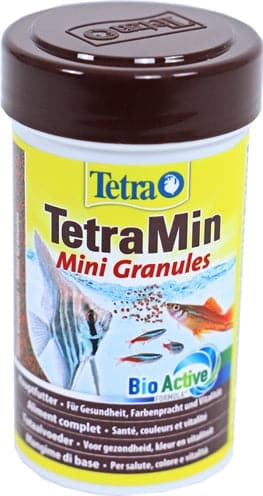
Tetra Min Minigranules Fish food 100 ml
Fine mini granules as a complete staple option for small freshwater fish. Offer small portions and check that rosy tetras can take the particles easily.
Check retailer for price0 retailers
View retailersPrices from the latest retailer update, excluding shipping. Check stock and delivery with the retailer.
Sources & review
This care guide draws on several specialist sources and was last checked on .
View the sources
- Creative Commons — Creative Commons Attribution-ShareAlike 3.0 Unported
- Tetra — TetraMin Mini Granules — manufacturer product information
- Zoological Journal of the Linnean Society — Melo et al. 2024, Phylogenomics of Characidae and phylogenetic classification
- Seriously Fish — Megalamphodus rosaceus — species profile, revised 2026
- FishBase — Megalamphodus rosaceus, Rosy tetra — FishBase
- Wikimedia Commons / Aquakeeper14 — Male Rosy Tetra.JPG — Wikimedia Commons