Colombian tetra
Hyphessobrycon columbianus

The Colombian tetra (Hyphessobrycon columbianus) is a medium-sized, colourful shoaling fish from northern Colombia. Its silvery-blue body and red caudal and anal fins stand out in a structured aquarium. Keep a mixed shoal of eight to ten or more in a long tank with open swimming space and planted margins. It can reach about 6.5 cm standard length, so it needs more room than small tetras. The guide also explains aquarium setup, compatible tankmates, feeding, and breeding. Check that each fish has enough food and room to swim.
Plan your aquarium →At a glance
- Temperature
- 20–28 °C
- pH
- 5.0–7.5
- GH
- 1–10 °dGH
- Aquarium length
- At least 90 cm
- Minimum aquarium volume
- At least 81 L
- Adult size
- Up to 6.5 cm
- Group size
- At least 8 individuals
- Temperament
- Peaceful
About this species
The Colombian tetra was described in 2002 as Hyphessobrycon columbianus Zarske & Géry. It is known from the Río Acandí in Chocó Department, northern Colombia, near Panama. Trade names include blue-flame, blue-red and Colombian red-fin tetra. Before the formal description, specimens were sometimes confused with H. ecuadorensis; these names are not interchangeable aquarium species.
Seriously Fish reports 65 mm standard length (SL), measured without the caudal fin. FishBase reports a maximum total length of 7 cm. These are different measurement types and should not be presented as the same measurement. Both sexes have a silver body with iridescent blue on the upper side and bright red caudal and anal fins. Mature males are generally slimmer, slightly smaller and more intensely coloured, with a longer dorsal fin.
Natural habitat
The natural range appears limited to small streams in the Río Acandí basin. Detailed habitat data are scarce. Available records mention small creeks, so an exact water type, depth or chemistry should not be claimed as universal. The species is named for Colombia and is not an Amazonian tetra.
An aquarium with planted margins, wood and an open centre offers both cover and swimming space. A dark substrate and structure can enhance colour but are not biological requirements. The species seems to appreciate some water movement; strong flow throughout the whole tank is unnecessary. Use plants and wood to break sightlines and create separate spaces without blocking swimming routes.
Aquarium and layout
Seriously Fish recommends a 90 × 30 cm base footprint and about 81 litres as the minimum. Preserve the length: a taller tank of the same volume offers less horizontal swimming room. The fish reaches about 6.5 cm SL and is an active, powerful swimmer. A mixed shoal of at least eight to ten supports normal group behaviour and reduces persistent targeting of a single fish.
Use a mature filter and plan regular water changes. Some flow is appropriate, but provide calmer areas too. Plant the margins, add wood or other safe structure and keep the centre open. Choose tankmates by adult size and activity: very small or slow fish may not suit the energetic movement and feeding competition of this species. A well-fitting cover is sensible for active fish.
Water conditions
Seriously Fish gives 20–28°C, pH 5.0–7.5 and GH 1–10 dGH. Reliable independent species-specific aquarium ranges from a second primary source are scarce. We therefore use the specialist profile’s ranges without artificially narrowing them. FishBase classifies the species as tropical freshwater but does not provide an additional aquarium range on its summary page. No supported species-specific KH target was found.
Stability matters more than aiming at one precise point within a broad range. Monitor temperature and water quality, acclimate fish gradually and avoid sudden pH adjustments. Records of a small stream do not justify recreating a particular mineral composition in a home aquarium. Match maintenance to the actual tank and keep organic pollution low.
Behaviour and group size
The specialist profile describes the Colombian tetra as generally peaceful and shoaling. A mixed group of eight to ten or more shows more natural behaviour; other shoaling fish can add security if the aquarium is large enough. Observe interactions: prolonged chasing, damaged fins or a fish unable to feed call for changes to group size, layout or stocking.
Calm characins of similar size, smaller cory catfish and suitable non-predatory medium-sized cichlids may be appropriate companions. Tiny fish that could fit in its mouth, long-finned species and very slow feeders are less safe due to size and activity differences. Avoid large predators. Serpae tetras are a risky combination because fin-nipping is documented for that species; behavioural risk outweighs overlapping water values. Observe each community and ensure every fish has access to food and cover.
Feeding
The species is probably an omnivorous forager. The specialist source lists mainly worms, insects and other zooplankton, with smaller amounts of plant material and organic detritus. In aquaria, offer varied quality flakes or granules alongside small live or frozen prey such as bloodworms, Daphnia and Artemia. Some prepared foods can include plant or algal content.
Offer portions that the fish can consume promptly. Distribute food so less dominant fish can feed, and remove leftovers to protect water quality. A suitable fine granule can be practical, but rotate it with other complete foods and small animal prey. Existing TetraMin Mini Granules is a suitable existing staple option if the shoal takes the particles well; check particle size and do not rely on one product as the entire diet.
Breeding
The Colombian tetra scatters eggs freely and provides no parental care. A mature aquarium may produce a few fry spontaneously, but adults eat accessible eggs. For controlled breeding, use a separate mature tank with subdued lighting. Fine-leaved plants, a spawning mop, marbles or mesh can protect eggs. An air-powered sponge filter or air stone supplies oxygen and gentle movement.
Condition adults beforehand with varied foods. The specialist source reports that a well-conditioned female may release up to about 2,000 eggs in one spawning; this is a source-reported upper figure, not a typical yield guarantee. Eggs may hatch within 24–36 hours under suitable conditions. Larvae begin with a large yolk sac; initial food is Paramecium or dust food around 5–50 microns. Add Artemia nauplii or microworms only once fry can take them. Maintain cleanliness with careful husbandry.
Keeping with other species

Serpae tetra
Not recommendedDiscouraged: Serpae tetras may nip fins, while Colombian tetras have extended fins and rely on a social shoal. This can create stress, injury and food competition. Shared water values do not remove this behavioural risk.
View species profile →Suitable products
Recommended staple foods
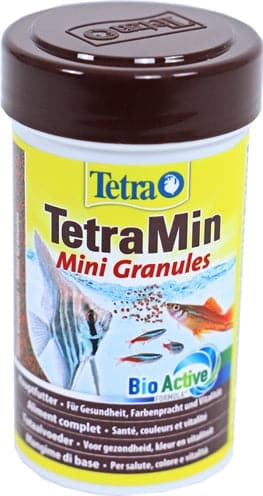
Tetra Min Minigranules Fish food 100 ml
Fine mini granules as an existing staple option. Colombian tetras are larger than many tetras; check all fish can take the particles and rotate with other suitable foods.
Check retailer for price0 retailers
View retailersPrices from the latest retailer update, excluding shipping. Check stock and delivery with the retailer.
Sources & review
This care guide draws on several specialist sources and was last checked on .
View the sources
- Creative Commons — Creative Commons Attribution-ShareAlike 3.0 Unported
- Zoological Journal of the Linnean Society — Melo et al. 2024, Phylogenomics of Characidae and phylogenetic classification
- Seriously Fish — Hyphessobrycon columbianus species profile, revised 2026
- FishBase — Hyphessobrycon columbianus — FishBase
- ITIS / Catalog of Fishes — ITIS report — Hyphessobrycon columbianus
- Marrabbio2 / Wikimedia Commons — Hyphessobrycon colombianus.jpg — Wikimedia Commons