Striped panchax
Aplocheilus lineatus

The striped panchax (Aplocheilus lineatus) is an active South Asian surface fish that can reach about 10 cm as an adult. It hunts small prey, may jump, and is therefore unsuitable for tiny tankmates or an uncovered aquarium. A long tank with a secure lid, floating plants and visual barriers provides a sound starting point. The familiar golden “Golden Wonder” is a selectively bred form of the same species. This guide explains the checked water ranges, housing, feeding and breeding; for a pair, we take a cautious practical minimum length of about 90 cm.
Plan your aquarium →At a glance
- Temperature
- 24–25 °C
- pH
- 6.5–7.5
- GH
- 5–18 °dGH
- Aquarium length
- At least 90 cm
- Adult size
- Up to 10 cm
- Group size
- At least 2 individuals
- Swimming zone
- Surface
- Temperament
- Predator, May jump
About this species
Aplocheilus lineatus belongs to the killifish family Aplocheilidae and was described by Valenciennes in 1846. Its elongated body and upturned mouth suit feeding near the surface. Adults may reach about 10 cm total length; FishBase gives 7 cm as a commonly reported length. Males are usually more colourful and larger than females. The golden “Golden Wonder” sold in the hobby is a selectively bred colour form, not a separate species or a wild population. Historical names include Panchax lineatum, A. vittatus and A. rubrostigma. Check the scientific name when buying because trade names can refer to the wild striped form or the golden strain.Natural habitat
The species is native to peninsular India and is also reported from northern Sri Lanka. It occupies a range of permanent waters, from upland streams and lakes to lowland rivers, wells, swamps and rice fields; occasional brackish conditions are reported. Many habitats have overhanging or surface vegetation where prey is available. It is not an annual killifish. Introductions are known outside its native range, so never release aquarium fish or water into natural waters. FishBase lists Least Concern based on an assessment from 2009; that should not be mistaken for a recent survey of every local population.Aquarium and layout
Choose a long aquarium with ample surface area. Fishkeeper suggests a tank about 3 feet long for a pair; FishBase lists 80 cm as the minimum aquarium size, while Seriously Fish gives a 75 × 30 cm base. Given that variation, this guide uses about 90 cm as a cautious practical minimum length for a pair. No fixed minimum volume is shown because the sources do not establish one shared figure. A group or multiple males need more room. Dense planting, floating cover, driftwood and broken sightlines offer shelter while leaving open surface space. A secure, tight-fitting lid is essential because this fish is an accomplished jumper.Water conditions
The aquarium-care sources differ slightly. Seriously Fish lists 24–27°C, pH 6.0–7.5 and 5–20 dGH. Fishkeeper gives 22–25°C, pH 6.5–7.5 and hardness up to 18 degrees. The concise care ranges here show their overlap: 24–25°C, pH 6.5–7.5 and 5–18 dGH. FishBase reports 22–25°C as a tropical natural environment; this is ecological information, not a separate aquarium recommendation. Keep temperature and water quality stable and avoid abrupt changes. A broad tolerance range does not make rapid swings safe.Behaviour and group size
Striped panchax spend much of their time near the surface and are active predators. Small fish, fry and small invertebrates may be eaten if they fit in the mouth; do not house them with neon tetras, tiny rasboras or dwarf shrimp. Potential tankmates should be peaceful but robust and too large to be prey, ideally using a different part of the water column. This species can be aggressive toward its own kind, especially when space and visual barriers are limited. A pair can be kept in a long tank. A larger group requires more space and observation. The sources do not establish one universal minimum group size, so this guide does not invent a number.Feeding
This carnivorous surface fish takes insects and larvae from the water surface in nature. Species-care sources say it usually accepts live, frozen and dried foods in aquaria. Fishkeeper lists flakes, granules and meaty frozen foods, including mosquito larvae, bloodworm, brine shrimp and daphnia. Offer a varied diet in portions the fish can swallow and check that every animal feeds. Several small portions are preferable to excess food left in the aquarium. The existing catalogue has 90 ml live Artemia as a supplementary food; it is not a complete staple diet.Breeding
Aplocheilus lineatus lives in permanent water and is not an annual killifish. Adhesive eggs are placed among fine-leaved plants or spawning mops, often near the surface. Seriously Fish describes a pair laying about 10–30 eggs per day for roughly two weeks; hatching commonly takes 11–14 days depending on temperature. Fishkeeper reports that some clutches may be larger, so these figures are observations rather than a guarantee. Condition adults on varied animal foods and provide fine spawning material and floating cover. Remove eggs or adults to limit predation. Separate young as they grow because larger fry may eat smaller ones. Newly hatched Artemia can be offered once the yolk sac has been absorbed.Keeping with other species

Sterba's cory
Suitable with conditionsConditional only: the two guides overlap at 24–25°C, pH 6.5–7.2 and GH 5–15. Striped panchax hunt small prey, so juvenile or small Sterbai corys are not a safe choice. Consider only robust adult fish, kept in their own group of at least six, in a tank at least 90 cm long with cover. The bottom-dwelling cory and surface fish use different zones, but total stocking and feeding access still need monitoring. This is a source-based assessment, not a trial of this exact pairing.
View species profile →Suitable plants

Java moss
Java moss (Taxiphyllum barbieri) suits as fine spawning material: the species-specific panchax source explicitly names it for egg laying. Its verified temperature range is 22–28°C and pH range 5–9, overlapping the fish’s care range. It grows in low to moderate light and injected CO2 is optional. Use it as an egg-laying surface, not as a substitute for floating cover or a secure lid.
- Light
- Low, Moderate
- CO₂
- CO₂ injection not essential
Suitable products
Recommended staple foods
Care sources say the species accepts dried foods, but no existing catalogue item has been checked for both composition and suitable food size. No product is linked based on its name alone.
Supplementary foods
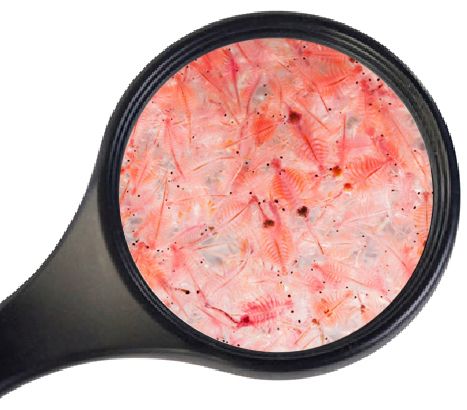
Levende Artemia 90ml
Live Artemia is suitable as supplementary variety: the species-specific care source explicitly lists brine shrimp among accepted foods. It is not a complete staple; combine it with a varied appropriate diet.
Check retailer for price0 retailers
View retailersPrices from the latest retailer update, excluding shipping. Check stock and delivery with the retailer.
Sources & review
This care guide draws on several specialist sources and was last checked on .