Sailfin molly
Poecilia latipinna

The sailfin molly (Poecilia latipinna) is a livebearing toothcarp native to the southeastern United States and Mexico. Adult males are best recognised by their large, sail-shaped dorsal fin. The species can reach about 12.5 cm standard length and the specialist profile gives a tank footprint of 76 × 38 cm (about 87 litres at 30 cm water depth). Sailfin mollies can live in freshwater, but need hard, mineral-rich, alkaline conditions; added salt is not routinely required. They eat substantial algae and plant material and may damage soft aquarium plants. Keep several females per male. Do not house them with other molly species if you want to avoid crosses: P. latipinna and P. sphenops can readily hybridise.
Plan your aquarium →At a glance
- Temperature
- 21–26 °C
- pH
- 7.0–8.5
- GH
- 15–35 °dGH
- Aquarium length
- At least 76 cm
- Minimum aquarium volume
- At least 87 L
- Adult size
- Up to 12.5 cm
- Group size
- At least 3 individuals
- Temperament
- Peaceful
About this species
Poecilia latipinna belongs to the family Poeciliidae and order Cyprinodontiformes. Eschmeyer’s Catalog of Fishes accepts Poecilia latipinna (Lesueur, 1821). Adult males develop a large sail-like dorsal fin; females are generally larger but have a smaller dorsal fin. The species may reach about 12.5 cm standard length, excluding the tail. FishBase reports up to 15 cm total length in males, which is a different measurement. Dark rectangular marks in the dorsal fin help distinguish it from P. velifera, but selectively bred colour strains and hybrids occur in trade. A retail colour name alone therefore cannot confirm species identity.Natural habitat
The native range runs from North Carolina in the United States south to Veracruz, Mexico, according to the Catalog of Fishes. It inhabits warm, often vegetated coastal streams, ponds, ditches, swamps and quiet backwaters; brackish canals also occur in its range. Introduced populations have been reported in many countries, with adverse ecological effects in some places. Never release aquarium animals or plants into outdoor waters. Occurrence in brackish or coastal water does not mean salt is needed in a freshwater aquarium.Aquarium and layout
Provide open swimming space with dense planting around the edges. The specialist source gives a 76 × 38 cm footprint and about 87 litres at 76 × 38 × 30 cm. This is a source-based guideline, not a universal stocking guarantee. Use a mature filter and keep water quality stable. Soft plants may be eaten or damaged; choose robust species and allow some algae to grow on suitable surfaces. In mixed-sex groups, keep at least two females per male to spread persistent courtship. Males may become aggressive toward each other, especially during breeding activity.Water conditions
Seriously Fish gives 21–26 °C, pH 7.0–8.5 and GH 15–35 °dGH. FishBase reports a broader temperature band and records the species from fresh, brackish and marine waters; for aquarium care we follow the narrower specialist range. The fish needs hard, alkaline water and may weaken quickly in soft, acidic conditions. Calcium and magnesium matter more than routine salt addition: the specialist source says salt is not necessary. Measure your source water and change chemistry gradually.Behaviour and group size
Sailfin mollies are generally suitable for hard-water communities, but adults may pick on smaller tankmates. Males may fight one another, particularly when females are present. Choose tankmates that tolerate hard, alkaline water and avoid very small, slow fish. P. latipinna readily crosses with P. sphenops; keep one molly species per aquarium if you want species-true offspring. Matching water values alone do not establish safe compatibility. The species is not universally plant-safe because soft leaves may be damaged.Feeding
The natural diet consists largely of algae and other plant material, although small animal foods are also eaten. Use a complete tropical food as a practical staple and offer vegetable- or algae-rich foods regularly. An existing algae wafer can be used as a supplement, but it does not replace a varied complete diet. For adult males, provide enough plant matter; the specialist source warns that too little green food may impair dorsal-fin development. Feed modest portions and remove leftovers.Breeding
The sailfin molly is livebearing. Seriously Fish recommends a trio of one male and two females because males may court persistently. FishBase and Seriously Fish differ on gestation and brood size, so this guide gives no exact duration or guaranteed number of fry. Dense plants provide cover, but adults and other fish may eat young. Plan for offspring in advance, and avoid mixing molly species if maintaining species identity matters.Keeping with other species

Common molly
Not recommendedThese two molly species can interbreed readily in aquaria. Do not keep them together if you want species-true offspring; keep one molly species per tank. Overlapping water parameters do not remove this risk.
View species profile →
Giant Sailfin Molly
Not recommendedThis sailfin molly and Poecilia latipinna are distinct species, but crossbred strains exist. Keep one molly species per aquarium if you want species-true offspring; similar water parameters do not prevent hybridisation.
View species profile →Suitable products
Recommended staple foods
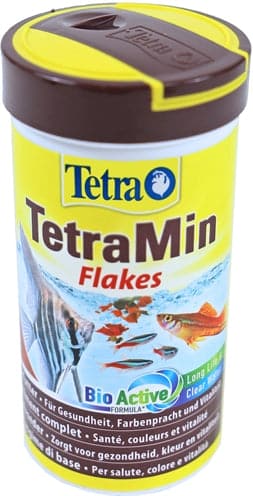
Tetramin Bio Active Vlokken Fish food 100 ml
Complete tropical food as a practical staple; offer it alongside algae- and vegetable-rich foods and check that sailfin mollies eat it readily.
Check retailer for price0 retailers
View retailersSupplementary foods
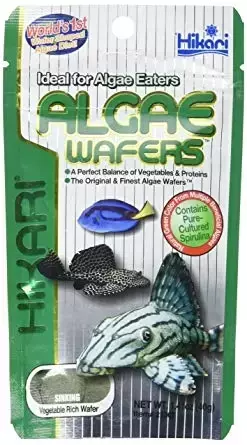
Hikari Algae wafers 40gr - Vissenvoer
Supplementary algae/plant food suited to the strongly plant-based natural diet; do not use it as the only complete food.
Check retailer for price0 retailers
View retailersPrices from the latest retailer update, excluding shipping. Check stock and delivery with the retailer.
Sources & review
This care guide draws on several specialist sources and was last checked on .
View the sources
- Hikari — Hikari Tropical Algae Wafers — manufacturer feeding information
- Tetra — TetraMin Flakes — manufacturer product information
- California Academy of Sciences — Eschmeyer’s Catalog of Fishes — Poecilia latipinna
- GBIF — GBIF Backbone Taxonomy — Poecilia latipinna
- Seriously Fish — Seriously Fish — Sailfin Molly / Poecilia latipinna
- FishBase — FishBase — Poecilia latipinna species summary
- Jacob Weston / Wikimedia Commons — Poecilia latipinna in the wild — Wikimedia Commons