Giant Sailfin Molly
Poecilia velifera

The giant sailfin molly (Poecilia velifera), also called the Yucatán molly, is a large livebearing toothcarp native to Mexico. Mature males are notable for their tall, sail-shaped dorsal fin. The specialist care profile gives a 91 × 38 cm footprint and about 104 litres at 30 cm water depth. This fish needs hard, alkaline water; routinely adding salt is not necessary. Plan for its adult size and leave room to swim and develop the dorsal fin. Keep several females per male and avoid mixing molly species if you want to prevent hybrid offspring.
Plan your aquarium →At a glance
- Temperature
- 22–28 °C
- pH
- 7.0–8.5
- GH
- 15–35 °dGH
- Aquarium length
- At least 91 cm
- Minimum aquarium volume
- At least 104 L
- Adult size
- Up to 15 cm
- Group size
- At least 3 individuals
- Temperament
- Peaceful
About this species
Poecilia velifera belongs to the family Poeciliidae and order Cyprinodontiformes. GBIF, WoRMS and FishBase list Poecilia velifera (Regan, 1914) as an accepted name. The species is native to the Mexican Yucatán Peninsula and nearby drainage systems. Males develop a conspicuously tall dorsal fin; it is larger than P. latipinna. Selected captive strains and hybrids occur in the trade, so a colour name alone does not always establish species identity.Natural habitat
Its native range is in southeastern Mexico, including Yucatán and Quintana Roo. FishBase records it in fresh and brackish water and coastal systems; Seriously Fish describes warm, mineral-rich, hard water conditions. Coastal or brackish-water records do not mean aquarium salt is required. Never release aquarium fish or plants outdoors; released animals can establish new populations.Aquarium and layout
Provide a spacious aquarium with open swimming space, effective filtration and plants around the edges. Seriously Fish gives a 91 × 38 cm base and about 104 litres at 30 cm water depth; more space is welcome. This sourced minimum is not a guarantee that any stocking level will fit. Crowding may impair dorsal-fin development in males. Keep at least two females per male to spread courtship pressure. Use planted margins and floating cover while leaving open swimming room.Water conditions
Seriously Fish recommends 22–28°C, pH 7.0–8.5 and GH 15–35 dGH. FishBase shows narrower measured environmental records, including 25–28°C and pH/GH observations around 8 and 13–19 dH; field records are not a complete aquarium boundary. For care, we follow the specialist aquarium range and recommend stable, hard, alkaline water. The source says salt is unnecessary; minerals such as calcium and magnesium matter. Change water chemistry gradually.Behaviour and group size
This species is usually peaceful, but only keep it with fish that tolerate hard, alkaline water and are large enough. Adult males may pursue females vigorously during courtship, so keep several females per male. P. velifera and P. latipinna are distinct species, but hybrids exist. Keep one molly species per aquarium if you want species-true offspring. Matching water values do not automatically make two species safe tankmates.Feeding
The giant sailfin molly is an omnivore. Wild foods include small invertebrates and other animal matter, as well as plant matter and detritus. Offer a complete tropical staple and regularly supplement it with suitable plant- or algae-rich foods. Feed small portions and remove leftovers. Supplementary algae food does not replace a complete diet.Breeding
The giant sailfin molly is livebearing. The specialist source recommends one male with two females because males can court vigorously. Dense plants along the edges give fry cover; parents and other fish may eat them. Plan for potential offspring in advance. Keep molly species separate if you want to preserve the species identity of the young.Keeping with other species

Sailfin molly
Not recommendedThis sailfin molly and Poecilia latipinna are distinct species, but crossbred strains exist. Keep one molly species per aquarium if you want species-true offspring; similar water parameters do not prevent hybridisation.
View species profile →Suitable products
Recommended staple foods
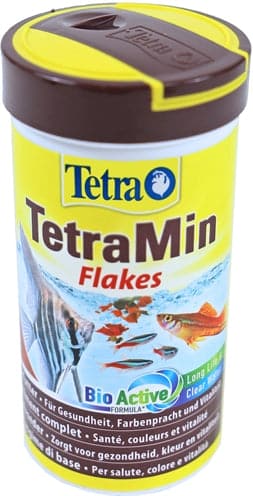
Tetramin Bio Active Vlokken Fish food 100 ml
Complete tropical food as a practical staple; also offer plant-rich foods regularly and check that the larger molly eats it readily.
Check retailer for price0 retailers
View retailersSupplementary foods
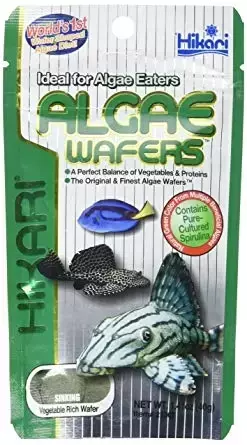
Hikari Algae wafers 40gr - Vissenvoer
Supplementary algae food that complements an omnivorous diet including plant matter; do not use it as the only complete food.
Check retailer for price0 retailers
View retailersPrices from the latest retailer update, excluding shipping. Check stock and delivery with the retailer.
Sources & review
This care guide draws on several specialist sources and was last checked on .
View the sources
- Hikari — Hikari Tropical Algae Wafers — manufacturer feeding information
- Tetra — TetraMin Flakes — manufacturer product information
- GBIF — GBIF Backbone Taxonomy — Poecilia velifera
- WoRMS — World Register of Marine Species — Poecilia velifera
- Integrated Taxonomic Information System — ITIS — Poecilia velifera
- Seriously Fish — Seriously Fish — Giant Sailfin Molly / Poecilia velifera
- FishBase — FishBase — Poecilia velifera species summary
- Dnoerholm / Wikimedia Commons — Poecilia velifera wild form — Wikimedia Commons