Lemon tetra
Hyphessobrycon pulchripinnis

The lemon tetra (Hyphessobrycon pulchripinnis) is a peaceful, golden South American schooling fish with a vivid red iris. Native to the Tapajós region, it does best in a spacious, calm group with open swimming room and sheltered edges. It is omnivorous, but its small mouth calls for appropriately fine, varied food. Consider an aquarium with a base around 80 × 30 cm or larger and keep water quality stable. This guide separates published aquarium care ranges from observations in breeding literature. This is not a shortcut to keeping fish in a tiny tank: the aquarium footprint and social needs matter more than its modest body size. Check that every tank mate can feed calmly.
Plan your aquarium →At a glance
- Temperature
- 23–28 °C
- pH
- 5.5–7.5
- GH
- 1–12 °dGH
- Aquarium length
- At least 80 cm
- Minimum aquarium volume
- At least 72 L
- Adult size
- Up to 4 cm
- Group size
- At least 8 individuals
- Temperament
- Peaceful
About this species
The lemon tetra is a small characin in the genus Hyphessobrycon. Its pale yellow to translucent gold flank and red-orange upper iris explain the common name. Colour is usually clearer in healthy adults in a settled environment with appropriate food; it is not, by itself, a reliable water-quality indicator.
FishBase reports about 3.8 cm standard length for males or unsexed fish and 3.6 cm for females. Seriously Fish lists 4 cm standard length. Standard length excludes the tail fin, so use about 4 cm as the upper figure in the consulted sources, not a guaranteed size for every fish. ITIS treats the species as valid. The older name Hemigrammus erythrophthalmus is described as invalid and is not treated here as a separate species.
Natural habitat
The species is native to Brazil’s Tapajós region. Regional aquaculture literature describes small tributaries and streams entering the lower Amazon, including waters of the rio Curuá do Sul and Tapajós. Seriously Fish identifies minor tributaries, smaller rivers, oxbows and flooded forests as likely habitats. Conditions vary across the region, so a home aquarium need not reproduce the chemistry of one exact collection site.
A fine or sandy substrate, driftwood roots and plants along the margins provide cover while leaving open swimming space. Leaf litter can support a natural layout and microbial growth, but it is optional. Use aquarium-safe leaves and remove material if it begins to affect water quality.
Aquarium and layout
Seriously Fish gives a base of about 80 × 30 cm, equivalent to approximately 72 litres at 30 cm water depth, as the smallest footprint to consider. This does not guarantee that every tank mate will fit. A longer aquarium offers a school more horizontal swimming room. Keep at least eight fish together; the specialist profile recommends a mixed group of eight to ten. Five is a lower group figure in the FishBase record, not the preferred recommendation.
Use plants, wood and optional floating plants to shade parts of the aquarium while preserving open lanes. Gentle to moderate, even flow is practical; avoid a strong jet across the whole tank. A mature filter, good gas exchange and routine maintenance matter more than specialised equipment. Cover the aquarium because small tetras may jump when startled. Acclimate new fish gradually and avoid abrupt changes in temperature or water chemistry.
Water conditions
Seriously Fish lists 20–28 °C, pH 5.0–7.5 and GH 1–12 dGH. FishBase lists 23–28 °C and pH 5.5–8.0. For a cautious practical guide, we use the overlap: 23–28 °C and pH 5.5–7.5. The GH range comes only from Seriously Fish. This is a source-based choice, not proof that every value in the range is equally suitable for every individual.
These are ranges, not targets between which water should fluctuate. Measure the existing aquarium first and do not change chemistry abruptly to reach a single number. Stable, clean water at a suitable temperature is essential. The sources do not provide a controlled species-specific KH range, so none is supplied. Check ammonia and nitrite after maintenance or changes and make water changes gradually.
Behaviour and group size
The lemon tetra is considered peaceful and suits a carefully planned community aquarium. It mainly uses open water. Keep it with other small, calm fish that tolerate similar temperature and water chemistry. A shared temperature figure alone is not enough: consider adult size, mouth size, swimming space, social needs and behaviour. Very small shrimp fry or eggs may be eaten, so do not assume the species is completely safe with every dwarf shrimp colony.
Within a mixed group, males form temporary dominance hierarchies and compete for female attention. A sufficiently large mixed-sex school spreads these interactions and encourages more natural behaviour. Males tend to be slimmer and slightly smaller; in adults, the dorsal and anal fins may be more intensely coloured. These are tendencies, not a reliable way to sex juveniles. Persistent chasing, damaged fins or fish unable to reach food call for a change in stocking.
Feeding
In the wild, the lemon tetra feeds on small invertebrates and crustaceans, along with plant matter and other small food items. In an aquarium, provide a varied omnivorous diet. Choose fine food that fits its small mouth and offer small portions so fish in midwater can feed. Suitable small frozen or live prey can add variety; use only reliably cultured or safely sourced organisms.
TetraMin Mini Granules is linked as an existing staple food. The manufacturer describes it as a complete, fine-grained food for small freshwater ornamental fish that sinks slowly and suits fish feeding in midwater. Check that the lemon tetras can actually swallow the granules; crush or replace them if they are too large. Feed only what is eaten promptly and avoid food accumulating on the substrate.
Breeding
The lemon tetra is a free-spawning egg scatterer with no parental care. Aquarium research describes males defending territories during morning spawning, females visiting territories individually, and multiple small batches across the season. Eggs are released over suitable substrate such as fine plants; adults do not guard or tend them. Eggs and larvae are often eaten in a community aquarium, so visible fry are not a predictable outcome.
For planned breeding, a separate mature breeding tank with fine-leaved plants or a mesh that keeps eggs out of adult reach is usually more practical than keeping the main group permanently in a spawning setup. Keep light subdued and water quality stable. A production study gives specific water chemistry for breeding; these values are not automatically general care values for all lemon tetras. Remove or separate adults after spawning if the eggs are to be saved. Feed larvae once they are free-swimming, using food small enough for their mouths.
Keeping with other species

Green neon tetra
Suitable with conditionsConditionally suitable with enough swimming room and properly sized schools: both are small, peaceful South American characins with overlapping warm-water ranges. The lemon tetra grows larger, so watch for food competition and keep each species in its own school. Observe them after introduction and do not add tiny shrimp fry if you want to preserve them.
View species profile →
Head-and-tail light tetra
Suitable with conditionsBoth are peaceful, active South American shoaling characins with overlapping guideline ranges. They may share a spacious, mature aquarium if each keeps its own school and has enough open swimming room and access to food. This pairing is not experimentally tested; observe behaviour and feeding, and avoid large predators or tiny shrimp fry.
View species profile →Suitable products
Recommended staple foods
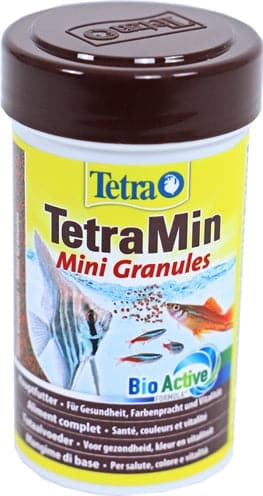
Tetra Min Minigranules Fish food 100 ml
Tetra describes Mini Granules as complete, fine-grained food for small freshwater ornamental fish that sinks slowly. This suits the lemon tetra’s small mouth and midwater feeding position; check that your fish can swallow the granules.
Check retailer for price0 retailers
View retailersPrices from the latest retailer update, excluding shipping. Check stock and delivery with the retailer.
Sources & review
This care guide draws on several specialist sources and was last checked on .
View the sources
- Creative Commons — Creative Commons Attribution-ShareAlike 3.0 Unported
- Seriously Fish — Hyphessobrycon pulchripinnis — aquarium species profile
- FishBase — Hyphessobrycon pulchripinnis Ahl, 1937 — FishBase
- Integrated Taxonomic Information System — ITIS report — Hyphessobrycon pulchripinnis, TSN 162884
- GBIF — Hyphessobrycon pulchripinnis Ahl, 1937 — GBIF Backbone
- California Academy of Sciences — Eschmeyer’s Catalog of Fishes — Hyphessobrycon pulchripinnis
- Windward Community College / TAMU Extension archive — Spawning and Production of the Lemon Tetra
- Tetra — TetraMin Mini Granules — manufacturer product information
- Wikimedia Commons / Waugsberg — Hyphessobrycon pulchripinnis.jpg — Wikimedia Commons