Glowlight tetra
Hemigrammus erythrozonus

The glowlight tetra (Hemigrammus erythrozonus) has an orange-red stripe across a fairly translucent body. It is a peaceful shoaling fish that suits a planted aquarium. Widespread captive breeding generally makes it a more approachable choice than a specialist wild-caught fish. This does not mean it can be added to any existing community without checking. Its own shoal, sufficient horizontal swimming space and an established filter remain essential. Prefer ten or more fish and consider how much room is really left after decorating. This guide separates everyday maintenance from the softer, quieter conditions of a breeding setup. It also explains why a fish that mixes well with other small companions can still be unsuitable for an aquarium containing adult angelfish.
Plan your aquarium →At a glance
- Temperature
- 24–28 °C
- pH
- 6.0–7.5
- GH
- 5–12 °dGH
- Aquarium length
- At least 60 cm
- Adult size
- Approximately 4 cm
- Group size
- At least 10 individuals
- Temperament
- Peaceful
About this species
The glowing stripe is part of the natural colour pattern, not evidence of artificial colouring. A fish sold as a glowlight tetra should be labelled Hemigrammus erythrozonus. It is neither a green neon nor every other translucent tetra with a reddish marking. Check the scientific name when adding to an existing shoal.
About 4 cm is a useful adult planning size. FishBase also displays a smaller maximum, but questions that figure and reports 4 cm elsewhere in the same account. A small shop juvenile is therefore not the size on which to base permanent stocking. Mature females are usually fuller-bodied. A rounded abdomen alone does not prove readiness to breed, however; also consider condition, appetite and general behaviour before selecting breeding fish.
Natural habitat
The known natural range lies in the Essequibo drainage of Guyana. This is a particular region rather than a general distribution across all major South American rivers. Described habitats include sheltered forest tributaries, where plant material can stain the water brown.
In the aquarium, translate that shelter into plants at the back and sides and wood breaking up sightlines. The objective is not a tank so dark that the animals cannot be assessed. Retain enough light for healthy plants and observation. A geographically precise biotope also requires independent checks of plant origins.
Many glowlights sold are captive-bred. Ask the supplier about the water used for the actual group you are buying. The species' native range explains its background but does not replace the history of those particular fish. Brown water alone proves neither suitable acidity nor suitable hardness, so appearance cannot substitute for measurements.
Aquarium and layout
Plan at least 60 cm of tank length for the shoal itself; additional schools or active companions warrant more length. The checked sources support this length. A calculated volume from an example aquarium is not treated as a universal stocking formula. Width, furnishings and the remaining swimming route also matter.
Avoid an entirely bare expanse if it leaves the fish retreating at every movement. Combine plant groups with an open area at the front or centre. From your usual viewing position, check that the shoal can retreat without being trapped in a corner. A lid and secure openings around hoses help prevent a startled fish leaving the tank.
Use a mature filter and adjust the outlet to the layout. Fish should not need to crowd behind one ornament to escape the current. Leave room for maintenance and check that new planting does not obstruct feeding. Add further inhabitants gradually, testing water quality between additions rather than treating apparently empty space as spare biological capacity.
Water conditions
This guide uses 24–28 °C, pH 6.0–7.5 and GH 5–12 °dH for routine care. This is a practical profile within the checked evidence; sources also give wider pH or hardness ranges. A range is not an invitation to swing regularly between its endpoints. Choose stable conditions compatible with all inhabitants.
Test your tap water before choosing stock. Selecting fish for the available water may be more manageable than continually adjusting its chemistry. Prepare replacement water consistently and check that temperature and composition are appropriate. Routine maintenance and a separate breeding attempt have different aims: softer breeding figures should not automatically become new limits on the everyday care card.
If behaviour changes unexpectedly, check ammonia/ammonium and nitrite as well as pH. Extra food or a warmer heater setting does not repair an immature filter. Salt is not a standard husbandry additive for this freshwater fish.
Behaviour and group size
Prefer at least ten glowlight tetras. Some sources state smaller minimum groups; we choose the larger shoal as the starting recommendation. Five glowlights and five fish of another species do not form one proper conspecific group. When buying, first consider completing the existing shoal instead of continually adding another species.
A quiet community of similarly small fish may work, but assess each combination individually. Glowlights should not be used as expendable distractions for much larger territorial animals. With adult angelfish, the size difference remains a predation concern. A combination can also fail without fighting if one species eats everything before the other emerges.
Alternating between loose swimming and rejoining the shoal need not indicate a problem. Persistent isolation, being cornered or missing meals justify reassessing companions and layout. Check the circumstances before automatically interpreting a behavioural change as disease.
Feeding
Glowlights usually accept small dry foods readily. Choose a complete food for small tropical fish as the staple and match the particles to actual swallowing ability. Fine flakes differ from large hard pellets: watch the fish rather than judging only the label. Distribute a small portion so less competitive individuals also get some.
Small live or frozen food offers variety. Biological accounts describe small invertebrates among natural foods, alongside plant material. This does not establish that exclusively live or exclusively plant-based food supplies a complete daily diet. Keep staple and supplementary feeding distinct.
Stop when food remains and adjust the next portion. A specific product is only linked when existing manufacturer and catalogue evidence adequately supports its use. Price or a similar name printed on packaging does not establish suitability.
Breeding
Glowlight tetras can be bred in aquaria. A separate, quietly lit breeding tank is more practical for deliberately raising young than relying on accidental survivors in a busy community. Fine plants or an appropriate spawning medium can receive eggs. Adults can eat those eggs, so prevent continued access after spawning.
Breeding accounts describe softer, more acidic conditions than may be needed for everyday maintenance of captive-bred fish. Use a separate controlled plan rather than abruptly changing the community aquarium. Young larvae require very small initial foods; arrange that supply before attempting a spawn. Protect early developmental stages from strong lighting.
No guaranteed egg count or fixed hatching day is given here. Temperature, parental condition and rearing circumstances influence development. Spawning is only the beginning: daily attention to available food and water quality determines whether the young continue growing.
Keeping with other species

Freshwater angelfish
UnsuitableAdult angelfish may prey on glowlight tetras. A peaceful start with juvenile angelfish does not reliably predict adult behaviour. Choose a different combination even where water parameters overlap.
View species profile →
X-ray tetra
Suitable with conditionsBoth are small, peaceful shoaling fish with a suitable shared water profile. Keep a separate group of each and reserve space for two shoals; the individual minimum length is not automatically sufficient. Check that both groups obtain food.
View species profile →Suitable plants

Java moss
Java moss can provide fine cover on wood or stone at 24–28 °C and pH 6–7.5. Keep the swimming lane open and gently remove trapped debris. It may serve as a spawning structure but does not guarantee protection of eggs from adults or companions.
- Light
- Low, Moderate
- CO₂
- CO₂ injection not essential
Suitable products
Recommended staple foods

Tropical Supervit Basic 100ml
Complete flake food for omnivorous and carnivorous fish. Crumble flakes into suitably small pieces and let them descend into the swimming layer. Check that quieter fish also feed.
Check retailer for price0 retailers
View retailers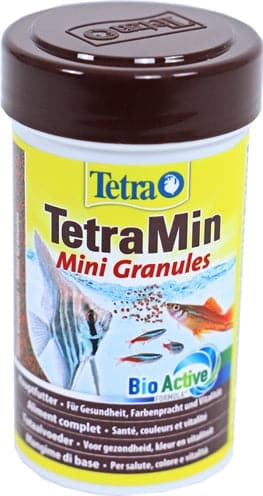
Tetra Min Minigranules Fish food 100 ml
Fine, slowly sinking mini granules as a staple for small freshwater fish. Let them soften and check that every fish swallows them easily; crush further if necessary.
Check retailer for price0 retailers
View retailersSupplementary foods

Tropical Dafnia 100ml
Dried daphnia as an occasional animal-food supplement. Crumble larger pieces and briefly moisten them before feeding. This does not replace a complete staple food.
Check retailer for price0 retailers
View retailersPrices from the latest retailer update, excluding shipping. Check stock and delivery with the retailer.
Sources & review
This care guide draws on several specialist sources and was last checked on .