Blue panchax
Aplocheilus panchax

The blue panchax (Aplocheilus panchax) is a distinctive surface-dwelling fish from South and Southeast Asia. It takes insects and larvae at the water surface and may regard small fish as prey. A secure cover and tankmates too large to fit its broad mouth are essential. The pale head spot helps with identification, but check the name when buying: several panchax look similar, and blue panchax is not the same species as striped panchax. Fishkeeper recommends a tank about 90 cm long for a pair. This guide uses only the overlapping water ranges reported by Fishkeeper and FishBase and omits a minimum volume because the evidence is not consistent enough. It also explains why small fish are at risk, how to make the aquarium escape-proof, and which varied animal foods are suitable. The tankmate note is deliberately conditional; it cannot guarantee compatibility in a particular aquarium.
Plan your aquarium →At a glance
- Temperature
- 20–25 °C
- pH
- 6.0–8.0
- GH
- 5–12 °dGH
- Aquarium length
- At least 90 cm
- Adult size
- Up to 9 cm
- Group size
- At least 2 individuals
- Swimming zone
- Surface
- Temperament
- Predator, May jump
About this species
The blue panchax belongs to Aplocheilidae and reaches about 9 cm in total length. A bright silvery-white spot on top of the head is characteristic when viewed from above. Males are usually more colourful and have slightly elongated fins, although the difference is not always obvious unless the fish are compared side by side. The trade name refers to a species, not a separate captive strain. FishBase lists it as Least Concern based on an assessment from 2018. That does not establish the condition of every local population; choose traceable stock and never release aquarium fish. It is an egg-laying killifish that hunts mainly in the upper water column. Its broad mouth, surface-feeding behaviour and jumping ability shape daily care more than body length alone. Treat the LC category as a dated assessment, not a guarantee about sustainable collection or trade.Natural habitat
The species is widely distributed across South and Southeast Asia. FishBase lists Pakistan, India, Bangladesh, Myanmar and parts of the Indo-Malayan archipelago; records also exist from other countries. Blue panchax occur in lowland wetlands, ponds, ditches, canals, reservoirs and mangrove creeks. They may enter slightly brackish water, but this does not mean salt is required in an aquarium. Vegetated areas with rooted or floating plants provide cover and feeding habitat; insects are an important part of the natural diet. Records span varied lowland waters and include mangrove creeks and slightly brackish environments. The reported localities extend across much of South and Southeast Asia, so conditions differ between populations. Natural occurrence in brackish water is not an instruction to add aquarium salt. For aquarium design, the useful ecological points are surface feeding, vegetated margins and access to open water.Aquarium and layout
Keep a pair in a tank at least 90 cm long, as Fishkeeper advises. A larger group needs more swimming room; a consistent minimum volume is not sufficiently supported, so none is stated. Leave open swimming space near the top while providing dense planting, floating plants and sheltered areas. The fish stays near the surface and is an accomplished jumper: fit a secure lid and close gaps around cables or feeding openings. Calm to moderate flow is practical, but no species-specific flow rate has been established.Water conditions
The sources overlap at 20–25°C and pH 6.0–8.0. For hardness, FishBase reports 5–12 dH and Fishkeeper up to 15 degrees; we use the shared, cautious range of 5–12 dH. These are guide ranges for stable aquarium care, not a reason for rapid corrections. KH has not been reliably established for this species. Test water with suitable kits and avoid sudden changes, especially during purchase and acclimation.Behaviour and group size
Blue panchax are surface-oriented predators. Small fish, fry and small shrimp may be eaten if they fit in the mouth, so tiny neon-type fish are unsuitable. Fishkeeper suggests medium-sized peaceful fish occupying other swimming zones as possible tankmates, but this is not a guarantee for every aquarium. A robust bottom-dweller such as Sterbai cory is only a conditional option in a long tank, with its own group, cover and monitored access to food. Do not automatically mix blue panchax with other surface fish or closely related panchax.Feeding
In nature, this species catches insects and larvae at or just below the surface. Fishkeeper lists flakes, granules and animal-based frozen foods; bloodworm, white mosquito larvae, brine shrimp and daphnia are among accepted foods. Offer variety in small portions the fish can swallow, and check that less dominant individuals also feed. Live Artemia from the product catalogue may be used as supplementary variety, but it is not a complete staple. No dry food is linked until both its composition and suitable particle size have been checked.Breeding
Blue panchax are not restricted to a single short annual breeding event; FishBase describes breeding over an extended period. For breeding, Fishkeeper recommends a pair in a separate tank with fine-leaved and floating plants. Eggs are deposited among plants close to the surface. Adults may eat eggs or fry, so move the eggs or remove the parents after spawning. Fishkeeper gives an incubation period of about 9–14 days depending on temperature. Start fry on suitably fine foods and keep water quality stable.Keeping with other species

Sterba's cory
Suitable with conditionsConditional only: the ranges overlap at 24–25°C, pH 6.0–7.2 and GH 5–12. Blue panchax hunt at the surface, and Fishkeeper warns against keeping them with small fish. Consider only robust adult Sterbai corys, in their own group of at least six and in a tank at least 90 cm long. Juveniles or small individuals are not a safe choice. Check cover and feeding access. This is a source-based assessment, not a trial of this exact pairing.
View species profile →Suitable plants

Java moss
Java moss (Taxiphyllum barbieri) can provide fine-leaved spawning cover when attached high in the aquarium. Fishkeeper recommends fine-leaved and floating plants and says eggs are laid among plants near the surface. This is a practical choice based on plant form and placement; retain floating cover and a secure lid as well.
- Light
- Low, Moderate
- CO₂
- CO₂ injection not essential
Suitable products
Recommended staple foods
Sources say dried foods may be accepted, but no catalogue item has been checked for both complete composition and suitable particle size for this species. Only supplementary live Artemia is linked.
Supplementary foods
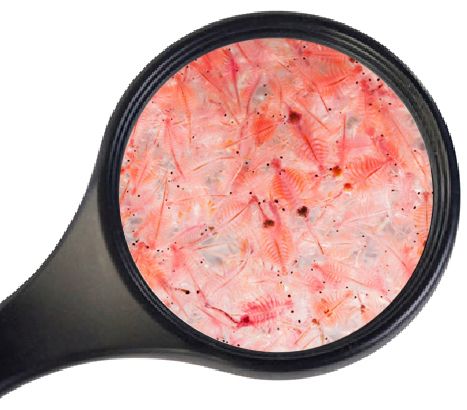
Levende Artemia 90ml
Live Artemia is suitable supplementary variety: Fishkeeper explicitly lists brine shrimp among appropriate animal foods. It is not a complete staple.
Check retailer for price0 retailers
View retailersPrices from the latest retailer update, excluding shipping. Check stock and delivery with the retailer.
Sources & review
This care guide draws on several specialist sources and was last checked on .