Yellow tang
Zebrasoma flavescens

The yellow tang is an active grazer, not a small yellow addition to fill a reef aquarium. Zebrasoma flavescens can reach about 20 cm and combines a deep body with a substantial need for usable swimming room. A juvenile looks modest, but its home must accommodate the adult from the outset. It searches for food throughout the day and may firmly defend its route or grazing area, especially against its own species and similar tangs. A large mature aquarium with established rock surfaces and a long clear swimming lane suits it better than a tall compact tank of the same volume. Captive-bred fish are available; ask for traceable provenance and familiar foods. This is not an obvious first marine fish for the average beginner. Space, plant-rich feeding and territorial behaviour require preparation and a way to manage the eventual community.
Plan your aquarium →At a glance
- Adult size
- Approximately 20 cm
- Aquarium length
- At least 150 cm
- Minimum aquarium volume
- At least 500 L
- Temperature
- 24–26 °C
- Specific gravity (SG at 25 °C)
- 1.024–1.026 SG
- Salinity
- 32–35 ppt
- pH
- 8.1–8.3
- Difficulty
- Moderate
- Temperament
- Territorial
- Diet
- Herbivore
- Swimming zone
- Middle
- Reef safety
- Generally reef safe
- Suitable for beginners
- No
- Social needs
- Solitary
- Keeping conspecifics
- Prefer one individual
Cautious husbandry guidance for adults, not a complete stocking calculation. Assess tank length, layout and the entire community together.
About this species
The almost uniformly yellow body, narrow snout and tall fins create the familiar outline. An adult needs room to swim without constantly turning. Sharp defensive structures occur at the tail base: avoid unnecessary handling and account for them during moving or maintenance. A night-time or stress-related colour change is not itself a diagnosis. Assess behaviour, breathing and condition together. A photograph of a juvenile says little about the room it will eventually need.
Natural habitat
The species occurs on Pacific reefs, with Hawaii important both in its natural distribution and in the history of aquarium collection. Rocky surfaces offer food and shelter. Daily grazing calls for extensive accessible surfaces in a mature aquarium. Do not build a solid wall that sacrifices every swimming route to more rock. The fish needs grazing places and open passages between them. A recently sterilised layout with a little green growth is not a dependable long-term food supply.
Aquarium and layout
Use approximately 500 L and 150 cm of length as a cautious lower planning threshold for one adult. More space is desirable with other active or territorial residents. This is a rounded editorial choice based on size, activity and care recommendations, not a physical boundary guaranteeing welfare. Leave a long open lane along the front or around rock groups. Provide good gas exchange without forceful jets everywhere, sheltered resting sites and stable rocks. A stronger pump never compensates for insufficient tank length.
Water conditions
Maintain stable tropical seawater and measure temperature, pH and salinity regularly. Oxygen demand and waste production make gas exchange and adequate biological filtration essential. Check ammonia/ammonium and nitrite after changes and follow nitrate as a trend. Replace evaporation with suitable fresh water; mix replacement seawater in advance. Calcium and magnesium may matter for the aquarium’s corals, but are not stand-alone supplement recommendations for this fish. Avoid abrupt corrections without measurement.
Behaviour and group size
A yellow tang may be relatively calm towards differently shaped fish yet become territorial around grazing areas or newly introduced tangs. Its tail can be used as a weapon. Pursuit, blocked feeding and injuries require intervention. Rockwork that interrupts sightlines helps but cannot solve fundamental lack of space. Plan the whole community beforehand and do not place a new fish inside a fully established territory without escape routes.
Feeding
Plant-rich feeding and grazing opportunities are central. Offer suitable marine algae, such as appropriate unseasoned nori, and complete foods intended for this feeding pattern. Position food accessibly without obstructing other animals. Animal ingredients may be part of variety, but an exclusively mysis-based diet is inappropriate. Check abdominal condition, daily intake and access to grazing surfaces. A product specifically named by its manufacturer for yellow tangs may be useful as a supplement without replacing the overall plant-rich ration.
Reef safety
The species is generally kept as reef safe. Normal grazing targets growth on surfaces rather than coral tissue. Nevertheless, leave physical clearance for large fins around rocks and delicate colonies. A positive reef classification does not guarantee identical behaviour from every individual. Feeding, condition and observation still matter. Category cards distinguish assessed low risk from lack of information; they do not promise safety for every possible invertebrate.
Keeping with other fish
A carefully chosen calm community may work if the aquarium is large enough and smaller fish retain separate refuges. A regal tang makes the combination much more demanding: start with the larger individual space requirement, then assess additional swimming room and feeding competition. Similar tangs may develop territorial conflicts. Shy firefish must feed freely. A conditionally suitable card does not mean that a pairing is automatically responsible in 500 L alongside many other active fish.
Keeping with invertebrates
Adult reef invertebrates are not the normal target of algae-oriented feeding, but species-specific evidence is insufficient for absolute safety claims across several categories. A large crab or anemone can create danger in the opposite direction. Consider adult size and layout for every addition. Grazing a surface must not automatically be mistaken for predation on an animal living there; when uncertain, observe what is actually eaten or damaged.
Breeding
Specialist captive breeding is successful and offers an alternative to wild collection. This is not straightforward home breeding: reproduction and rearing small pelagic larvae require specialised systems and suitable live foods. Do not buy another adult simply to form a breeding pair. A complete home protocol is not sufficiently supported for this guide. Ask about the hatchery and rearing diet so a captive-bred juvenile’s transition follows what it already knows.
Possible problems
A sunken abdomen, damaged skin, rapid breathing or endlessly repeating a short swimming route needs attention. Investigate feeding and available room as well as water quality. New fish may introduce parasites despite appearing healthy. Seek informed guidance for quarantine and treatment rather than automatically dosing the reef, where corals and invertebrates may be harmed. An adequately large system, good feeding and stocking without chronic territorial stress remain the foundation of daily care.
Keeping with other species

Ocellaris clownfish
Suitable with conditionsThe tang sets a much greater minimum length and needs clear swimming lanes. Give the smaller neighbour cover and a feeding area outside the busy route.
View species profile →
Royal gramma
Suitable with conditionsThe tang sets a much greater minimum length and needs clear swimming lanes. Give the smaller neighbour cover and a feeding area outside the busy route.
View species profile →
Banggai cardinalfish
Suitable with conditionsThe tang sets a much greater minimum length and needs clear swimming lanes. Give the smaller neighbour cover and a feeding area outside the busy route.
View species profile →
Pajama cardinalfish
Suitable with conditionsThe tang sets a much greater minimum length and needs clear swimming lanes. Give the smaller neighbour cover and a feeding area outside the busy route.
View species profile →Suitable products
Recommended staple foods
No sufficiently verified product advice is available for this feeding category yet. Follow the feeding guide; an absent product card does not mean this food is unnecessary.
Supplementary foods
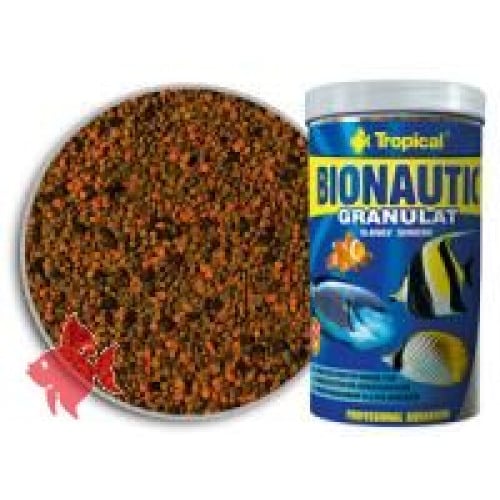
Tropical Bionautic Granulaat 100ml
The manufacturer explicitly lists Zebrasoma flavescens. This marine granulate is supplementary here; it does not replace daily plant-based food and grazing surfaces. Check that the fish accepts the granules.
Check retailer for price0 retailers
Compare prices
Tropical Bionautic Granulaat 500ml
The manufacturer explicitly lists Zebrasoma flavescens. This marine granulate is supplementary here; it does not replace daily plant-based food and grazing surfaces. Check that the fish accepts the granules.
Check retailer for price0 retailers
Compare pricesGrazing food
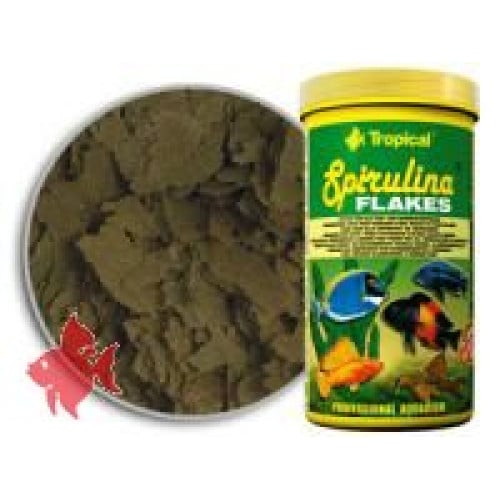
Tropical Spirulina Flakes 100ml
Spirulina flakes explicitly intended by the manufacturer for herbivorous marine fish as well. Use as a plant-based supplement: crumble and pre-wet if needed, and check acceptance. Does not replace natural grazing surfaces or a varied diet.
Check retailer for price1 retailers
Compare prices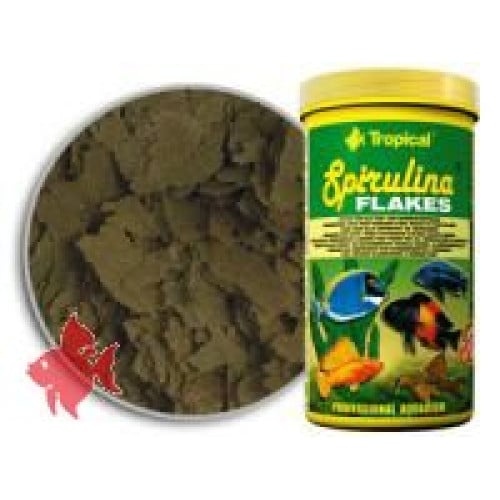
Tropical Spirulina Flakes 1000ml
Spirulina flakes explicitly intended by the manufacturer for herbivorous marine fish as well. Use as a plant-based supplement: crumble and pre-wet if needed, and check acceptance. Does not replace natural grazing surfaces or a varied diet.
Check retailer for price1 retailers
Compare pricesPrices from the latest retailer update, excluding shipping. Check stock and delivery with the retailer.
Sources & review
This care guide draws on several specialist sources and was last checked on .