Tailspot blenny
Ecsenius stigmatura

The tailspot blenny is a small rock-dweller often peering from an opening before making short grazing trips. Ecsenius stigmatura has distinctive head markings and a dark spot at the tail base. Its modest size attracts keepers of smaller reefs, but an empty or newly started tank is a poor choice. It needs accessible colonised surfaces and food it demonstrably accepts. A blenny constantly pecking at rocks can still lose weight if little useful nutrition is available. Choose one specimen for a quiet setup and watch competitors using the same perches or grazing sites. It is no guaranteed cure for unwanted algae. The real question is whether you can feed and house this fish throughout its life, including when the aquarium becomes much cleaner or the layout changes.
Plan your aquarium →At a glance
- Adult size
- Approximately 7 cm
- Aquarium length
- At least 60 cm
- Minimum aquarium volume
- At least 80 L
- Temperature
- 24–26 °C
- Specific gravity (SG at 25 °C)
- 1.024–1.026 SG
- Salinity
- 32–35 ppt
- pH
- 8.1–8.3
- Difficulty
- Moderate
- Temperament
- Territorial
- Diet
- Herbivore
- Swimming zone
- Middle
- Reef safety
- Generally reef safe
- Suitable for beginners
- Conditional
- Social needs
- Solitary
- Keeping conspecifics
- Prefer one individual
Cautious husbandry guidance for adults, not a complete stocking calculation. Assess tank length, layout and the entire community together.
About this species
Adults reach a maximum of approximately 7 cm. Head markings, slender shape and the tail spot aid identification. Other Ecsenius species appear under similar blenny names despite differences in diet and coral behaviour, so verify the full name. Perching on rock or showing only the head from a crevice fits its lifestyle. Judge health from condition, breathing and feeding rather than the time spent swimming in open water.
Natural habitat
The species lives on tropical western Pacific reefs with hard surfaces and small openings. Grazing growth and shelter occur close together. Reproduce this with several suitable perches and escape places, keeping feeding surfaces accessible. Sterile decorative rock offers shape without equivalent nutrition. Short trips between familiar sites can be normal, whereas forced hiding without feeding access is a problem. The natural pattern helps distinguish these situations.
Aquarium and layout
Use approximately 80 L and 60 cm of length as a cautious lower threshold for one fish in a quiet simple community. More volume and a larger colonised surface provide a margin. Make narrow secure openings, stabilise rocks and cover the aquarium. Moderate flow with resting places is preferable to uniformly forceful jets. Larger residents must not block every food site. Litres are only one condition: a larger newly arranged bare tank may still be unsuitable.
Water conditions
Keep temperature, pH and salinity stable and allow biological maturation. Evaporation can change concentration relatively quickly in a smaller aquarium; measure and top up with suitable fresh water. Check ammonia/ammonium and nitrite after changes and monitor nitrate and leftovers. Extra food compensating for poor grazing surfaces must be delivered carefully. Clean-looking water and rocks do not automatically suit a grazer, while vigorous nuisance-algae growth does not automatically mean nutritious food either.
Behaviour and group size
The tailspot may be calm towards many fish yet defend a favoured hole or feeding patch. Similar bottom- and rock-dwellers can become competitors. Evaluate brief threats alongside the available escape routes. Persistent pursuit, injury or loss of all perches is not a trouble-free situation. Provide separate refuges and intervene if one fish is permanently displaced. Large busy fish may cause feeding stress even without direct bites.
Feeding
Feeding is strongly oriented towards grazing and plant ingredients. Offer appropriate marine algae foods or complete foods suited to this application, checking actual uptake. Natural grazing surfaces remain useful but must not be the sole unchecked food source. A little animal food passing through the tank does not complete the plan. Track appetite and abdominal condition. A spirulina product is not automatically linked on its ingredient alone: marine application and nutritional role need adequate support.
Reef safety
The species is generally kept as reef safe, but family-wide blenny information does not apply equally to every species. Inspect individual pecking to see what is actually eaten. Grazing beside a coral differs from repeated tissue damage. If colonies open less, check the fish and other possible causes. Low coral risk is not a guarantee and does not replace feeding. Uncertainty stays visible for categories without enough specific evidence.
Keeping with other fish
Calm cardinalfish and fish not using the same holes may fit. A watchman goby needs its own bottom area; a clown goby needs separate perches. A royal gramma can exert pressure where rockwork offers too few distinct caves. Large predators are unsuitable for this small animal. Active wrasses and dwarf angelfish warrant particular attention to food competition. Read relationship cards alongside the real layout and available grazing area.
Keeping with invertebrates
A growth-oriented diet does not make this fish a typical hunter of large ornamental shrimp or snails, but a universal invertebrate guarantee is unsupported. Check actual species and sizes. Large crabs or predatory shrimp can threaten a resting blenny in the reverse direction. Clams, tubeworms and echinoderms still need specific evidence. An unknown judgement signals further checking, not an unspoken absence of risk.
Breeding
Blennies may breed under specialised conditions, laying eggs at a sheltered site and producing vulnerable larvae. For this particular species, the guide lacks a sufficiently checked simple home protocol. No fixed egg counts, timings or guaranteed first food are therefore supplied. Adding another fish solely to breed is unjustified without a suitable social and spatial plan. Ask for traceable provenance and the rearing diet of any captive-bred fish.
Possible problems
The main practical concern is weight loss despite visible grazing. Check the food value of available surfaces and actual acceptance of supplements. An oversized or dominant neighbour can aggravate the problem. Also watch cover gaps, injury and rapid breathing. Do not continually move rocks to make the fish visible. Recurring poor condition calls for water checks, social assessment and, when necessary, specialist help. This blenny is a resident to care for, not disposable cleaning equipment.
Keeping with other species

Ocellaris clownfish
Suitable with conditionsThe blenny must retain grazing surfaces and resting holes. Shared use of rockwork can cause conflict; monitor its condition and actual food intake.
View species profile →
Royal gramma
Suitable with conditionsThe blenny must retain grazing surfaces and resting holes. Shared use of rockwork can cause conflict; monitor its condition and actual food intake.
View species profile →
Banggai cardinalfish
Suitable with conditionsThe blenny must retain grazing surfaces and resting holes. Shared use of rockwork can cause conflict; monitor its condition and actual food intake.
View species profile →
Pajama cardinalfish
Suitable with conditionsThe blenny must retain grazing surfaces and resting holes. Shared use of rockwork can cause conflict; monitor its condition and actual food intake.
View species profile →Suitable products
Recommended staple foods
No sufficiently verified product advice is available for this feeding category yet. Follow the feeding guide; an absent product card does not mean this food is unnecessary.
Supplementary foods
No sufficiently verified product advice is available for this feeding category yet. Follow the feeding guide; an absent product card does not mean this food is unnecessary.
Grazing food
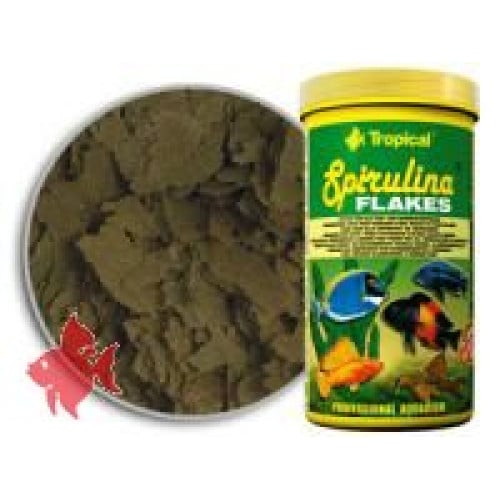
Tropical Spirulina Flakes 100ml
Spirulina flakes explicitly intended by the manufacturer for herbivorous marine fish as well. Use as a plant-based supplement: crumble and pre-wet if needed, and check acceptance. Does not replace natural grazing surfaces or a varied diet.
Check retailer for price1 retailers
Compare prices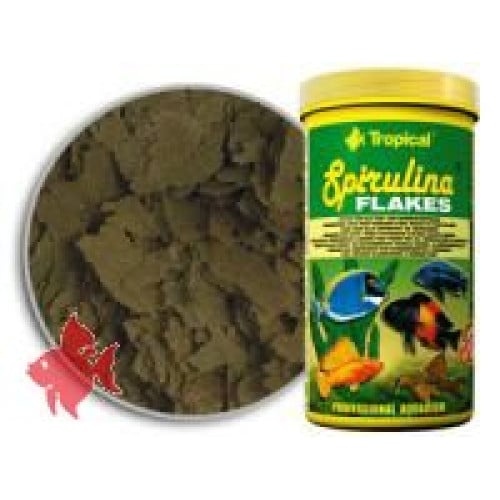
Tropical Spirulina Flakes 1000ml
Spirulina flakes explicitly intended by the manufacturer for herbivorous marine fish as well. Use as a plant-based supplement: crumble and pre-wet if needed, and check acceptance. Does not replace natural grazing surfaces or a varied diet.
Check retailer for price1 retailers
Compare pricesPrices from the latest retailer update, excluding shipping. Check stock and delivery with the retailer.
Sources & review
This care guide draws on several specialist sources and was last checked on .