True rummy-nose tetra
Petitella rhodostoma

The true rummy-nose tetra (Petitella rhodostoma) is a small, peaceful shoaling fish with a vivid red snout and a black-and-white patterned tail. It is an active swimmer and does best in a cohesive group of at least ten. Provide a long aquarium of at least 90 cm, stable clean water, open swimming space and fine, varied foods.The trade name “rummy-nose tetra” is also applied to similar species. Check the identifying features and do not rely on a shop label alone. A fading red head may accompany stress or poor conditions, but is not a diagnosis by itself. Also observe breathing, swimming and appetite.
Plan your aquarium →At a glance
- Temperature
- 24–26 °C
- pH
- 5.5–6.5
- GH
- 2–15 °dGH
- Aquarium length
- At least 90 cm
- Adult size
- Approximately 5 cm
- Group size
- At least 10 individuals
- Temperament
- Peaceful
About this species
The species was described in 1924 as Hemigrammus rhodostomus. Following taxonomic research, the accepted combination is Petitella rhodostoma, as used by the Catalog of Fishes. The original combination remains useful as a synonym when consulting older sources.
Distinguish it from P. bleheri and P. georgiae. In P. rhodostoma, red does not extend over the gill cover and a dark mark is present on the lower side of the caudal peduncle. Colour can fade in poor condition, so use more than colour alone.
Natural habitat
The species occurs in the Orinoco basin and lower Amazon region of Venezuela and Brazil. The specialist profile describes blackwater streams and tributaries, where organic matter can stain and acidify the water.
Wood, subdued lighting and shelter around the margins can create a calm layout. Plants are not a defining feature of the natural habitat, but can provide cover along the sides in an aquarium. Keep the middle open for the shoal.
Aquarium and layout
Seriously Fish recommends at least 90 cm tank length for this active shoal and a group of ten or more. FishBase lists a shorter aquarium and smaller group; this guide follows the more cautious species-specific recommendation to support swimming and social behaviour. A reliable minimum volume in litres has not been established, so none is stated.
Provide gentle flow, effective filtration and regular water changes. Place wood and plants mainly around the sides and retain a long swimming lane. Choose tankmates by adult size, behaviour, territory and feeding habits; matching water values alone does not ensure compatibility.
Water conditions
Sources differ slightly. Seriously Fish gives 24–27 °C and pH 5.5–7; Aquarist Atlas gives 23–26 °C and pH 5.5–6.5. Their overlapping range is 24–26 °C and pH 5.5–6.5. Seriously Fish lists GH 2–15 °dGH. Keep conditions stable and avoid abrupt changes made solely to chase a number.
Values reported for breeding are narrower and softer and refer to a dedicated spawning setup; they are not a daily requirement for every shoal. Keep ammonia and nitrite at zero and maintain the aquarium carefully.
Behaviour and group size
This is a peaceful, tightly shoaling species. Keep at least ten together; in a smaller group, natural shoaling behaviour may diminish. They are not strong feeding competitors and may be outcompeted by large, very fast or dominant species.
Choose calm tankmates of appropriate adult size that are also kept in suitable groups. Consider territories, swimming zones, tank length and whether every fish can feed. “Same water values” alone is not a compatibility assessment. Separate fish that are persistently chased or cannot access food.
Feeding
The species is omnivorous but has a small mouth. Offer small flakes or fine granules; larger flakes can be crumbled before feeding. Regularly supplement dry food with suitable small live or frozen foods such as Daphnia and Artemia.
The linked complete tropical flakes are suitable only when finely crushed and when the fish are observed eating them. Distribute small portions across the shoal, avoid uneaten food and do not rely on one product as the sole diet.
Breeding
This is an egg scatterer with no parental care; adults will eat eggs they can reach. Breeding requires a separate dimly lit tank with suitable fine substrate, plants or spawning material through which eggs can fall. Remove the parents after spawning.
Seriously Fish describes softer, more acidic water for breeding and reports hatching after about 24–36 hours, followed by free swimming a few days later. These are source-specific observations; results depend on temperature and other conditions. Start fry on infusoria and move to larger suitable foods as they grow.
Suitable plants

Java fern
Suitable: Java fern fits the shared 24–26 °C and pH 6–6.5 range. Attach its rhizome to wood or stone and leave a long swimming lane open for the active shoal. This is aquarium suitability, not a natural co-occurrence claim.
- Light
- Low, Moderate
- CO₂
- CO₂ injection not needed
Suitable products
Recommended staple foods
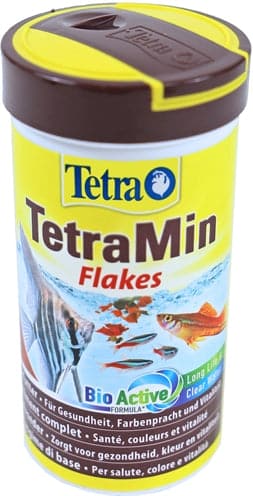
Tetramin Bio Active Vlokken Fish food 100 ml
Complete tropical flakes for omnivorous fish. Crumble them finely for the small mouth and confirm the shoal eats them; continue to rotate in small live or frozen foods.
Check retailer for price0 retailers
View retailersPrices from the latest retailer update, excluding shipping. Check stock and delivery with the retailer.
Sources & review
This care guide draws on several specialist sources and was last checked on .
View the sources
- Neotropical Ichthyology — Bittencourt et al. (2020), Petitella phylogenetic placement and population divergence
- Seriously Fish — Petitella rhodostoma — aquarium care profile
- FishBase — Petitella rhodostoma — species summary (legacy URL)
- Aquarist Atlas — Petitella rhodostoma — species profile; accepted name checked against Catalog of Fishes
- California Academy of Sciences — Eschmeyer’s Catalog of Fishes — accepted name Petitella rhodostoma
- Wikimedia Commons — Petitella rhodostoma photograph and CC BY-SA 2.0 license