Siamese algae eater care guide
Crossocheilus oblongus

The Siamese algae eater (Crossocheilus oblongus) is an active Southeast Asian cyprinid known for grazing on algae and biofilm. It grows to a substantial size and swims continuously; Aquarium Co-Op gives about 190 litres as a lower reference for one fish and recommends a secure lid. Note that ‘Siamese algae eater’ and the older label C. siamensis are not used consistently in the trade. This guide covers the accepted species C. oblongus and flags uncertainty where identification or data for lookalikes are mixed. Care therefore involves more than a small tank with algae: swimming room, a varied diet and planning for adult size all matter. The ranges below are source-based guidance; observe the condition and behaviour of the individual fish.
Plan your aquarium →At a glance
- Temperature
- 22–27 °C
- pH
- 6.0–8.0
- GH
- 4–12 °dGH
- Aquarium length
- At least 120 cm
- Minimum aquarium volume
- At least 190 L
- Adult size
- Up to 16 cm
- Group size
- At least 5 individuals
- Temperament
- Territorial, May compete for food
About this species
The accepted scientific name is Crossocheilus oblongus Kuhl & van Hasselt, 1823. Aquarium books and shops also use the older name Crossocheilus siamensis. However, the common trade name Siamese algae eater is not always species-specific: FishBase warns that historical data and fish sold under this name may involve several species. Do not rely on a shop label alone. The species is generally described as slender and active, with a dark lateral stripe continuing onto the middle rays of the caudal fin. Its pointed snout and clear fins help distinguish it from, for example, the sucker-mouthed Chinese algae eater and the flying fox with conspicuously marked fins. Related Crossocheilus can still be difficult to separate in a retail tank.
Natural habitat
Crossocheilus oblongus is native to Southeast Asia. The available species record describes a freshwater, benthopelagic fish from tropical conditions. FishBase explicitly cautions that some older biological information assigned to this name may combine several similar species. We therefore do not present a precise river, current speed, or microhabitat as a firm species fact. Clean, well-oxygenated water, open swimming room, and rocks or wood that support biofilm suit its known grazing behaviour without implying an unsupported detail about its exact natural site.
Aquarium and layout
Aquarium Co-Op recommends 50–55 US gallons (about 190–208 litres) for one adult and a secure lid because these fish may jump. Treat approximately 190 litres as that source’s practical lower reference, not a guarantee that every aquarium of that volume is suitable. The fish is active and grows large, so provide a generous swimming route and ample bottom and grazing surfaces. The sources reviewed did not establish a reliable species-specific minimum tank length, so none is claimed here. Use rocks and wood as grazing surfaces, and create visual breaks if keeping more than one. A mature, stable filter is important; uneaten food should not compromise water quality.
Water conditions
OATA gives 22–27°C, pH 6.0–8.0, GH 4–12°dH and KH 3–10°dKH. FishBase lists other ranges but warns that older records under the Siamese algae-eater name may mix several species. We therefore use OATA husbandry guidance for this trade group and make the possible identification ambiguity clear. Keep values stable and avoid abrupt chemical corrections. Also test ammonia and nitrite; OATA advises keeping both at zero. Mature biological filtration and good oxygenation are essential.
Behaviour and group size
The Siamese algae eater is fast and continually active. Aquarium Co-Op describes shoaling in nature but reports that aquarium fish may become territorial or semi-aggressive toward conspecifics as they mature. Its practical options are one fish, or a group of at least three in a larger aquarium, with more volume for each additional fish and décor that breaks lines of sight. A pair is not automatically the safest choice. Choose tankmates that can handle an active swimmer and competition at feeding time; slow or very small animals may be outcompeted. Because trade names can refer to different species, this guide does not assert an unverified list of individual tankmates.
Feeding
This is an omnivorous grazer, not a maintenance tool that can live on nuisance algae alone. Algae and biofilm are part of its natural foraging; Aquarium Co-Op also reports acceptance of flakes, wafers, frozen and freeze-dried foods, and blanched vegetables. Offer a varied diet in suitable portions and check that every fish gets enough. Hikari Algae Wafers are linked only as supplementary plant-based food, not as a complete staple. Aquarium Co-Op notes that dwarf shrimp may be eaten while many snails and larger shrimp are often left alone; this is not a guarantee for individual animals. Balance feeding with plant growth and water quality.
Breeding
The selected reliable care sources do not provide a reproducible home-breeding protocol for correctly identified Crossocheilus oblongus. Conditions used by commercial farms, or reports concerning other Crossocheilus species, cannot be transferred without evidence. We therefore do not present a temperature trick, hormone treatment, or larval diet as a guaranteed method. Any attempt requires a separate, stable breeding setup and confident identification of the parents; record results as observations rather than species standards.
Keeping with other species

Rainbow Shark
UnsuitableNot recommended. Seriously Fish specifically lists Crossocheilus among fish that Epalzeorhynchos tends to attack. Their overlapping grazing and bottom niches raise conflict risk; matching water values do not make this a safe pairing.
View species profile →Suitable products
Supplementary foods
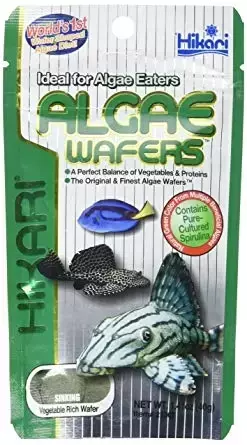
Hikari Algae wafers 40gr - Vissenvoer
Supplementary plant-based grazing food for an omnivore; offer alongside a varied diet and observe whether the fish accepts it.
Check retailer for price0 retailers
View retailersPrices from the latest retailer update, excluding shipping. Check stock and delivery with the retailer.
Sources & review
This care guide draws on several specialist sources and was last checked on .
View the sources
- California Academy of Sciences — Eschmeyer’s Catalog of Fishes — Crossocheilus oblongus
- Integrated Taxonomic Information System — ITIS — Crossocheilus oblongus
- Ornamental Aquatic Trade Association — How to look after tropical algae eaters — Siamese algae eater care sheet
- FishBase / WorldFish — FishBase — Crossocheilus oblongus summary
- Aquarium Co-Op — Care Guide for Siamese Algae Eaters — Aquarium Co-Op
- Hikari Sales USA — Hikari Algae Wafers — manufacturer product information
- Wikimedia Commons — File:Crossocheilus Oblongus (1).jpg — image identity and license