Kitty tetra
Hyphessobrycon heliacus

The Kitty tetra (Hyphessobrycon heliacus) is a small golden shoaling fish from Brazil’s upper Tapajós region. Adult males develop elongated fins; both sexes have a dark mark at the base of the tail. Keep a group in a cycled aquarium with planted margins and open swimming space. A cautious shared range from aquarium sources is 23–26°C and pH 6–7. Older keeper notes and current retailer pages differ, so the evidence and its limits are explained below. Length figures may also use different measurement methods.
Plan your aquarium →At a glance
- Temperature
- 23–26 °C
- pH
- 6.0–7.0
- GH
- Up to 8 °dGH
- Aquarium length
- At least 60 cm
- Minimum aquarium volume
- At least 40 L
- Adult size
- Up to 2.8 cm
- Group size
- At least 10 individuals
- Temperament
- Peaceful
About this species
Hyphessobrycon heliacus was described in 2002 by Moreira, Landim and Costa from the upper Tapajós basin in Brazil. ITIS treats it as valid; FishBase follows the family Acestrorhamphidae, while ITIS still shows the older Characidae placement. A 2024 phylogenomic revision divided American tetras among several families. Higher classification is changing, but the species name and authorship are consistent.
FishBase lists a maximum standard length (SL) of 2.8 cm and describes the golden body, chevron-shaped flank marks and a large dark caudal-peduncle spot. Mature males may develop filamentous dorsal and pelvic fins. A recent retailer page gives 5–6 cm without specifying the measurement; that is far above the primary description and FishBase value, so it is not treated here as the usual size. A German aquarium-association profile reports 2–3.5 cm. Length figures also depend on measurement method.
Kitty tetra is an established international trade name. Do not confuse this fish with similar small golden tetras. Confirm the combination of the dark tail-base spot, flank markings and, in mature males, elongated fins rather than relying on colour alone.
Natural habitat
The species is known from the Teles Pires River and small tributaries in the upper Tapajós basin, in Brazil’s Mato Grosso state. The original description, FishBase and a regional species profile place records in this drainage. The documented range is therefore more specific than a broad label such as “the Amazon”.
FishBase describes specimens from shallow, still or slow marginal waters with muddy bottoms and abundant submerged vegetation. This is more specific than general seller descriptions of “rivers”. An aquarium can provide structure with plants, roots and shade without reproducing a muddy substrate. Keep the bottom easy to maintain and use aquarium-safe materials.
A locality record does not establish the exact pH or hardness experienced by every wild fish. Field information and aquarium recommendations are therefore kept separate. No measured species-specific flow rate was found; gentle to moderate, even circulation is a practical setup choice, not a precise biological value.
Aquarium and layout
A German aquarium-association keeper profile gives 40 litres as an experienced lower bound and notes that a larger aquarium is helpful because males may chase each other intensely. A Brazilian species profile recommends a tank about 60 cm long and 30 cm wide. Use roughly 60 cm length as a practical lower bound, with planted margins and open midwater. A minimum volume does not guarantee that every group or community mix will fit.
Species-specific hobby sources recommend a group of at least ten. Several females per male are a sensible precaution for a breeding or adult group, so attention is not concentrated on one female. This comes from older keeper experience, not a universally proven sex ratio. Provide dense edge planting, visual barriers and quiet retreats, while leaving swimming room through the middle.
Allow the aquarium to cycle fully before adding fish. Provide steady filtration, gas exchange and regular water changes. A well-fitted lid is sensible for small active fish. After introduction, check that timid individuals are not repeatedly chased and that all fish can feed.
Water conditions
An older German aquarium-association profile gives 22–26°C; a Brazilian species profile gives 23–28°C; a current European retailer gives 24–28°C. Because these ranges differ, 23–26°C is a cautious overlap of the first two species sources, not an experimentally established optimum. The German keeper found his fish active at 22°C and cautioned that prolonged higher temperatures might shorten lifespan; that is an individual observation.
For pH, the German profile gives about 5.5–7.8, the Brazilian profile 6–7 and a European retailer 5.5–7.5. We use pH 6–7 as a cautious shared band. GH reports also conflict: the German practice profile says 0–20 dGH, the Brazilian source gives an upper bound below 8, and a retailer only says “soft to medium”. We therefore do not publish an exact GH target; keep mineral content stable and consider the fish’s source and acclimation before changing it.
Avoid rapid chemical corrections. Test temperature and pH reliably; ammonia and nitrite should not be detectable in a cycled aquarium. Stable conditions and suitable water quality matter more than chasing one supposed ideal number.
Behaviour and group size
The Kitty tetra is a shoaling fish described as peaceful in species-specific aquarium sources. It mainly uses the middle water. Adult males may pursue females and display toward one another while breeding; adequate group size, more females than males and visual barriers are sensible precautions. Observe the actual fish: persistent hiding, damage or missed meals are reasons to review the layout or stocking.
Neon tetras are only a conditional tankmate. Both are small, peaceful schooling fish with overlapping care ranges, but they use similar swimming space and each needs its own group. Provide more room than the stated lower bound and check that Kitty tetras can reach food. Shared water values alone do not prove compatibility; no controlled cohabitation trial was found.
Avoid large fish able to swallow a Kitty tetra, boisterous species that exclude it at feeding time and layouts where males have no retreat or visual barriers. Quarantine and careful observation of new arrivals remain sensible.
Feeding
A study of natural stomach contents describes a varied omnivorous diet that includes filamentous algae and plant matter, insects and other small animal material. The fish is neither exclusively carnivorous nor an algae eater. In aquaria it accepts dried foods and small live or frozen foods; an older keeper profile names Cyclops as a favourite. Food particles must suit this small fish.
Existing TetraMin flakes are linked as a staple because the central product records classify them as complete omnivorous freshwater flakes and a species-specific aquarium source reports acceptance of flake food. Crumble flakes into bite-size pieces if needed and check that fish actually take them. This does not claim an exact flake size. Rotate with suitably small live or frozen foods and do not leave uneaten larger pieces on the bottom.
Offer small portions and check that every fish eats, especially in a community aquarium. No reliable species-specific daily amount or schedule was found. Adjust feeding to intake and body condition and remove leftovers.
Breeding
The species lays eggs and provides no parental care. The aquarium-association profile describes repeated spawning and recommends a mesh or dense fine-leaved substrate to protect eggs from adults. The Brazilian species profile notes that aquarium breeding details remain limited; practical observations should not be presented as a universally guaranteed recipe.
An older keeper reported better hatch rates in softer, more acidic water in his own attempts, while eggs were laid but did not hatch in harder tap water. This is one keeper’s observation, not proof of an exact ideal pH. Avoid abrupt changes and use a separate stable breeding aquarium with fine-leaved plants or a spawning mop and protection from egg predation.
The fry are very small. The association profile names Paramecium as first food and Artemia nauplii once fry are large enough, about eight to ten days after becoming free-swimming in that particular observation. Timing is not guaranteed. Check water quality daily and offer only food the larvae can take.
Keeping with other species

Neon tetra
Suitable with conditionsNeon tetras are suitable only under conditions: the shared guidance is about 23–26°C and pH 6–7. Both are small midwater shoaling fish and each needs its own group. Provide more space than the minimum and check that Kitty tetras reach food; males may chase conspecifics. Overlapping water values alone do not guarantee a trouble-free mix.
View species profile →Suitable products
Recommended staple foods
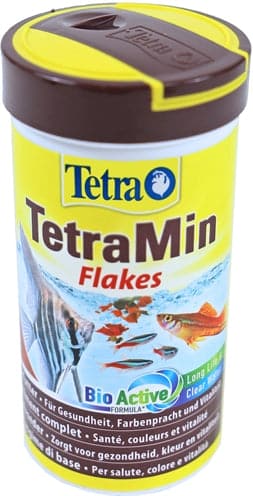
Tetramin Bio Active Vlokken Fish food 100 ml
Complete omnivorous freshwater flakes. Crumble them into bite-size pieces for this small tetra and check intake; rotate with suitable small animal foods.
Check retailer for price0 retailers
View retailersPrices from the latest retailer update, excluding shipping. Check stock and delivery with the retailer.
Sources & review
This care guide draws on several specialist sources and was last checked on .
View the sources
- Zoological Journal of the Linnean Society — Melo et al. 2024, Phylogenomics of Characidae and phylogenetic classification
- FishBase — Hyphessobrycon heliacus Moreira, Landim & Costa, 2002
- Integrated Taxonomic Information System — ITIS taxonomic report, TSN 641129
- Moreira, Landim & Costa; Copeia 2002(2):428–432 — Hyphessobrycon heliacus: A New Characid Fish from the Upper Rio Tapajós Basin
- Aquarismo Paulista — Tetra Heliacus — species profile and cited natural-diet study
- Aquarienverein Rößmäßler Halle; Gernod Seela — Fisch des Monats — Kitty-Salmler, July 2009
- Wikimedia Commons; Haplochromis — Hyphessobrycon heliacus.jpg — photograph