False rummy-nose tetra
Petitella georgiae

The false rummy-nose tetra (Petitella georgiae) is a small, peaceful shoaling fish from the western Amazon. Its red head and black-and-white tail pattern resemble other species sold as rummy-nose tetras. A tank at least 90 cm long, a group of ten or more, and open swimming room support its tight shoaling behaviour. It is peaceful but competes poorly with large, boisterous or dominant fish. Fine foods and stable, clean water are important.Check the fish’s identity when buying: the trade name “rummy-nose” alone cannot distinguish the species.
Plan your aquarium →At a glance
- Temperature
- 22–26 °C
- pH
- 5.5–7.0
- GH
- 1–12 °dGH
- Aquarium length
- At least 90 cm
- Minimum aquarium volume
- At least 100 L
- Adult size
- Approximately 3.9–5 cm
- Group size
- At least 10 individuals
- Temperament
- Peaceful
About this species
Géry and Boutière described this species in 1964. The accepted name is Petitella georgiae. It was often placed in Characidae, but the current catalogue places Petitella in Acestrorhamphidae, subfamily Megalamphodinae. It is related to the firehead tetra P. bleheri and the “true” rummy-nose P. rhodostoma; the three are frequently confused in trade.
A molecular study also found marked differences between Peruvian and Purus populations, possibly consistent with a species complex. We do not split populations here without taxonomic evidence.
Natural habitat
The species is recorded in the upper Amazon basin, including the Purus in Peru and Brazil and the Negro and Madeira in Brazil. Descriptions include clear tributaries and small rivers; other habitat accounts mention slow, shaded waters. Conditions vary by locality, so aquarium keepers should not treat one interpretation as universal.
Dim lighting, a dark substrate and wood can enhance the fish’s appearance and provide shelter along the margins. Keep old leaf litter clean so it does not decay. An open swimming area remains important for the shoal.
Aquarium and layout
Seriously Fish recommends a tank at least 90 cm long for this active shoaler and a group of ten or preferably more. B-Aqua gives 100 litres as a minimum and 250 litres as its recommended volume for its assumed stocking. These are different published recommendations; the volume is not a mathematical conversion of tank length. Choose a long aquarium and assess the whole stocking plan separately.
Plant the sides and rear, with dark substrate and roots or wood. Use steady filtration. Do not add large, boisterous tankmates based only on shared water values: the false rummy-nose is a weak feeding competitor.
Water conditions
Sources give 22–26 °C, pH 5.5–7 and GH 1–12 °dGH, with broad agreement between Seriously Fish and FishBase. Breeding profiles sometimes describe narrower, softer conditions; those apply to a dedicated spawning setup, not as daily requirements for a normal shoal aquarium.
Keep values stable and check water quality regularly. A fading red head can accompany stress or poor condition, but colour change alone is not a diagnosis. Check behaviour, breathing, fins and feeding before changing water chemistry.
Behaviour and group size
This is a very peaceful, tightly shoaling fish that should be kept with at least ten conspecifics. It competes poorly beside large, boisterous or dominant fish that take food quickly. Small South American companions may fit if their own group needs, adult size, territories and swimming zone are considered; matching water values alone is not enough.
Check that the shoal stays cohesive and that all fish feed. A group that hides, fragments or cannot reach food may be under pressure. Choose a calm community and increase stocking only when tank length, filtration and total load allow it.
Feeding
The small mouth requires fine food. Use small flakes or grind larger flakes before feeding. The species is omnivorous, and specialist guidance recommends regular small live or frozen foods such as Daphnia or Artemia for colour and condition. The linked complete flakes are suitable only after being crushed finely and after confirming that fish eat them.
Distribute food so dominant individuals do not take every particle. Offer small portions that are eaten promptly and remove leftovers. Flakes do not replace the recommended variety of appropriate live or frozen foods.
Breeding
The species scatters adhesive eggs among fine-leaved plants or other spawning material and provides no parental care. Adults may eat the eggs; a separate, dimly lit breeding tank and prompt removal of adults improve survival. The source describes both group and pair spawning.
Seriously Fish reports hatching after about 24–36 hours and free swimming 3–4 days later. These are source-specific timings, not guarantees in every breeding tank. Eggs and fry are light-sensitive. Begin free-swimming fry on infusoria, then move to microworms or newly hatched brine shrimp.
Suitable plants

Java fern
Suitable: Java fern tolerates the shared 22–26 °C and pH 5.5–7 range. Attach its rhizome to wood or stone and keep swimming room open for the tightly schooling fish. Aquarium suitability, not a natural co-occurrence claim.
- Light
- Low, Moderate
- CO₂
- CO₂ injection not needed
Suitable products
Recommended staple foods
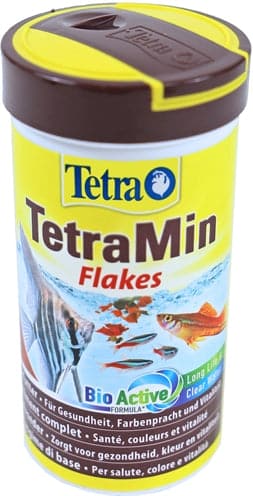
Tetramin Bio Active Vlokken Fish food 100 ml
Complete tropical flakes for omnivores. Grind finely for the small mouth and confirm the shoal actually eats them. Continue offering suitable small live or frozen foods regularly.
Check retailer for price0 retailers
View retailersPrices from the latest retailer update, excluding shipping. Check stock and delivery with the retailer.
Sources & review
This care guide draws on several specialist sources and was last checked on .
View the sources
- Seriously Fish — Petitella georgiae — care profile
- FishBase — Petitella georgiae — biological summary
- B-Aqua — Faux Nez Rouge — aquarium volume guidance
- Neotropical Ichthyology — Bittencourt et al. (2020), Petitella phylogenetic placement and population divergence
- Wikimedia Commons — Petitella georgiae photograph and license