Emerald dwarf danio
Danio erythromicron
The emerald dwarf danio (Danio erythromicron), also sold as the emerald dwarf rasbora, is a small group fish from Myanmar’s Inle Lake watershed. Its green body and reddish-brown vertical bars are distinctive, but its tiny size calls for calm, sheltered conditions. Dominant males may spar, and the species does poorly in acidic water. Provide a mature, stable aquarium with adequate floor space and a substantial group. Do not mix it with the closely related celestial pearl danio: there is limited evidence of hybridisation. Males display and spar, especially when in condition, so a suitable group and broken sightlines matter more than litres alone. The species comes from a karst landscape and needs a different water approach from many soft-water danios. Do not let the “rasbora” trade label lead to confusion with the celestial pearl danio. When buying, also check fins and the caudal peduncle for unusual traits that could suggest uncertain hybrid stock.
Plan your aquarium →At a glance
- Temperature
- 20–24 °C
- pH
- 7.0–8.0
- GH
- 12–20 °dGH
- Aquarium length
- At least 60 cm
- Minimum aquarium volume
- At least 54 L
- Adult size
- Up to 2 cm
- Group size
- At least 20 individuals
- Temperament
- Peaceful
About this species
The accepted scientific name is Danio erythromicron; older combinations include Microrasbora erythromicron and Celestichthys erythromicron. Adults reach about 20 mm standard length. The body is green to blue-green with reddish-brown vertical bars. Males are usually more colourful and slimmer; females are fuller-bodied. Trade names containing “rasbora” do not change its taxonomy. Choose fish with normal body shape and steady swimming, and be cautious with mixed or uncertain breeding lines.Natural habitat
The species is known from Lake Inle and nearby waters in Shan State, Myanmar. Shallow margins support reed-like plants and dense submerged vegetation. Floating gardens create tangles of roots and stems that shelter small fish. The lake water is clear and neutral to slightly alkaline. Habitat information helps guide setup but need not be copied literally. Avoid acidic, tannin-rich conditions, which do not suit this species.Aquarium and layout
For this small but social danio, Seriously Fish gives a minimum base of 60 × 30 cm and about 54 litres. The footprint accounts for dominant male behaviour; volume alone cannot establish whether a tank is suitable. Use a dark substrate, dense plants, broken sightlines and gentle filtration. Floating plants can add cover. Leave some open swimming room and add fish only to a mature, stable aquarium. Much larger or boisterous companions may intimidate these shy fish or outcompete them at feeding time.Water conditions
Use 20–24 °C, pH 7.0–8.0 and GH 12–20 dGH as the specialist care range. The species comes from neutral to slightly alkaline Lake Inle and does poorly in acidic water. Keep conditions stable and avoid rapid corrections. Base maintenance on measured water quality, stocking and the fish’s previous conditions; a field observation is not a reason to change an aquarium abruptly.Behaviour and group size
Keep emerald dwarf danios in a group, ideally 20 or more, with enough space. They are shy, and males may spar; cover and a larger group help spread attention. Seriously Fish reports limited evidence of hybridisation with the celestial pearl danio (Danio margaritatus) and advises against keeping them together. This warning still applies where some temperature or other care values overlap. Choose other tank mates only after checking size, behaviour and the full water requirements.Feeding
The species takes small invertebrates and zooplankton. Offer varied, appropriately small foods: suitable micro pellets, fine live food and frozen foods such as Daphnia or Artemia. Newly imported or thin fish can struggle to acclimatise; start with small live prey and introduce dry food gradually. They rarely feed at the surface, so floating foods are not ideal. Feed small portions and confirm that all fish are eating.Breeding
Emerald dwarf danios scatter eggs and provide no parental care. Fry may appear in a mature, densely planted tank, but adults eat eggs and larvae. Deliberate breeding needs a separate setup with fine-leaved plants or suitable spawning material. Remove adults after spawning and prepare microscopic first foods. The process requires attention to egg predation and the very small early fry stage.Suitable products
Supplementary foods

Tropical Dafnia 100ml
Dried Daphnia for supplementary variety, not as a sole staple food.
Check retailer for price0 retailers
View retailers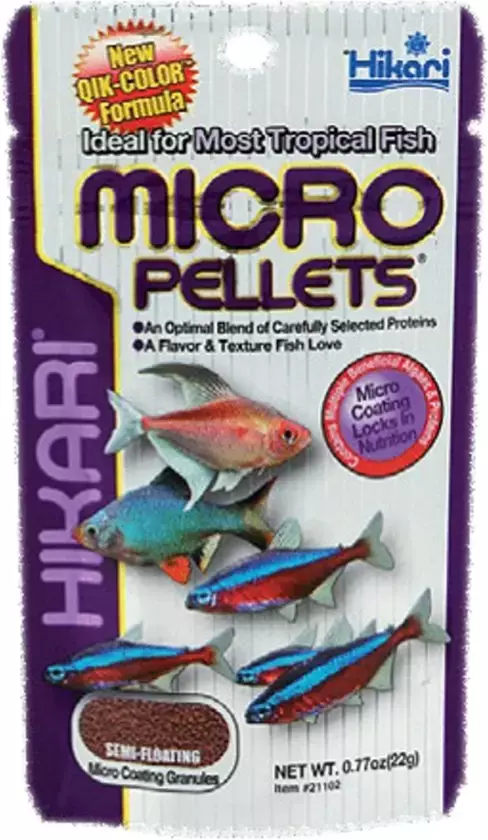
Hikari Micro pellets 22gr - Vissenvoer
Manufacturer-described micro pellet for small-mouthed fish; introduce only after acclimation in tiny portions and confirm intake.
Check retailer for price0 retailers
View retailersPrices from the latest retailer update, excluding shipping. Check stock and delivery with the retailer.
Sources & review
This care guide draws on several specialist sources and was last checked on .