Blyxa japonica
Blyxa japonica

Blyxa japonica forms compact, grass-like clumps and is often used in the foreground or midground. Botanical and aquarium sources place the species in tropical and subtropical Asia. Profiles differ in recommended temperature, light intensity and CO2 demand: a broad tolerance range is not the same as an optimum cultivation range. This guide keeps those differences visible and avoids unsupported exact aquarium settings. The plant is best suited to a stable, well-lit aquarium where CO2 and nutrients can be adjusted carefully around the needs of its livestock and other plants.
Plan your aquarium →At a glance
- Difficulty
- Moderate
- Plant height
- 10–20 cm
- Growth rate
- Moderate
- Placement
- Foreground, Midground
- Temperature
- 16–32 °C
- pH
- 5.0–7.0
- Light
- Moderate, High
- CO₂
- Recommended
- Nutrient uptake
- Through roots and water
- Substrate
- Sand, Gravel
- Propagation
- Runners, Cuttings
About this plant
Blyxa japonica is an accepted species in the family Hydrocharitaceae. Kew lists Hydrilla japonica as a synonym, so it is not a separate aquarium species. In cultivation it grows as a dense clump of narrow, grass-like leaves. With sufficient light, leaves may develop warm or reddish tones. Exact colour depends on growing conditions and should not be treated as guaranteed.
Natural habitat
Kew describes its native range as tropical and subtropical Asia. Tropica mentions nutrient-rich shallow pools, swamps and slow-flowing rivers in East and Southeast Asia. This habitat context is useful, but it is not a complete aquarium recipe. Conditions in a community tank must also suit every animal present.
Placement in the aquarium
Plant small groups in the foreground or midground. Dennerle lists foreground use, while Flowgrow describes grass-like clumps in the midground. Choose the position according to the intended scale and leave space around clumps for water flow and maintenance. Set the roots gently into the substrate and prevent livestock from uprooting new plants.
Light
Tropica recommends medium to high light, while Dennerle specifies strong lighting. This suggests a plant that grows more compactly and may show more colour under good light. No reliable species-specific PAR target was established. Do not use watts per litre as a universal prescription. Adjust light gradually and assess new growth alongside CO2, nutrients and shading.
CO₂
Sources describe CO2 as important but differ in intensity: Tropica rates demand as medium and Dennerle recommends high availability. This does not establish a fixed concentration for every aquarium. If injecting CO2, adjust gradually and watch fish and invertebrates. Without injection, growth may be less predictable; stable conditions and patience are useful.
Nutrition and fertilisation
The reviewed profiles do not establish a unique fertiliser formula for Blyxa japonica. Tropica’s general plant-care guidance describes both substrate nutrition and liquid water-column fertiliser. Adapt a chosen approach to total plant mass and the existing substrate. Do not automatically add nutrients in response to one symptom; first consider light, CO2, water conditions and other possible causes.
Substrate and root feeding
Set the roots in a stable bed of sand or fine gravel. The sources do not prescribe a particular substrate brand or mandatory root fertiliser. A nutrient-rich substrate may be part of an aquarium setup, but the species profiles do not make it an absolute requirement. Avoid damaging roots when moving the plant and check that the clump remains anchored.
Growth and pruning
Tropica, Dennerle and Flowgrow describe growth as medium or moderate. Actual growth depends on lighting, CO2, nutrients and adjustment after planting. A clump can gradually spread. Remove damaged leaves carefully and prevent neighbouring plants from shading it for long periods.
Propagation
Dennerle reports side shoots; Flowgrow also lists division, cuttings, daughter plants and seed. For aquarium keepers, healthy side shoots or carefully dividing a clump are the most practical vegetative options. Separate young growth once it has enough roots. Seed production is unnecessary for routine maintenance and requires different conditions.
Suitable fish and animals
This draft contains no controlled list of fish or invertebrates specifically assessed with Blyxa japonica. Consider substrate-digging fish, plant grazers and animals that may dislodge young clumps. Matching pH or temperature values alone does not prove compatibility. Observe new combinations and re-anchor plants when needed.
The guide explains how planting can provide cover. No plant species have yet been linked as reviewed combinations, so no automatic recommendations are shown.
Possible problems
Loose or deteriorating leaves can have several causes, including transport damage, adjustment after planting, shade or unstable care. The sources do not support any one symptom as a definitive diagnosis. Remove slimy or dead foliage and avoid changing several settings at once. Assess new growth over several weeks before adjusting cultivation.
Care for this plant
Tools
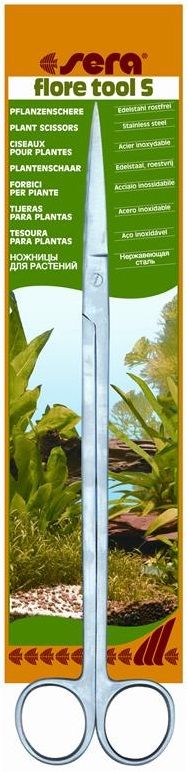
Sera Flore Tool S plantenschaar
OptionalOptional tool for carefully removing damaged leaves. Scissors are not a care requirement.
Check retailer for price0 retailers
View retailersPrices from the latest retailer update, excluding shipping. Check stock and delivery with the retailer.
Sources & review
This care guide draws on several specialist sources and was last checked on .