Three-spot gourami
Trichopodus trichopterus

The three-spot gourami (Trichopodus trichopterus) is a medium-to-large labyrinth fish from Southeast Asia. It breathes air at the surface as well as using its gills, so the water surface must remain accessible. Temperament varies: some individuals are relatively calm, while certain males become territorial as they mature and may repeatedly chase tankmates. The species therefore needs generous swimming space, visual cover, stable water and a secure route to the surface. This guide also explains its varied omnivorous diet, the colour forms sold under different trade names, and the risks around spawning. Aquarium-size figures are presented as cautious planning guidance because reliable sources give different minima and behaviour differs between fish.
Plan your aquarium →At a glance
- Temperature
- 24–28 °C
- pH
- 6.0–7.5
- GH
- 5–19 °dGH
- Aquarium length
- At least 120 cm
- Minimum aquarium volume
- At least 200 L
- Adult size
- Up to 15 cm
- Group size
- At least 2 individuals
- Temperament
- Territorial
About this species
Trichopodus trichopterus (Pallas, 1770) is commonly called the three-spot or blue gourami. The natural form is blue-grey with three dark flank spots. Gold, opaline, cosby/marbled and silver forms are colour varieties of this same species, not separate species. It can reach about 15 cm standard length, excluding the caudal fin. The older combination Trichogaster trichopterus remains common in literature and trade.
Natural habitat
The species inhabits lowland waters in Southeast Asia, especially the Mekong basin. It occurs in shallow, sluggish or still waters with dense aquatic vegetation, including marshes, ditches and floodplains. As a labyrinth fish it also takes air at the surface, which must remain accessible.
The IUCN lists it as Least Concern (LC), assessed in 2019. Never release aquarium fish into ponds or natural waters.
Aquarium and layout
Recommendations differ: Seriously Fish lists 90 × 30 × 30 cm (about 81 litres gross); FishBase cites a minimum aquarium length of 100 cm; My-Fish recommends at least 100 cm and 200 litres for a pair or harem, and says 120 cm is more sensible for territorial males. Given adult size and possible aggression, this guide uses 120 cm as a cautious length for a territorial male and 200 litres for a pair or harem. This is a spacious planning recommendation, not a universally measured biological minimum.
Plant the margins densely and offer floating cover, while keeping open swimming space and surface access. Avoid strong current. Use mature filtration, stable temperature and regular maintenance. A lid helps keep the air above the water warm and prevents jumping.
Water conditions
The aquarium and species sources differ. Seriously Fish gives 24–30 °C, pH 5.5–8.5 and GH 3–35 dGH; FishBase and My-Fish report partly narrower ecological or aquarium values. We show the overlap supported across these sources: 24–28 °C, pH 6–7.5 and GH 5–19 dGH.
These are working ranges, not a reason to make sudden corrections to stable water. Acclimate fish gradually to changes. No reliable species-specific KH target is established.
Behaviour and group size
Temperament varies among individuals. Some three-spot gouramis remain calm; others become strongly territorial as they mature. Males may fight and become especially aggressive during breeding. Do not assume this species is always a suitable community fish.
Avoid keeping several males in a small aquarium. A pair or harem needs space and visual barriers. A male may persistently chase or injure an unwilling female, so have a way to separate them. Very small fish may be viewed as food. We therefore do not name any tankmate as guaranteed compatible.
Feeding
Trichopodus trichopterus is omnivorous. Offer varied dried food, supplemented with suitable frozen or live foods such as Daphnia, Cyclops, brine shrimp or mosquito larvae, plus some plant matter. Feed measured portions and remove leftovers.
TetraMin XL Flakes is described by Tetra as complete XL flake food for larger freshwater ornamental fish, so it is linked as one part of the staple diet. Rotate it with other suitable foods; a single product is not a varied diet.
Breeding
The male builds a bubble nest among floating plants and guards the eggs. After spawning, he may chase the female aggressively; remove her if she is being harassed or injured. Seriously Fish reports about 20–30 hours to hatching and a further 4–5 days to free swimming. Remove the male once the fry are swimming freely.
Fry first need very small foods such as infusoria or liquid fry food, then larger live foods as they grow. Growth may be uneven, so monitor young fish and prevent cannibalism.
Suitable products
Supplementary foods
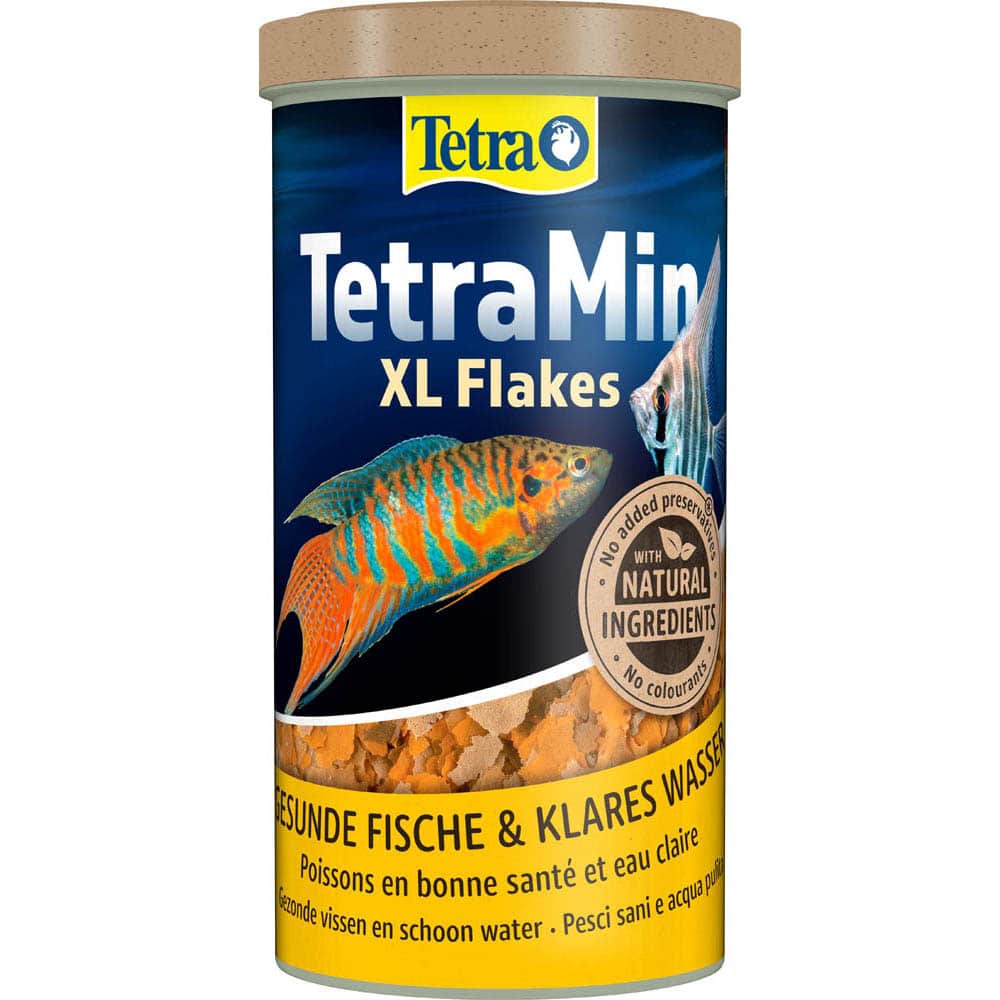
1000ml XL Flakes TetraMin Vlokkenvoer
Tetra describes these extra-large flakes as complete food for larger freshwater ornamental fish. That suits the size and omnivorous diet of the three-spot gourami. Rotate with frozen or live foods and feed controlled portions.
Check retailer for price0 retailers
View retailersPrices from the latest retailer update, excluding shipping. Check stock and delivery with the retailer.
Sources & review
This care guide draws on several specialist sources and was last checked on .
View the sources
- Creative Commons — Creative Commons CC0 1.0 Universal
- California Academy of Sciences — Eschmeyer’s Catalog of Fishes — Trichopodus trichopterus
- FishBase Consortium — Trichopodus trichopterus — FishBase summary
- Seriously Fish — Trichopodus trichopterus — specialist aquarium profile, revised 2026
- My-Fish — Blauer Fadenfisch — My-Fish species profile
- IUCN — Trichopodus trichopterus — IUCN Red List assessment
- Tetra — TetraMin XL Flakes — manufacturer product information
- Wikimedia Commons / Obsidian Soul — Trichopodus trichopterus (3 spot gourami, Philippines) 02.jpg