Threadfin rainbowfish
Iriatherina werneri

The threadfin rainbowfish (Iriatherina werneri) is a small, graceful rainbowfish from vegetated, slow-moving waters of New Guinea and northern Australia. Mature males are especially striking, displaying their elongated fin rays. Its delicate build and tiny mouth call for a calm, biologically stable aquarium and food small enough to be taken. Keep a group, plant the aquarium densely around the edges while leaving open swimming room, and choose tankmates that neither outcompete it nor nip long fins. It is not an ideal first aquarium fish: feeding competition and unstable water are meaningful risks.
Plan your aquarium →At a glance
- Temperature
- 24–28 °C
- pH
- 6.0–7.5
- GH
- 5–12 °dGH
- Aquarium length
- At least 60 cm
- Adult size
- Approximately 4 cm
- Group size
- At least 6 individuals
- Temperament
- Peaceful
About this species
This species belongs to Melanotaeniidae, the rainbowfish family. The accepted taxon is Iriatherina werneri Meinken, 1974. The genus is currently monotypic, with one recognised species. It is also traded as the featherfin rainbowfish; the common name refers to its elegant extended fin rays.
The body is slender and silvery. Males develop a large rounded first dorsal fin and conspicuous threadlike extensions on the second dorsal and anal fins. Females lack these long filaments and are usually smaller and less ornate. Fishes of Australia and FishBase report a maximum of about 4 cm standard length (SL) for males or unsexed specimens, and about 3 cm SL for females. SL ends at the caudal peduncle and is not total length. Local populations can differ in colour and fin form; a trade label does not establish a geographic lineage.
Natural habitat
The range includes south-central New Guinea and parts of northern Australia. Museum accounts include the Goyder region, the Jardine River and northern Australian drainages. The fish inhabits slow streams, swampy ponds, lagoons and billabongs with abundant aquatic vegetation. Dense marginal plants and floating vegetation provide cover and feeding habitat.
Field measurements vary with location and conditions; they are not aquarium targets. Translate the habitat into gentle flow, oxygenated water without a strong current, plants and shaded areas. The origin of a captive-bred fish in trade is often not traceable to one locality, so do not imitate supposedly exact biotope chemistry without provenance information.
Aquarium and layout
A 60 × 30 cm base and approximately 54 litres are cited by a specialist aquarium profile as the smallest size to consider. Treat this as a source-based lower limit for a species group, not a guarantee for every layout or tankmate combination. A longer aquarium offers calmer swimming space and makes it easier to keep a proper group without constant displacement at feeding or display sites. Large, boisterous or fin-nipping community fish are a poor match for this delicate species.
Use a mature filter with gentle output; the species comes from sluggish waters and may struggle in a strong current. Plant the sides and rear, consider floating plants, and retain open middle and upper swimming areas. Fine-leaved plants and moss provide cover and possible spawning material. A secure lid is sensible general husbandry for small active fish, although the consulted sources do not identify jumping as a defining risk. Add fish only after the aquarium is established and ammonia and nitrite are not detectable.
Water conditions
Sources provide broad limits rather than one universal optimum. Seriously Fish lists 22–30 °C, pH 5–8 and GH 1–12 °dH for aquarium care. FishBase records a narrower ecological band, while Fishes of Australia describes natural water temperatures of 23–28 °C. As a cautious practical aquarium guide, we use 24–28 °C, pH 6.0–7.5 and GH 5–12 °dH. This is an editorial care band within the broader evidence, not a claim that every population requires exactly these values.
Stability and a mature aquarium matter more than chasing a single number. If problems arise, measure temperature, pH and hardness with appropriate tests and make changes gradually. Avoid strong chemical corrections and rapid swings. The core sources consulted do not establish a reliable species-specific KH target, so none is supplied. Suitable water changes, filtration and gas exchange help maintain water quality.
Behaviour and group size
The threadfin rainbowfish is peaceful and social. Keep at least six, preferably ten or more, so the fish are less nervous and can show natural schooling and display behaviour. Males may briefly compete while displaying; space and visual barriers help prevent one fish from being persistently chased. A group is more appropriate than a single pair.
This is a delicate species that can easily lose food to faster fish, and the long fins of males may be nipped. A dedicated aquarium is often the safest option. Similar small, peaceful fish such as some Pseudomugil may fit only conditionally. Shared water values alone do not prove successful cohabitation: maintain full groups, provide extra space and calm feeding areas, and check daily that every fish eats. Avoid large predators, boisterous fish, fin nippers and forceful currents.
Feeding
In nature it takes tiny floating or suspended particles, including diatoms, phytoplankton and zooplankton. Its mouth is small. Offer small portions of suitably fine live foods, such as appropriate micro-crustaceans, newly hatched brine shrimp or microworms, and observe whether the fish actually take them. Variety matters; coarse or rapidly sinking food should not drift out of reach unnoticed.
Sera Micron Powder is a very fine floating powder containing zooplankton and phytoplankton components according to the manufacturer. Its particle size makes it a practical option to trial, especially for small fish, but the manufacturer positions it as food for fish fry and amphibian larvae. We therefore do not present it as a proven staple for adult threadfin rainbowfish. Start with a tiny amount, confirm actual ingestion and remove leftovers. Also offer suitable live foods or other small complete foods as appropriate; a product link does not replace observing the fish.
Breeding
This species is an egg scatterer with no parental care. During courtship the male spreads his ornate fins; females deposit small numbers of adhesive eggs among fine plants, moss or floating-plant roots. The eggs are not guarded, and adults may eat eggs and larvae. Fine vegetation higher in the aquarium offers spawning surface but cannot guarantee fry survival.
For a focused breeding attempt, a separate stable aquarium with a sponge filter and fine spawning material can protect eggs. Check the material carefully and move only eggs that are found, avoiding unnecessary disturbance to the group. Fishes of Australia gives an approximate hatching time of 7–10 days; development depends in part on temperature and conditions, so treat this as an indication, not a fixed timetable. Very small larvae need appropriately sized first foods and clean water. Small, regular maintenance is safer than allowing excess food to accumulate. Record observations from the actual spawn rather than turning them into a universal guarantee.
Keeping with other species

Spotted blue-eye
Suitable with conditionsConditional with Gertrude’s spotted blue-eye: the published aquarium care bands overlap, and Seriously Fish lists comparable Pseudomugil as possible companions. This is not evidence of a cohabitation trial. Keep both species in full groups, provide extra swimming space and calm feeding areas, and check daily that the slower threadfin rainbowfish receives enough tiny food. Avoid fin nippers.
View species profile →Suitable products
Supplementary foods
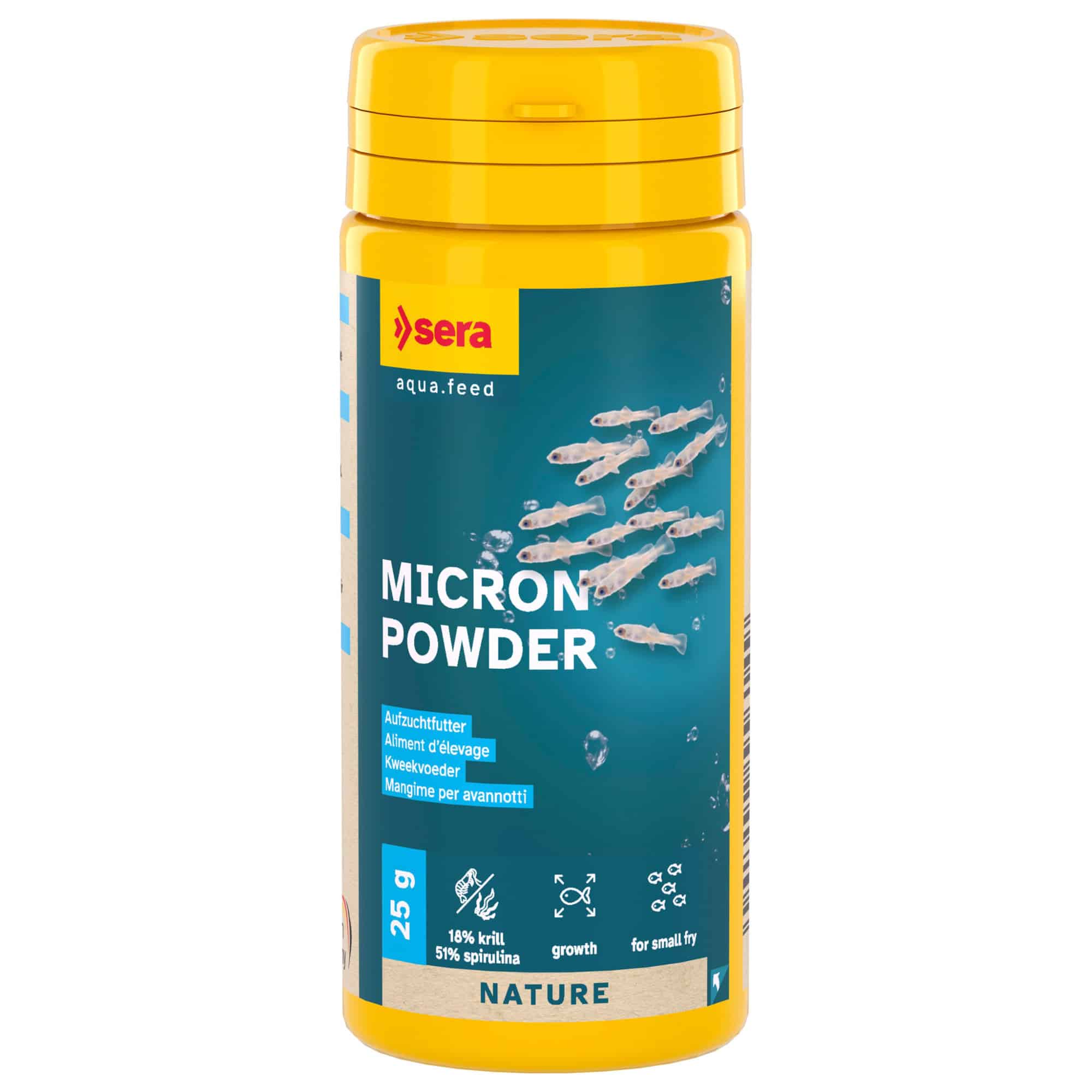
Sera Micron Nature - 50 ml
Very fine floating powder that is practical to trial for a tiny mouth. The manufacturer describes it mainly for fish fry; use it cautiously as a supplement, feed sparingly and confirm ingestion. It is not a proven staple for adult fish.
Check retailer for price0 retailers
View retailersPrices from the latest retailer update, excluding shipping. Check stock and delivery with the retailer.
Sources & review
This care guide draws on several specialist sources and was last checked on .
View the sources
- Seriously Fish — Iriatherina werneri — specialist aquarium profile
- Fishes of Australia / Museums Victoria — Threadfin Rainbowfish, Iriatherina werneri
- FishBase — Iriatherina werneri — species summary
- California Academy of Sciences — Iriatherina werneri — Catalog of Fishes
- sera — sera Micron Powder — manufacturer product information
- Wikimedia Commons / NRJMelvinT — Iriatherina werneri.jpg
- Creative Commons — Creative Commons Attribution-ShareAlike 4.0 International
- GBIF — Iriatherina werneri Meinken, 1974 — GBIF Backbone Taxonomy