Spotted skiffia
Skiffia multipunctata

The spotted skiffia (Skiffia multipunctata) is a small Mexican goodeid that grazes on algae and aufwuchs. Male colour varies widely: some develop conspicuous dark blotches, but a pattern does not prove a separate species or locality. The species is threatened in the wild and has disappeared from many historical sites. Set up a roomy, well-aerated group aquarium, keep temperatures on the cool side in line with the specialist husbandry source, and choose responsibly bred fish with as much provenance information as possible. Keep known locality lines separate and never release aquarium fish.
Plan your aquarium →At a glance
- Temperature
- 15–24 °C
- pH
- 7.2–8.5
- GH
- 12–25 °dGH
- Aquarium length
- At least 60 cm
- Minimum aquarium volume
- At least 60 L
- Adult size
- Up to 7.2 cm
- Group size
- At least 6 individuals
- Temperament
- Peaceful, May nip fins
About this species
Skiffia multipunctata (Pellegrin, 1901) belongs to the family Goodeidae. Historical combinations include Goodea multipunctata and Xenendum multipunctatum. The species name refers to the multiple spots seen on some fish, but the pattern is highly variable. Males are often more colourful and may develop large dark blotches; females are usually greyer and more uniform. Pattern alone is not a reliable measure of species identity or locality lineage.Natural habitat
The spotted skiffia was historically found in western Mexico, including areas around Lake Chapala and parts of the Santiago and Lerma drainages. The Goodeid Working Group reports that the remaining range is now concentrated in the Río Duero system. Populations declined through water diversion, channel works, habitat change and introduced predatory fish. The fish inhabits springs, ditches, quiet river channels and shallow waters where algae, roots and marginal vegetation provide food and cover.Aquarium and layout
The Goodeid Working Group lists 60 litres as a minimum and prefers a broad, low aquarium; another aquarium source recommends at least 60 cm length. Treat these as lower limits for a species-led group, not as a reason to overstock. Provide open swimming and feeding areas, roots or rocks, leaf litter, and dense plants along the sides and rear. Flow may be moderate, but aeration and dissolved oxygen should remain high. A mature, stable aquarium helps maintain this threatened fish in good health.Water conditions
The specialist Goodeid Working Group cautions that continuous temperatures above 24°C may harm health and describes a cooler winter period below 20°C for experienced keepers. Practical Fishkeeping instead gives 25–28°C for aquarium water, a clear source conflict. We follow the more cautious specialist recommendation and present 15–24°C as a practical envelope, not a universal ideal for every fish. Practical Fishkeeping gives pH 7.2–8.5 and GH 12–25 dGH. Keep water quality stable and oxygen-rich; use seasonal cooling only when conditions can be controlled.Behaviour and group size
The species is generally peaceful toward other fish, but males may nip one another and long-finned fish can be targeted. The safest setup is a species-led colony with plants and visual barriers. Some secondary care sources use six or more fish as a practical starting group; this is not an experimentally established biological minimum. Do not mix Skiffia species: crosses, including with S. francesae, have occurred in captivity. Similar water parameters alone do not demonstrate compatibility.Feeding
Skiffia multipunctata is a grazer with a predominantly plant-based diet. In nature it feeds mainly on algae and aufwuchs from rocks, roots and plants, supplemented by small invertebrates. Provide safe grazing surfaces and offer plant-based complete flakes, blanched vegetables and suitably small animal foods such as water fleas. The specialist group reports that the fish also accepts granules and tablets. Vary the diet and do not feed animal foods exclusively; algae wafers are supplementary, not a complete menu.Breeding
This is a livebearing goodeid. The Goodeid Working Group says fry are usually not eaten, although cover and food availability matter. Practical Fishkeeping reports gestation of six to eight weeks and commonly around 10–15 young, occasionally up to 20; these are observations, not a guarantee. Dense planting provides refuge. Record broodstock provenance and keep S. multipunctata separate from other Skiffia species. The “Black Beauty” trade form is historically a hybrid with S. francesae and should not be passed on as pure spotted skiffia.Suitable products
Supplementary foods
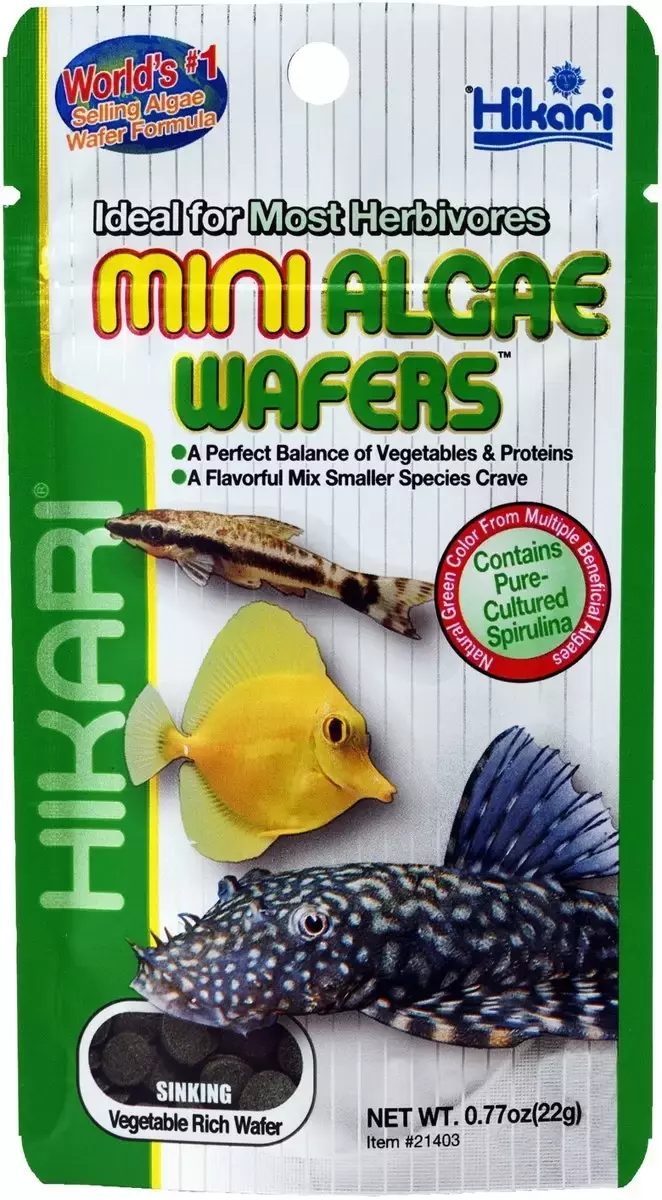
Hikari Mini algae wafers 22gr - Vissenvoer
Small algae wafers (6.5–7.5 mm) are described by the manufacturer for smaller algae-eating fish. Use as supplemental grazing food and vary with other plant-based and small animal foods.
Check retailer for price0 retailers
View retailersPrices from the latest retailer update, excluding shipping. Check stock and delivery with the retailer.
Sources & review
This care guide draws on several specialist sources and was last checked on .
View the sources
- Goodeid Working Group — Goodeid Working Group — Skiffia multipunctata species account
- FishBase — FishBase — Skiffia multipunctata summary
- Practical Fishkeeping — Practical Fishkeeping — Spotted Skiffia care article
- Look For Fish — Look For Fish — Skiffia multipunctata care profile
- Aquarismo Paulista — Aquarismo Paulista — Skiffia multipunctata profile
- Livebearerguy / Wikimedia Commons — Skiffia multipunctata (3) male — Wikimedia Commons