Saulosi cichlid
Chindongo saulosi

Chindongo saulosi is a small, vividly coloured mbuna from Lake Malawi. Small does not mean peaceful: males defend rocky territories and may chase other fish. This guide covers a spacious rock-focused aquarium, stable alkaline water, a plant-forward feeding plan and maternal mouthbrooding. The accepted scientific name is Chindongo saulosi, although many aquarium books and shops still use Pseudotropheus saulosi. In the wild the species is assessed as Critically Endangered and is naturally restricted to one small reef. This care information is intended for fish already in captivity. Choose traceable captive-bred stock only and do not buy wild-caught fish.
Plan your aquarium →At a glance
- Temperature
- 24–27 °C
- pH
- 7.6–8.4
- GH
- 10–25 °dGH
- Aquarium length
- At least 120 cm
- Minimum aquarium volume
- At least 200 L
- Adult size
- Up to 8.6 cm
- Group size
- At least 6 individuals
- Swimming zone
- Bottom, Middle
- Temperament
- Territorial
About this species
The currently accepted name is Chindongo saulosi (Konings, 1990). Eschmeyer’s Catalog of Fishes confirms this combination; Pseudotropheus saulosi is the familiar former name still seen in aquarium books and shops. Use it as a search synonym, not as a separate species.
Natural habitat
The species is endemic to Taiwan(e)e Reef, a rocky reef in Lake Malawi northwest of Chizumulu Island. FishBase describes groups in the upper, sediment-free rocky zone, where currents are strong. The fish pick food from the biocover on rocks.
The IUCN assessment displayed by FishBase is Critically Endangered (CR), assessed in 2018. Its natural range is extremely small, and aquarium collection historically contributed to pressure on the population. Treat this as care guidance for existing captive stock: choose traceable captive-bred fish and do not buy wild-caught animals.
Aquarium and layout
Recommendations vary from about 128 litres to 150–200 litres, and from roughly 100 to 120 cm in tank length. Because Saulosi are territorial and limited shelter can intensify conflict, this guide uses about 200 litres and 120 cm as a cautious baseline. It is a planning recommendation, not a guarantee that every group will thrive together.
Build a stable rock structure with multiple caves, crevices and broken sightlines, while leaving open swimming space. Use sand or another fine substrate, strong filtration and good oxygenation. Secure rocks against digging fish to prevent collapse. Plants are not characteristic of the natural rocky reef and may be uprooted or damaged.
Water conditions
FishBase records natural conditions of 23–27 °C and pH 7.4–8.4. AquaInfo recommends 24–28 °C and pH 7.6–8.8 for aquarium care. We therefore show 24–27 °C and pH 7.6–8.4 as cautious working values consistent with both source ranges.
For GH, FishBase lists 7–30 dH and AquaInfo 10–25 dH; this guide shows 10–25 °dGH as an aquarium-oriented range. Keep the water hard, alkaline and above all stable. GH and KH are different measurements; do not make rapid adjustments to chase one target number.
Behaviour and group size
Saulosi is a territorial, rock-dwelling mbuna. An adult male may defend a site and repeatedly chase subordinate fish if the layout or group composition is unsuitable. A cichlid-focused source recommends a group and suggests starting with six juveniles; the eventual sex ratio and group size depend on behaviour and are not guaranteed by that starting point.
This is not a standard community fish. Avoid similarly dominant mbuna in small or sparsely furnished aquariums. If an experienced keeper mixes species, provide ample room, separate rock territories and several feeding points. Intervene if fish stop feeding, hide continuously or are injured.
Feeding
When keeping a group, spread small portions across several spots so subordinate fish can feed too. Offer only what is eaten promptly and remove leftovers to limit unnecessary waste and protect water quality.
Breeding
Chindongo saulosi is a maternal mouthbrooder. After spawning, the female collects the eggs in her mouth and protects the young there during early development. Timing and brood size vary; no fixed number of fry is guaranteed.
Leave a brooding female undisturbed where possible and do not routinely catch her. Young fish are yellow; males gradually develop blue colour and dark bars as they mature. Breed only from responsibly sourced captive stock and avoid mixing provenance lines when they are known.
Suitable products
Supplementary foods
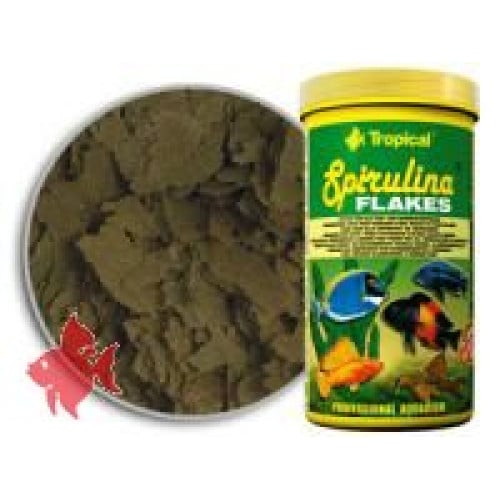
Tropical Spirulina Flakes 100ml
Spirulina flakes for herbivorous and omnivorous fish; Tropical describes this food for daily feeding. Use it as a plant-based part of a varied diet and crumble the flakes if needed so Saulosi can take them easily.
Check retailer for price0 retailers
View retailersPrices from the latest retailer update, excluding shipping. Check stock and delivery with the retailer.
Sources & review
This care guide draws on several specialist sources and was last checked on .
View the sources
- California Academy of Sciences — Eschmeyer's Catalog of Fishes — Chindongo saulosi
- FishBase — Chindongo saulosi — FishBase summary
- AquaInfo — Saulosi Cichlid (Chindongo saulosi)
- Aquarist Atlas — Chindongo saulosi — Care, Habitat & Breeding
- Zoopet — Chindongo saulosi species record
- Biotope Aquarium Project — Taiwanee Reef Lake Malawi biotope aquarium
- IUCN Red List — Chindongo saulosi — IUCN Red List assessment
- Wikimedia Commons; Gerard Delany; border removal by Xhienne — Pseudotropheus saulosi.jpg
- Tropical — Tropical Spirulina Flakes — manufacturer product record