Redtail goodeid
Xenotoca eiseni

The redtail goodeid (Xenotoca eiseni) is a robust livebearing toothcarp native to Nayarit, Mexico. Males are recognised by an orange-red tail, but this is not an automatic community fish: some individuals seriously attack tankmates. The trade name is also not always dependable because closely related species and older captive strains may have been mixed. Prefer traceable captive-bred stock with known origin, and keep the group in a spacious, species-focused aquarium. Ask the breeder which species and origin can actually be documented; do not identify fish by colour alone. Never release aquarium animals into open water.
Plan your aquarium →At a glance
- Temperature
- 15–25 °C
- pH
- 6.0–8.0
- GH
- 10–20 °dGH
- Aquarium length
- At least 60 cm
- Minimum aquarium volume
- At least 250 L
- Adult size
- Up to 7.5 cm
- Group size
- At least 6 individuals
- Temperament
- Aggressive, May nip fins
About this species
Xenotoca eiseni (Rutter, 1896) belongs to the family Goodeidae. ITIS and FishBase use this valid name. The Goodeid Working Group places the genus in quotation marks because it considers the generic placement unresolved. This is a taxonomic note, not a second species. A 2016 revision distinguished X. doadrioi and X. lyonsi from the formerly broader X. eiseni group.Natural habitat
The species is native to the Mexican state of Nayarit. The Goodeid Working Group documents historical springs, pools, lakes, streams and rivers in the Río Mololoa/Santiago, Río Santa Rosa and Río Huicicila drainages. Remaining known populations are small and threatened by water loss, habitat change and introduced fishes. The true origin of many aquarium fish is uncertain; colour alone cannot prove a pure species or locality lineage.Aquarium and layout
Follow the cautious specialist recommendation of at least 250 litres, with a broad base and relatively low water column. Seriously Fish lists a much smaller aquarium and a 60 × 30 cm base, a substantial difference. Do not use that smaller figure as proof that a 60 cm tank is sufficient. Choose a spacious, low aquarium with open swimming room, sturdy wood or rock structure, dense planting in patches, moderate flow and strong aeration. A species-only setup makes behaviour easier to manage.Water conditions
Seriously Fish lists 15–30°C, pH 6.0–8.0 and GH 10–20 dGH. The Goodeid Working Group cautions against keeping the species continuously above 25°C and describes a cooler winter rest for experienced breeders. We therefore present 15–25°C as a cautious practical range; it is not an instruction to swing constantly between the extremes. Keep pH and hardness stable and oxygenation high. Seasonal cooling is a specialist breeding method, not a requirement for every keeper.Behaviour and group size
This active fish can be unpredictably aggressive. Males may harass one another, and some individuals nip fins or seriously injure other species; catfish are specifically identified as at risk in the species literature. The safest option is a roomy group in a species aquarium, with visual barriers and ample swimming space. A secondary care source gives six fish as a practical group floor, but specialist sources do not establish a fixed scientific minimum. Do not add vulnerable tankmates based only on similar water parameters.Feeding
Xenotoca eiseni is omnivorous, with plant material making up an important part of the diet. In nature it feeds on algae and aufwuchs as well as crustaceans, worms and insect larvae. Offer a complete staple, alternating it with algae- and vegetable-rich foods and suitable animal foods. The Goodeid Working Group reports that flakes, granules, tablets and freeze-dried brine shrimp are readily accepted. An algae wafer is a supplement, not a complete daily staple by itself.Breeding
This is a livebearing goodeid. In goodeids, embryos receive nourishment inside the female and newborns may briefly retain trophotaenia tissue. Seriously Fish reports gestation of about seven to eight weeks and broods of 5–50 young; numbers vary with each female and conditions. The Goodeid Working Group notes that fry are often eaten. Do not rely on parental tolerance; provide refuge. Keep known locality lineages separate, record provenance and never pass uncertain trade fish on as a verified pure line.Suitable products
Recommended staple foods
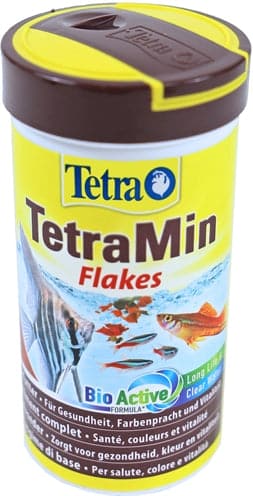
Tetramin Bio Active Vlokken Fish food 100 ml
A complete staple for this omnivorous goodeid; rotate it with plant- and algae-rich foods.
Check retailer for price0 retailers
View retailersSupplementary foods
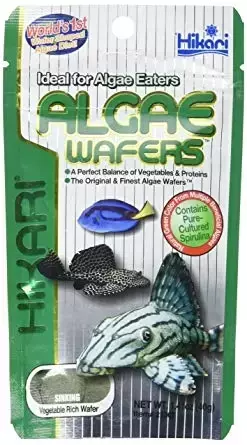
Hikari Algae wafers 40gr - Vissenvoer
Supplementary algae food suits its grazing diet; do not use it as the only food.
Check retailer for price0 retailers
View retailersPrices from the latest retailer update, excluding shipping. Check stock and delivery with the retailer.
Sources & review
This care guide draws on several specialist sources and was last checked on .
View the sources
- Seriously Fish — Seriously Fish — Xenotoca eiseni care profile
- Goodeid Working Group — Goodeid Working Group — “Xenotoca” eiseni species account
- FishBase — FishBase — Xenotoca eiseni summary
- Integrated Taxonomic Information System — ITIS — Xenotoca eiseni taxonomic report
- Underground Aquarium — Underground Aquarium — Red-tailed splitfin care profile
- Mattia Nocciola / Wikimedia Commons — Xenotoca eiseni male — Natural History Museum, University of Pisa (Wikimedia Commons)