Panda garra
Garra flavatra

The panda garra (Garra flavatra) is an active bottom-dweller from western Myanmar that grazes surfaces with its adhesive disc. Seriously Fish recommends a minimum 90 × 30 cm aquarium footprint (about 81 litres) and clean, oxygen-rich water with strong current. Keep a small group and provide grazing surfaces, retreats and a secure lid: these fish can climb glass. They do not live on algae alone. A mature aquarium with biofilm helps, but it does not replace a varied diet. Do not identify a fish from the shop name “panda algae eater” alone; trade names are also used for other Garra-like fishes. Its modest size does not make it a simple cleaner fish: group behaviour, current and a mature biofilm surface all matter. Check feeding access and escape gaps routinely.
Plan your aquarium →At a glance
- Temperature
- 22–27 °C
- pH
- 6.5–7.5
- GH
- 2–12 °dGH
- Aquarium length
- At least 90 cm
- Minimum aquarium volume
- At least 81 L
- Adult size
- Up to 9 cm
- Group size
- At least 4 individuals
- Temperament
- Peaceful
About this species
Garra flavatra was described by Kullander and Fang in 2004 and is accepted as valid by Eschmeyer’s Catalog of Fishes. The panda garra is endemic to the Rakhine Yoma range in western Myanmar. Trade names include clown garra, banded butterfly garra and rainbow garra; it is sometimes incorrectly called a loach. Its dark and pale bands are distinctive, but their intensity varies. Check the identity carefully and do not confuse it with another striped sucker-mouth fish. FishBase lists a Vulnerable IUCN assessment from 2010. The specialist aquarium profile reports commercial breeding since 2008; choose documented captive-bred stock where possible, without making unsupported claims about the impact of every traded fish on wild populations.Natural habitat
The species is known from streams and small rivers on the western slopes of the Rakhine Yoma. The original description includes shallow, clear sites with gravel, pebbles and rocks; water levels and flow change with the monsoon. Pools form in dry periods, while flow increases during the rainy season. This variation means a natural locality does not prescribe one fixed aquarium current. The specialist care profile nevertheless recommends a clean, highly oxygenated aquarium with strong water movement and plenty of surfaces for biofilm. Treat the Vulnerable assessment as a reason to check provenance carefully, not as proof that every captive-bred or traded fish has the same impact. The western Myanmar distribution should not be expanded to the whole country or to other Garra species. The care values on this page come from an aquarium source; they are not measurements from every locality.Aquarium and layout
Use a 90 × 30 cm footprint and about 81 litres as the smallest starting point; a larger tank provides more room for a group and multiple grazing stations. Arrange rounded stones, pebbles, sand and wood. Leave open routes between structures and expose hard surfaces for biofilm. Robust plants can be attached to wood or rock; avoid covering the entire bottom. This species belongs in a biologically mature aquarium because it grazes biofilm and is sensitive to unstable conditions. The specialist source prefers filter turnover above ten times the aquarium volume per hour. Provide good aeration and a firmly secured lid: panda garras can climb glass and escape.Water conditions
Published aquarium values are 22–27 °C, pH 6.5–7.5 and GH 2–12 dGH. No reliable KH range is established. Keep temperature and water chemistry stable; if behaviour changes, measure the aquarium before making adjustments. High oxygen and current matter, but the source does not give one fixed l/h value for every tank, so do not size a filter from this species page alone. Use mature biological filtration and limit organic waste. Natural flow changes seasonally, but that does not cancel the aquarium recommendation for strong movement.Behaviour and group size
Panda garras are relatively peaceful toward other species, but are not fully tolerant of conspecifics. The specialist profile recommends three or four or more if space permits. A group forms a hierarchy, with brief chasing and fin displays. A fish kept alone may instead become more aggressive toward similarly shaped species. Do not select tankmates only because water values overlap: also assess adult size, bottom use, current, feeding competition and available space. This guide does not mark any specific fish pairing as individually verified. After introduction, watch whether every fish can feed and rest; separate them if persistent chasing, injuries or loss of condition occur.Feeding
Garra flavatra is an omnivorous grazer, not a fish that can live on aquarium algae alone. Allow natural biofilm to grow on rocks and wood, and provide a varied diet. The specialist profile names insect larvae, Tubifex, Artemia and sinking dry food with meaningful vegetable content such as spirulina. The linked Hikari Mini Algae Wafers is marketed for smaller algae-eating bottom fish and has a manufacturer-stated diameter of about 6.5–7.5 mm. Use it as a grazing supplement, not as the sole food. Feed modest portions and check that subordinate group members also get access; remove leftovers to keep the water clean.Breeding
The specialist profile reports commercial breeding in Myanmar since 2008. Its described method uses a separate aquarium with flowing, highly oxygenated water and selected pairs. The source reports hatching in about 24–30 hours, roughly 72 hours of yolk-sac nourishment, and acceptance of Artemia nauplii at around one week. These are observations from a specific setup, not a guarantee of home-breeding results. A breeding attempt needs a separate, biologically stable aquarium and very small first foods. Do not move adults to an immature tank, and keep eggs or larvae away from strong filter intakes.Suitable products
Supplementary foods
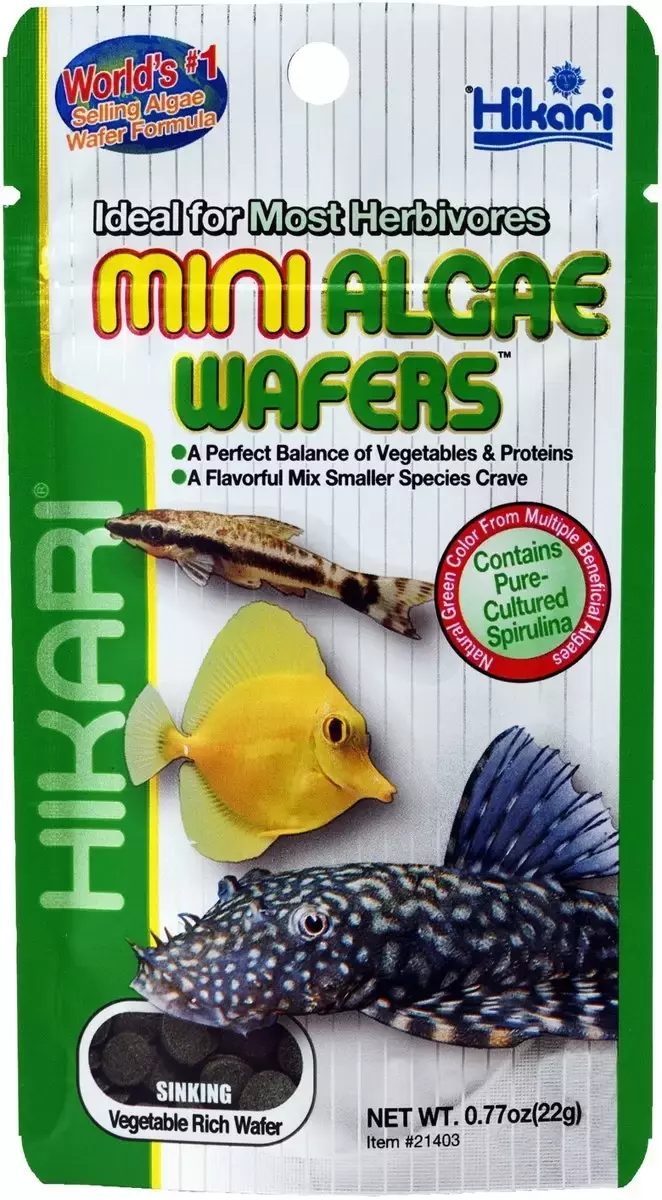
Hikari Mini algae wafers 22gr - Vissenvoer
A small algae wafer as supplementary grazing food; manufacturer size about 6.5–7.5 mm. Garra flavatra is omnivorous: also offer varied animal foods; do not use this as the entire diet.
Check retailer for price0 retailers
View retailersPrices from the latest retailer update, excluding shipping. Check stock and delivery with the retailer.
Sources & review
This care guide draws on several specialist sources and was last checked on .
View the sources
- Seriously Fish — Garra flavatra (Panda Garra) — aquarium and species profile
- California Academy of Sciences — Eschmeyer’s Catalog of Fishes — Garra flavatra
- Ichthyological Exploration of Freshwaters — Kullander & Fang (2004), original description of seven Garra species
- Integrated Taxonomic Information System — ITIS — Garra flavatra taxonomic record
- FishBase — FishBase — Garra flavatra
- Hikari Sales USA — Hikari Mini Algae Wafers — manufacturer specifications and feeding guidance
- Wikimedia Commons — File:Garra flavatra 4.jpg — image, author and reuse license