Montezuma swordtail
Xiphophorus montezumae

The Montezuma swordtail (Xiphophorus montezumae) is a livebearing toothcarp from northeastern Mexico. Males are notable for their exceptionally long caudal sword. The fish needs ample swimming room, strong filtration and tankmates that will not nip its fins. Specialist breeder Select Aquatics recommends at least 30 US gallons (about 114 litres); A cautious practical baseline is an aquarium about 80 cm long and around 114 litres; sources differ, and a larger tank gives more room for the striking caudal sword. This guide also covers setup, feeding and reproduction. Aquarium recommendations are not the same as field measurements; body length differs greatly from total length when the sword is included.
Plan your aquarium →At a glance
- Temperature
- 20–24.5 °C
- pH
- 7.0–8.0
- GH
- 10–20 °dGH
- Aquarium length
- At least 80 cm
- Minimum aquarium volume
- At least 114 L
- Adult size
- Up to 8.5 cm
- Group size
- At least 3 individuals
- Temperament
- Territorial
About this species
The accepted name is Xiphophorus montezumae Jordan & Snyder, 1899, in the family Poeciliidae. A male’s total outline including the sword is much longer than its body length; sources use different measurement methods.Natural habitat
The species occurs in northeastern Mexico, including the Río Pánuco drainage. The Xiphophorus Genetic Stock Center describes flowing rivers and streams over sand, silt, gravel and rock. Keep water clean and well filtered; moderate movement and aeration suit this habitat.Aquarium and layout
Select Aquatics recommends at least 30 US gallons, about 114 litres; TFH also calls for a large aquarium without giving dimensions. A documented setup with six specimens in an 80 cm tank and a species profile citing about 80 cm support 80 cm as a cautious practical floor, not a scientifically established minimum. Larger is welcome. Plants provide cover. Protect the long sword from fin-nippers.Water conditions
TFH gives aquarium conditions of 20–24.5°C and pH 7.0–8.0, with medium to very hard water (150–350 ppm). FishBase lists ecological values of 20–26°C, pH 7–8 and dH 10–20. Hardness units are not directly interchangeable; aim for stable, mineral-rich water and adjust gradually.Behaviour and group size
Males can be intolerant of one another and may spar. TFH recommends plenty of females when keeping a group. Provide space and cover; a species-focused aquarium is a safe choice when you want to reduce aggression or protect the long tail. Avoid boisterous or fin-nipping companions.Feeding
This species is omnivorous. Offer a complete tropical staple and vary it with suitable small live, frozen or freeze-dried foods. Algae and plant matter should also be part of the varied diet. Algae wafers are supplementary, not a complete staple.Breeding
Xiphophorus montezumae is livebearing. FishBase describes internal development and reports an approximate four-to-five-week gestation and 15–30 young; these are reference values, not a guarantee for every aquarium. Dense plants provide cover for fry. Plan for repeated broods and decide in advance how to manage offspring.Suitable products
Recommended staple foods
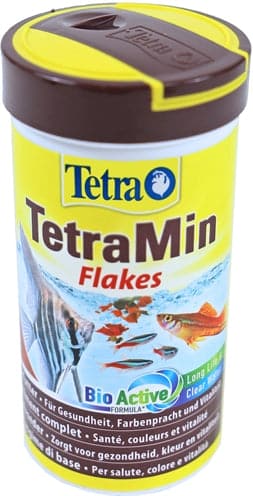
Tetramin Bio Active Vlokken Fish food 100 ml
Complete tropical staple for this omnivorous swordtail; complement it with suitable plant matter and small animal foods.
Check retailer for price0 retailers
View retailersSupplementary foods
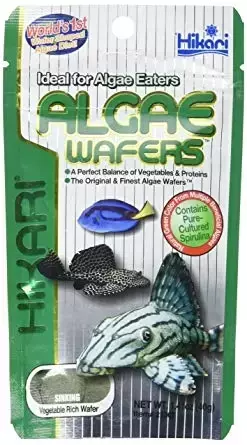
Hikari Algae wafers 40gr - Vissenvoer
Supplementary algae food for variety alongside a complete staple; do not use it as the sole diet.
Check retailer for price0 retailers
View retailersPrices from the latest retailer update, excluding shipping. Check stock and delivery with the retailer.
Sources & review
This care guide draws on several specialist sources and was last checked on .
View the sources
- Hikari — Hikari Tropical Algae Wafers — manufacturer feeding information
- Tetra — TetraMin Flakes — manufacturer product information
- Tropical Fish Hobbyist — TFH Magazine — Xiphophorus montezumae species profile
- Select Aquatics — Xiphophorus montezumae — Select Aquatics
- FishBase — FishBase — Xiphophorus montezumae summary
- GBIF — GBIF Backbone Taxonomy — Xiphophorus montezumae
- Xiphophorus Genetic Stock Center — Xiphophorus montezumae — Xiphophorus Genetic Stock Center
- Goodeid Working Group / American Livebearer Association — 10 Livebearers for Your Wish List — American Livebearer Association article
- Biotope Aquarium Project — Rio Tamasopo biotope aquarium — six Xiphophorus montezumae in 80 cm tank
- ZOOBOX — Montezuma swordtail husbandry profile
- Loury Cédric / Wikimedia Commons — Xiphophorus montezumae — Wikimedia Commons