Doctor fish care
Garra rufa

Garra rufa is a robust bottom-dwelling fish from West Asian river systems. It needs a spacious, cool, well-oxygenated aquarium with strong flow and mature surfaces to graze. The common name ‘doctor fish’ is widely used in trade, but a fish sold under that label is not automatically verified as this species. It is also not a tropical fish for a standard heated community tank. The combination of low temperature, strong current and a secure lid makes its setup different from that of many familiar tropical aquarium fish. This guide describes the accepted species while making the limits of trade labels clear.
Plan your aquarium →At a glance
- Temperature
- 14–20 °C
- pH
- 6.0–8.0
- GH
- 1–15 °dGH
- Aquarium length
- At least 120 cm
- Minimum aquarium volume
- At least 243 L
- Adult size
- Up to 12 cm
- Group size
- At least 3 individuals
- Temperament
- Peaceful
About this species
Garra rufa (Heckel, 1843) is a cyprinid with a modified lower mouth used to attach to surfaces and scrape food. The name doctor fish is associated with fish spas, but it does not establish the identity or suitability of an aquarium specimen. The specialist profile warns that fish sold as G. rufa may be closely related taxa or mixed populations. Treat the shop label as provisional rather than conclusive evidence. A species-focused care plan starts with documented provenance, cool water and a spacious river-like layout.
Natural habitat
The accepted species concept covers parts of the eastern Mediterranean and Middle East, including river systems in Turkey, Syria, Jordan, Israel, Iraq and Iran; Aleppo, Syria is the type locality. It occurs in varied waters, often clear, fast-flowing headwaters and tributaries, but also in some larger lowland channels and reservoirs. Oxygen-rich water and sunlight support biofilm on submerged stones and other hard surfaces. The broad native range does not make the identity of an arbitrary trade ‘doctor fish’ certain. Keep natural distribution and trade identification as separate questions.
Aquarium and layout
Start with a footprint of at least 120 × 45 cm; the specialist aquarium profile associates this with about 243 litres. More floor space is helpful for adult fish and a group. Arrange rounded stones, sand or fine gravel, a few larger rocks and, if desired, wood. Keep open swimming lanes alongside stable grazing surfaces. Use a mature, biologically stable aquarium because the fish graze biofilm and are a poor fit for a newly established, fluctuating tank. Seriously Fish recommends strong current, preferably filter turnover above ten times the tank volume per hour, and good aeration. Fit a secure lid: the fish can jump and climb glass.
Water conditions
The published aquarium guidance from Seriously Fish is 14–20 °C, pH 6.0–8.0 and GH 1–15 dGH. This is a cool-water fish; a typical tropical heater is often unnecessary and may make the aquarium too warm. The source does not provide a dependable KH range, so none is stated here. Prioritise stable temperature, oxygen and water quality. Combine strong flow with quieter areas where fish can rest. Measure actual temperatures in both summer and winter; a cool-water regime also limits which other species can share the aquarium.
Behaviour and group size
Garra rufa is relatively peaceful with species that need similar conditions, but conspecific behaviour still matters. Tolerance declines in small aquaria; a group forms a visible pecking order with short chases and displays. Seriously Fish recommends keeping three or four or more if space permits. This is not permission to crowd adult fish. Assess companions by temperature, adult size, swimming zone, flow needs, food competition and available space as well as water chemistry. No individual companion pairing has been verified strongly enough for this guide. After introductions, watch for injuries, persistent chasing and whether every fish can feed.
Feeding
This bottom grazer is not an algae-only fish. The specialist profile describes grazing algae and biofilm, but also recommends animal foods such as chironomid larvae, Tubifex, Artemia or finely chopped prawn, plus quality sinking dry foods; some should contain a substantial vegetable component. The linked Hikari Mini Algae Wafers are only a supplement, not a complete diet for this species. Alternate suitable plant-based and animal foods, offer small portions and ensure subordinate fish can reach the food. Remove leftovers before they affect water quality. Do not rely on the ‘cleaner fish’ label or biofilm alone as a feeding plan.
Breeding
Wild populations may spawn over an extended season, often from April to November. Eggs are scattered over gravel or rocks and the adults provide no parental care. The specialist source notes that large numbers of fish traded as Garra rufa are produced in several countries, while the populations and species identity involved are not always clear. It is also uncertain whether every commercial batch is naturally bred or hormonally stimulated. This does not prove that a particular shop fish is pure or was bred by a specific method. A breeding attempt needs a separate stable aquarium, appropriate water quality and protection for eggs and fry. Avoid promising a guaranteed method based only on a trade name.
Suitable products
Supplementary foods
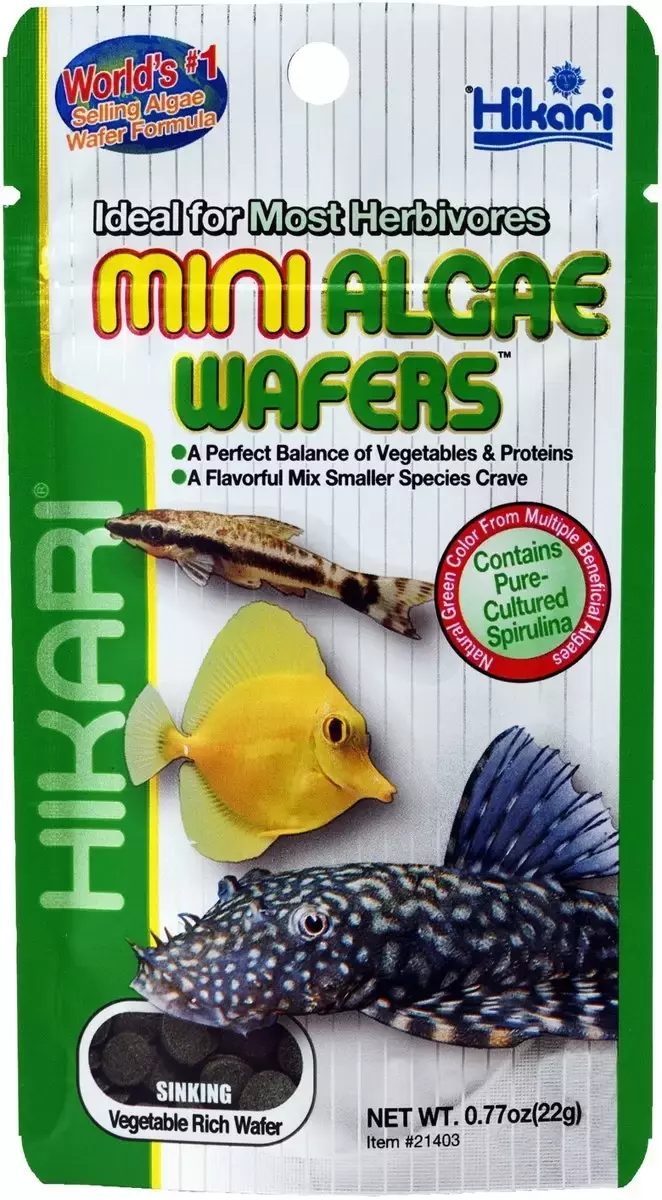
Hikari Mini algae wafers 22gr - Vissenvoer
A small sinking algae wafer for the supplementary vegetable/grazing part of this benthic omnivore’s diet. Also offer animal foods; this product is not a complete diet.
Check retailer for price0 retailers
View retailersPrices from the latest retailer update, excluding shipping. Check stock and delivery with the retailer.
Sources & review
This care guide draws on several specialist sources and was last checked on .
View the sources
- Hikari Sales USA — Hikari Mini Algae Wafers — manufacturer specifications and feeding guidance
- Seriously Fish — Garra rufa (Doctor Fish) — species and aquarium profile
- California Academy of Sciences — Eschmeyer’s Catalog of Fishes — Garra rufa
- Integrated Taxonomic Information System — ITIS — Garra rufa taxonomic record (TSN 689117)
- FishBase — FishBase — Garra rufa species summary
- Cybium / Société Française d’Ichtyologie — Yalçın et al. — Diet of Garra rufa in the Asi basin
- Wikimedia Commons — File:Garra Rufa.JPG — image identity, author and license