Demasoni cichlid
Chindongo demasoni

Chindongo demasoni is a small, vividly blue-striped mbuna from Lake Malawi. Its size is misleading: fish of its own species may be chased and injured. This guide covers a spacious rock-focused aquarium, stable hard alkaline water, a high-fibre plant-based diet and maternal mouthbrooding. The accepted scientific name is Chindongo demasoni; older literature often uses Pseudotropheus demasoni. The species is assessed as Vulnerable and has a restricted range. Choose traceable captive-bred fish only and do not buy wild-caught stock. Plan the rock layout and stocking carefully, because an unstable hierarchy can quickly become dangerous.
Plan your aquarium →At a glance
- Temperature
- 24–26 °C
- pH
- 7.8–8.5
- GH
- 12–16 °dGH
- Aquarium length
- At least 120 cm
- Minimum aquarium volume
- At least 300 L
- Adult size
- Up to 6.34 cm
- Group size
- At least 4–12 individuals
- Swimming zone
- Bottom, Middle
- Temperament
- Territorial
About this species
The valid name is Chindongo demasoni (Konings, 1994), a cichlid in the subfamily Pseudocrenilabrinae. Eschmeyer’s Catalog of Fishes confirms this combination. The former combination Pseudotropheus demasoni remains a useful search term, not a separate species.
Natural habitat
The species is from Lake Malawi in Tanzania. Documented localities include Pombo Rocks and the area around Ndumbi Point and Ndumbi Rocks. This is a restricted part of the lake, not a fish found throughout all of Lake Malawi. It grazes growth on rocks in its rocky habitat.
FishBase reports an IUCN assessment of Vulnerable (VU), dated 22 May 2018. Given its restricted range, this guide is for fish already kept in aquariums. Buy traceable captive-bred fish only and ask about their origin.
Aquarium and layout
AquaInfo gives a minimum aquarium size of 120 × 50 × 50 cm. Those external dimensions equal 300 litres of gross geometric volume; substrate, rocks and headspace reduce the actual water volume. Another specialist source discusses about 55–80 US gallons for a group of twelve. Because recommendations differ and aggression is a major risk, this guide uses 120 cm length and roughly 300 litres gross geometry as a cautious planning baseline, not a guarantee that a group will remain peaceful.
Build stable rockwork with many caves, crevices and broken sightlines while leaving swimming space. Use sand, robust filtration and good oxygenation. Secure the rocks. Live plants are not a practical choice: aquarium care sources report that they may be eaten.
Water conditions
AquaInfo recommends 22–26 °C and pH 7.5–8.5. Aquarist Atlas gives about 75–82 °F (roughly 24–28 °C) and pH 7.8–8.6. We show the overlap: 24–26 °C and pH 7.8–8.5. AquaInfo lists GH 12–16 °dGH; the other consulted sources do not give a comparable GH range.
Keep the water hard, alkaline and especially stable. Do not make sudden pH or hardness changes to chase a target number; gradual transitions and good water quality matter more than constant adjustment.
Behaviour and group size
Demasoni is a strongly territorial mbuna. Aggression toward its own species can be severe despite its small size. Sources differ on group planning: AquaInfo describes a harem of one male with at least three females, while Aquarist Atlas discusses a larger group of around twelve to distribute aggression. These are not guaranteed formulas; sex cannot be reliably identified by colour, and a dominant fish may still injure or kill others.
Do not keep this species as an isolated pair or casually mix it with other fish. A group needs substantial floor space, rockwork, broken sightlines and a plan for separation. Intervene if fish cannot feed, are pursued constantly or are injured. We do not list specific tankmates without verified compatibility evidence.
Feeding
In the wild, this species grazes aufwuchs: algae, microorganisms and small food particles growing on rocks. Choose a high-fibre, plant-forward staple with spirulina in small flakes or pellets; feed modest portions and make sure subordinate fish can eat too. An existing spirulina food is linked as a complementary option, not a complete diet.
Animal foods should be occasional, small extras at most. AquaInfo advises against tubifex and red mosquito larvae. Avoid large high-protein meals and overfeeding; remove leftovers.
Breeding
Chindongo demasoni is a maternal mouthbrooder. After spawning, the female collects the eggs in her mouth and carries the young there during early development. AquaInfo describes aquarium observations of about 19–21 days; timing and brood size vary and are not guaranteed.
Leave a brooding female as undisturbed as possible and provide quiet refuges. Move her only with a sound plan and when necessary; catching her can add stress.
Suitable products
Supplementary foods
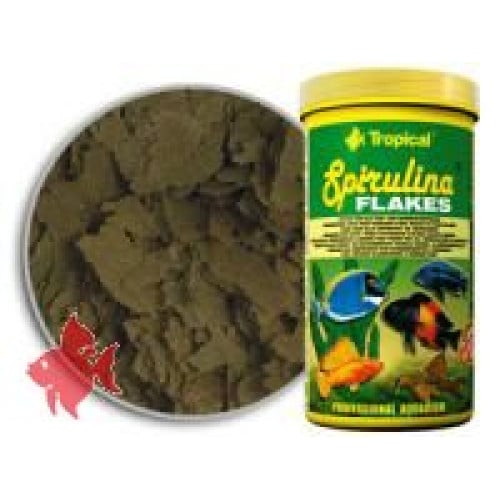
Tropical Spirulina Flakes 100ml
Spirulina flakes for herbivorous fish suit this mbuna’s high-fibre, plant-forward diet. Use this existing product as part of a varied diet and crumble the flakes if needed.
Check retailer for price0 retailers
View retailersPrices from the latest retailer update, excluding shipping. Check stock and delivery with the retailer.
Sources & review
This care guide draws on several specialist sources and was last checked on .
View the sources
- Tropical — Tropical Spirulina Flakes — manufacturer product record
- California Academy of Sciences — Eschmeyer’s Catalog of Fishes — Chindongo demasoni
- FishBase — Chindongo demasoni — FishBase summary
- AquaInfo — Chindongo demasoni — Malawi mbuna care
- Aquarist Atlas — Demasoni cichlid — care, habitat and breeding
- IUCN Red List — Chindongo demasoni — IUCN Red List assessment
- Wikimedia Commons; Emőke Dénes — Hal - Pseudotropheus demasoni - 6.jpg