Celebes halfbeak
Nomorhamphus liemi

The Celebes halfbeak (Nomorhamphus liemi) is a live-bearing surface fish from the highland streams of South Sulawesi. In nature it feeds mainly on flying insects near the water surface and may dart suddenly when startled in an aquarium. A tightly fitted lid is essential, including sealed gaps around cables and hoses. Provide cool, clean, well-oxygenated water, generous horizontal swimming space and plants near the surface while keeping a clear feeding lane. The supported temperature overlap is 20–24°C. Adult size differs by sex and measurement method: FishBase records males or unsexed fish to 8 cm standard length and females to 9 cm total length. The species is assessed as Near Threatened.
Plan your aquarium →At a glance
- Temperature
- 20–24 °C
- pH
- 6.5–7.8
- GH
- Up to 12 °dGH
- Aquarium length
- At least 100 cm
- Minimum aquarium volume
- At least 150 L
- Adult size
- Up to 9 cm
- Group size
- At least 4 individuals
- Swimming zone
- Surface
- Temperament
- May jump
About this species
Nomorhamphus liemi Vogt, 1977 belongs to Zenarchopteridae within Beloniformes. Its common name, Celebes halfbeak, refers to Sulawesi’s former European name. Eschmeyer’s Catalog of Fishes treats the species as valid and uses 1977 as the publication year; some sources cite 1978 because the journal volume carried that date. Fishkeeper lists historical names for the liemi and snijdersi forms in its synonym field. This guide follows the current species-level treatment and does not turn colour forms or older names into separate species. FishBase and the type record place it in the Maros highlands of South Sulawesi.Natural habitat
FishBase reports the species from freshwater on Sulawesi, with the Maros highlands in South Sulawesi as a documented locality. Fishkeeper describes shallow flowing water and feeding on insects at the surface. Sources provide limited detail on exact natural water chemistry, so this guide does not invent a field measurement. In an aquarium, keep the upper water layer accessible, maintain good oxygenation and avoid forcing strong flow through every area. When buying fish, ask about locality and whether they are captive bred or wild collected. A trade name by itself does not prove a precise collection site.Aquarium and layout
Choose a long aquarium with ample open surface area. Fishkeeper recommends as much surface area as possible but does not give a minimum volume. TankBud lists 150 litres, Akvaforum 160 litres and Dutch specialist retailer Heevis a minimum length of 100 cm; another husbandry source gives 90 cm. This guide therefore uses 150 litres and 100 cm as a conservative practical lower bound for a group, not a stocking guarantee for every setup. Place dense plants and floating cover mostly along the edges so fish have shelter and an open feeding lane. Provide a calmer resting area away from the main current. Use mature filtration and small, regular water changes.Water conditions
FishBase gives 20–24°C, pH 6–8 and hardness 5–12 dH. Fishkeeper lists 20–25°C, pH 6.5–7.8 and hardness up to 12 degrees. The displayed temperature and pH ranges use the overlap between both sources: 20–24°C and pH 6.5–7.8. For GH, only the shared upper limit of 12°dGH is supported; no unsupported minimum is added. Keep the water clean, well oxygenated and stable. Avoid sudden temperature or chemistry changes, especially after transport or while acclimating fish to a new aquarium.Behaviour and group size
This halfbeak stays mainly just below the surface and can leap powerfully when startled. A secure lid with no gaps is essential; check cable openings and spaces around pipes. Fishkeeper recommends keeping them in groups: one male with several females, or, in a more spacious aquarium, a mixed group with at least six males and visual barriers. The central minimum of four fish is only a cautious lower bound derived from one male plus several females; the source does not specify a fixed ratio. They are generally peaceful toward suitable species, but very small fish or fry may be eaten. We therefore name no specific tankmates without a separate pair-specific review.Feeding
FishBase reports that N. liemi feeds mainly on flying insects. Fishkeeper describes taking insects at the surface and accepting small meaty frozen foods such as daphnia, mosquito larvae and brine shrimp; some specimens may later accept flakes or granules. Offer small portions that remain accessible near the surface and check that every fish is feeding. Vary suitable live and frozen foods and remove leftovers. The existing catalogue includes live Artemia as supplementary prey, not as a complete staple. An existing dry food lacks sufficiently verified product facts for us to recommend it as complete, species-specific nutrition.Breeding
Nomorhamphus liemi is live-bearing. FishBase records broods of about 9–11 young. Fishkeeper describes aquarium breeding as moderately difficult and gives a gestation period of roughly three to eight weeks depending on temperature. Prepare the breeding setup in advance with calm conditions and cover near the surface. Adults may eat fry, so Fishkeeper advises separating the large newborn young from the parents. They can be raised on Artemia nauplii and fine first foods. The brood size and gestation period are reported source values, not a guarantee for every female or population.Suitable products
Recommended staple foods
No existing staple has sufficiently verified product facts and complete-diet evidence for this species while also passing the current product match checks. The existing TetraMin entry has only an unverified imported flake-form field, so it is not linked. Artemia is listed as a supplement only.
Supplementary foods
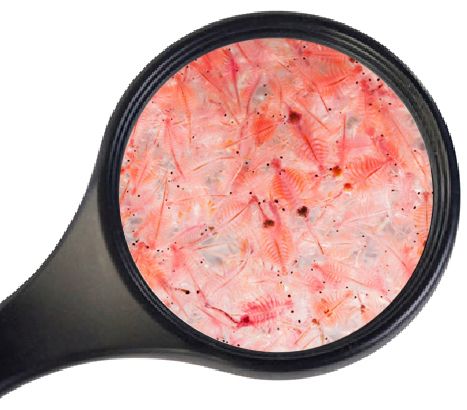
Levende Artemia 90ml
FishBase describes a diet based mainly on flying insects; the species-specific Fishkeeper profile also lists small crustaceans and explicitly accepts brine shrimp. This live Artemia is suitable as variety, but it is not a complete staple.
Check retailer for price0 retailers
View retailersPrices from the latest retailer update, excluding shipping. Check stock and delivery with the retailer.
Sources & review
This care guide draws on several specialist sources and was last checked on .
View the sources
- FishBase — FishBase — Nomorhamphus liemi summary
- California Academy of Sciences — Eschmeyer’s Catalog of Fishes — Nomorhamphus liemi
- Maidenhead Aquatics / Fishkeeper — Fishkeeper — Celebes halfbeak care profile
- TankBud — TankBud — Celebes halfbeak care profile
- Akvaforum — Akvaforum — Nomorhamphus liemi aquarium profile
- Heevis — Heevis — Nomorhamphus liemi
- Look For Fish — Look For Fish — Celebes halfbeak husbandry notes
- Vassil / Wikimedia Commons — Celebes halfbeak at Cologne Zoo — Wikimedia Commons