Butterfly splitfin
Ameca splendens

The butterfly splitfin (Ameca splendens), also called the butterfly goodeid, is an active Mexican livebearing toothcarp suited to a large, well-circulated aquarium. Males may be pushy with one another and with other fish, so a species setup is the safest choice. The species is critically endangered and some historical subpopulations have disappeared. Choose traceable captive-bred stock only and never release aquarium fish into the wild. This goodeid is not an automatic choice for a small community tank: it swims actively, feeds greedily and benefits from strong filtration, oxygenation and a carefully planned group setup. This guide separates aquarium advice from measurements taken in natural springs.
Plan your aquarium →At a glance
- Temperature
- 20–25 °C
- pH
- 7.0–8.0
- GH
- 10–20 °dGH
- Aquarium length
- At least 90 cm
- Minimum aquarium volume
- At least 250 L
- Adult size
- Up to 9 cm
- Group size
- At least 6 individuals
- Temperament
- May nip fins, May compete for food
About this species
Ameca splendens Miller & Fitzsimons, 1971 belongs to the family Goodeidae. Males are smaller and more colourful, with a yellow-and-black tail margin and a notched reproductive fin; females are heavier-bodied. Seriously Fish reports a maximum standard length of about 9 cm. Standard length excludes the tail and should not be presented as total length.Natural habitat
The species is from Jalisco in western Mexico and is associated with clear springs and their outflows. The Goodeid Working Group documents several subpopulations, some of whose habitats have disappeared. The fish is often described as extinct in the wild, but Seriously Fish and the Goodeid Working Group report that remnant wild populations persist. Their status differs among subpopulations; the species should be treated as critically endangered.Aquarium and layout
The Goodeid Working Group recommends at least 250 litres and a generous base area. Seriously Fish also specifies a footprint of at least 90 × 30 cm, but does not recommend a smaller volume than GWG; use 250 litres as the cautious minimum and provide adequate length too. Arrange rocks or roots, groups of robust plants and open swimming space. Moderate to brisk flow and very good aeration are important.Water conditions
For aquarium care, Seriously Fish gives 20–25°C, pH 7.0–8.0 and GH 10–20 dGH. The Goodeid Working Group describes warmer natural springs but cautions that persistently high aquarium temperatures may harm health. Keep conditions stable and oxygen-rich; do not treat field measurements as a second aquarium target. GWG describes a seasonal cool rest for experienced breeders, but this is not a universal requirement.Behaviour and group size
Males display and chase one another; sight breaks and a spacious layout can help. The species sources also report occasional fin-nipping of other fish and intense competition at feeding time. A species-only aquarium is the safest baseline. Do not casually mix it with timid, smaller or long-finned fish. No named tankmates have been added as verified compatibility relationships.Feeding
In nature it grazes mainly on algae and aufwuchs, while also taking small animal prey. Offer a complete food and make plant matter a substantial part of the diet, such as spirulina food, blanched greens or seaweed, alongside suitable fibre-rich animal foods. Seriously Fish describes it as a greedy omnivore; an algae wafer is supplementary, not a complete staple.Breeding
Ameca splendens is a livebearing goodeid. Seriously Fish reports gestation of about 55–60 days and broods of 5–30 large fry, though individual broods vary. The young are relatively large and, according to the source, are not often eaten by their parents. A species setup prevents accidental crosses and helps maintain stock provenance. Where population-line information is known, keep lines separate and distribute responsibly sourced captive-bred fish only.Suitable products
Recommended staple foods

Tetramin Bio Active Vlokken Fish food 100 ml
Complete tropical food for this omnivorous goodeid; provide a substantial plant-based component as well.
Check retailer for price0 retailers
View retailersSupplementary foods
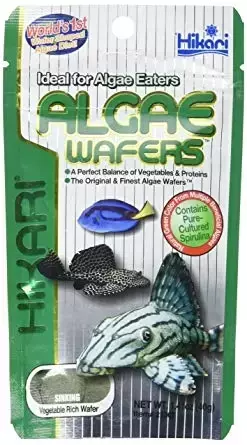
Hikari Algae wafers 40gr - Vissenvoer
Supplementary algae food suits its grazing diet; do not use it as a complete staple on its own.
Check retailer for price0 retailers
View retailersPrices from the latest retailer update, excluding shipping. Check stock and delivery with the retailer.
Sources & review
This care guide draws on several specialist sources and was last checked on .
View the sources
- Tropical — Plant-based aquarium foods — manufacturer information
- Seriously Fish — Seriously Fish — Ameca splendens
- Goodeid Working Group — Goodeid Working Group — Ameca splendens species account
- U.S. Fish and Wildlife Service — U.S. Fish and Wildlife Service — Ecological Risk Screening Summary
- California Academy of Sciences — Eschmeyer's Catalog of Fishes — Ameca splendens
- GBIF — GBIF — Ameca splendens
- Usien / Wikimedia Commons — Ameca splendens Jungtier 2016-12-11 — Wikimedia Commons
- Aqua-Pedia — Aqua-Pedia — Butterfly Splitfin care profile