Striped otocinclus
Otocinclus vittatus
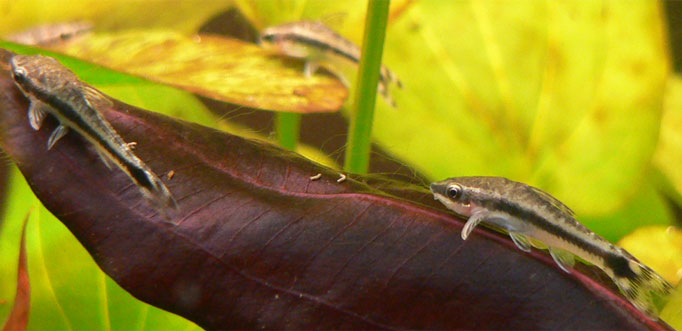
A dark longitudinal stripe; look for a well-filled belly when purchasing. A small, sensitive grazer for a mature aquarium with biofilm. Check that every fish is actually feeding.
At a glance
- Scientific name
- Otocinclus vittatus
- Dutch name
- Gestreepte dwergzuigmeerval
- Water temperature
- 20–26 °C
- pH
- 6–8
- Adult length, up to approximately
- 5 cm
- Experience
- Some experience
- General hardness (GH)
- 5–19 °dGH
- Starting footprint
- 60 × 30 cm
- Swimming or living zone
- Surfaces & plants
- Flow
- Moderate, with sheltered areas
This is a documented adult size, not a measured average. SL means body length excluding the tail fin. Sex, origin and cultivated form can affect size.
Care guidance; origin and captive breeding can change requirements. Some ranges are deliberately narrower than natural extremes in the source. Adjust water gradually and keep ammonia and nitrite at zero.
Tank sizes are editorial starting points for adults, not guarantees for a complete stocking plan. Group size, tank height, swimming length and territories may require a larger aquarium.
Origin
South America — Paraguay / Brazil
Habitat & setup
Vegetated freshwater habitats; provide plants and quiet refuges.
Diet
Biofilm and soft algae, supplemented with suitable sinking and plant-based foods. A bare clean tank offers too little food.
Behaviour & grouping
At least 6 of the same species; larger groups with enough room.
Living with other animals
Only very small, calm species with matching water needs. Larger fish may swallow this species; a species aquarium is often easier to manage.
Possible combinations to investigate further
- Lemon tetra
20–26 °C · pH 6–7.5
Reproduction
Egg-laying; eggs and fry usually need separate rearing.
A suitable cover helps prevent escape and jumping. Protect intakes for small animals. Do not use copper-based fish medication with invertebrates.
Sources & image credits
Data compiled on: 2026-09-27. Species sources support identity and care; group sources give general starting points. Practical recommendations are an editorial synthesis.
Photo: Otocinclus_vittatus.jpg — No machine-readable author provided. Chle assumed (based on copyright claims).. CC BY-SA 3.0.