Fire shrimp
Lysmata debelius
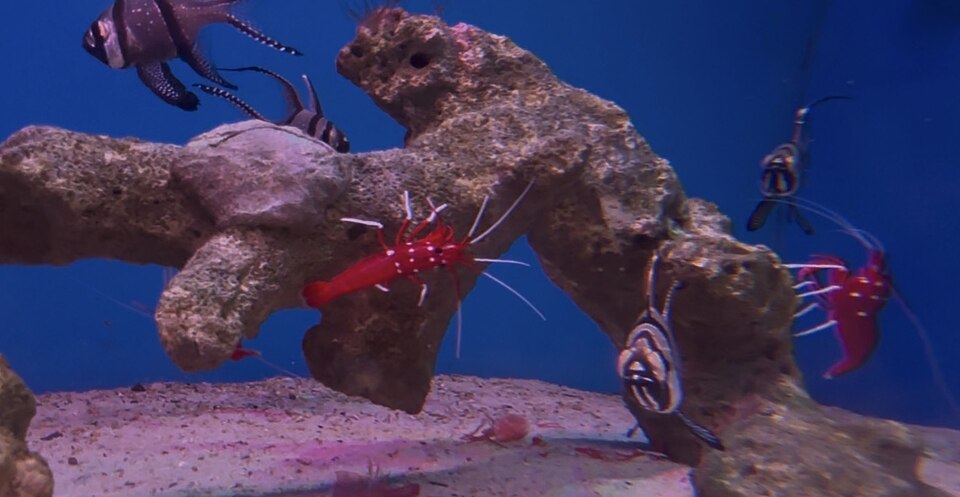
Deep red with white spots; often stays sheltered beneath rocks. A marine shrimp for a stable, mature aquarium. Provide moulting refuges and feed it deliberately.
At a glance
- Scientific name
- Lysmata debelius
- Dutch name
- Bloedgarnaal
- Water temperature
- 24–26 °C
- pH
- 8.3–8.4
- Adult length, up to approximately
- 6 cm
- Experience
- Some experience
- Carbonate hardness (KH)
- 8–12 °dKH
- Specific gravity (SG)
- 1.024–1.025
- Starting volume
- 60 L
- Swimming or living zone
- Rocks & refuges
- Flow
- Moderate, with sheltered areas
- With corals
- Usually possible; check companions
This is a documented adult size, not a measured average. SL means body length excluding the tail fin. Sex, origin and cultivated form can affect size.
Care guidance; origin and captive breeding can change requirements. Some ranges are deliberately narrower than natural extremes in the source. Adjust water gradually and keep ammonia and nitrite at zero.
General marine targets also use group-level care guidance. Check the needs of your corals too. SG is not salinity in ppt; follow your instrument’s temperature calibration.
Tank sizes are editorial starting points for adults, not guarantees for a complete stocking plan. Group size, tank height, swimming length and territories may require a larger aquarium.
Origin
Indo-Pacific region
Habitat & setup
Tropical reef with rocks, crevices and open water.
Diet
Varied complete marine food and small thawed animal foods; include suitable plant-based food.
Behaviour & grouping
One animal or a compatible established pair; do not force pairing.
Living with other animals
Non-predatory reef fish such as suitable clownfish or small gobies. Avoid shrimp-eating wrasses, puffers and other predators.
Possible combinations to investigate further
- Percula clownfish
24–26 °C · pH 8.3–8.3
Reproduction
Larval development in seawater; rearing is specialised and not automatic in a community tank.
A suitable cover helps prevent escape and jumping. Protect intakes for small animals. Do not use copper-based fish medication with invertebrates.
Sources & image credits
Data compiled on: 2026-09-27. Species sources support identity and care; group sources give general starting points. Practical recommendations are an editorial synthesis.
Photo: Fire_shrimp_with_cardinalfish.jpg — Skaterlight2013. CC0.