Dwarf chain loach
Ambastaia sidthimunki
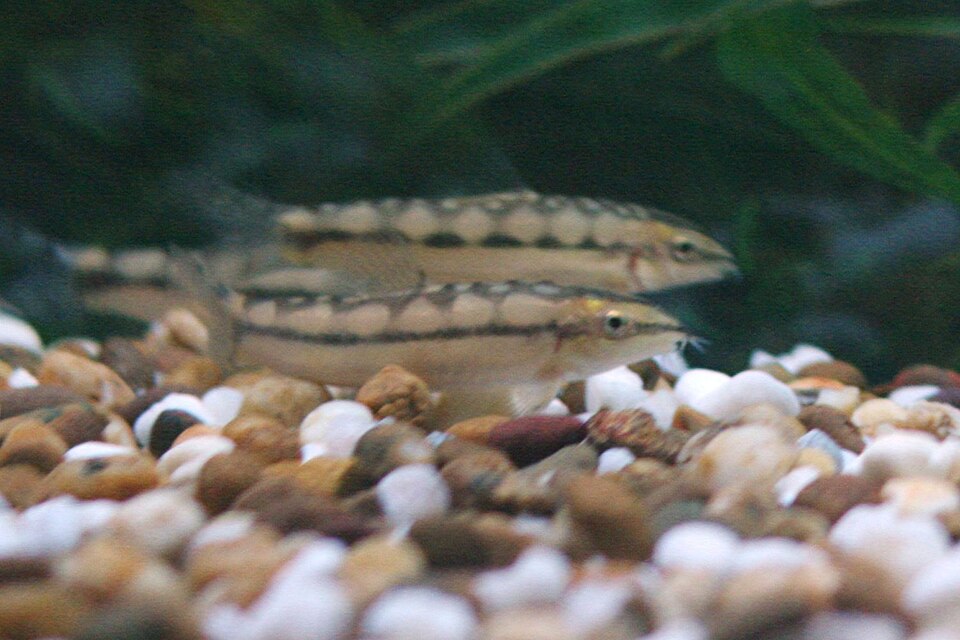
Dwarf loach with chain-like dark markings; keep several conspecifics. A social bottom-dweller that needs ample shelter. Check gaps, filter intakes and sharp edges in the décor.
At a glance
- Scientific name
- Ambastaia sidthimunki
- Dutch name
- Dwergkettingbotia
- Water temperature
- 20–30 °C
- pH
- 5.5–7.5
- Adult length, up to approximately
- 6 cm SL
- Experience
- Basic knowledge
- General hardness (GH)
- 1–12 °dGH
- Starting footprint
- 80 × 30 cm
- Swimming or living zone
- Bottom
- Flow
- Moderate, with sheltered areas
This is a documented adult size, not a measured average. SL means body length excluding the tail fin. Sex, origin and cultivated form can affect size.
Care guidance; origin and captive breeding can change requirements. Some ranges are deliberately narrower than natural extremes in the source. Adjust water gradually and keep ammonia and nitrite at zero.
Tank sizes are editorial starting points for adults, not guarantees for a complete stocking plan. Group size, tank height, swimming length and territories may require a larger aquarium.
Origin
Asia — Thailand
Habitat & setup
Freshwater bottoms with sand and cover; avoid sharp substrates.
Diet
Dedicated sinking complete food and small frozen foods. Ensure portions reach the bottom.
Behaviour & grouping
Group of at least 5–6; provide several refuges.
Living with other animals
Robust but peaceful fish of suitable size. Small shrimps and snails may be eaten; provide enough conspecifics.
Possible combinations to investigate further
- Harlequin rasbora
21–28 °C · pH 5.5–7.5
Reproduction
Breeding requires species-specific expertise; do not expect successful reproduction in a community aquarium.
A suitable cover helps prevent escape and jumping. Protect intakes for small animals. Do not use copper-based fish medication with invertebrates.
Sources & image credits
Data compiled on: 2026-09-27. Species sources support identity and care; group sources give general starting points. Practical recommendations are an editorial synthesis.
Photo: Yasuhikotakia_sidthimunki.jpg — Lerdsuwa. CC BY-SA 3.0.